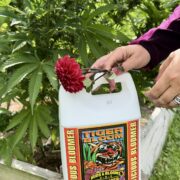

Standing in front of a wall of fertilizer bottles and three-number labels can make a first-time outdoor grower want to skip feeding altogether. The good news is that you don’t need a complicated system, just a clear idea of what your plants need at each stage. This guide explains what those numbers mean and walks you through a simple two-bottle approach, from early growth through harvest. By the end, you’ll know what to feed, when to switch, and how to keep it simple.
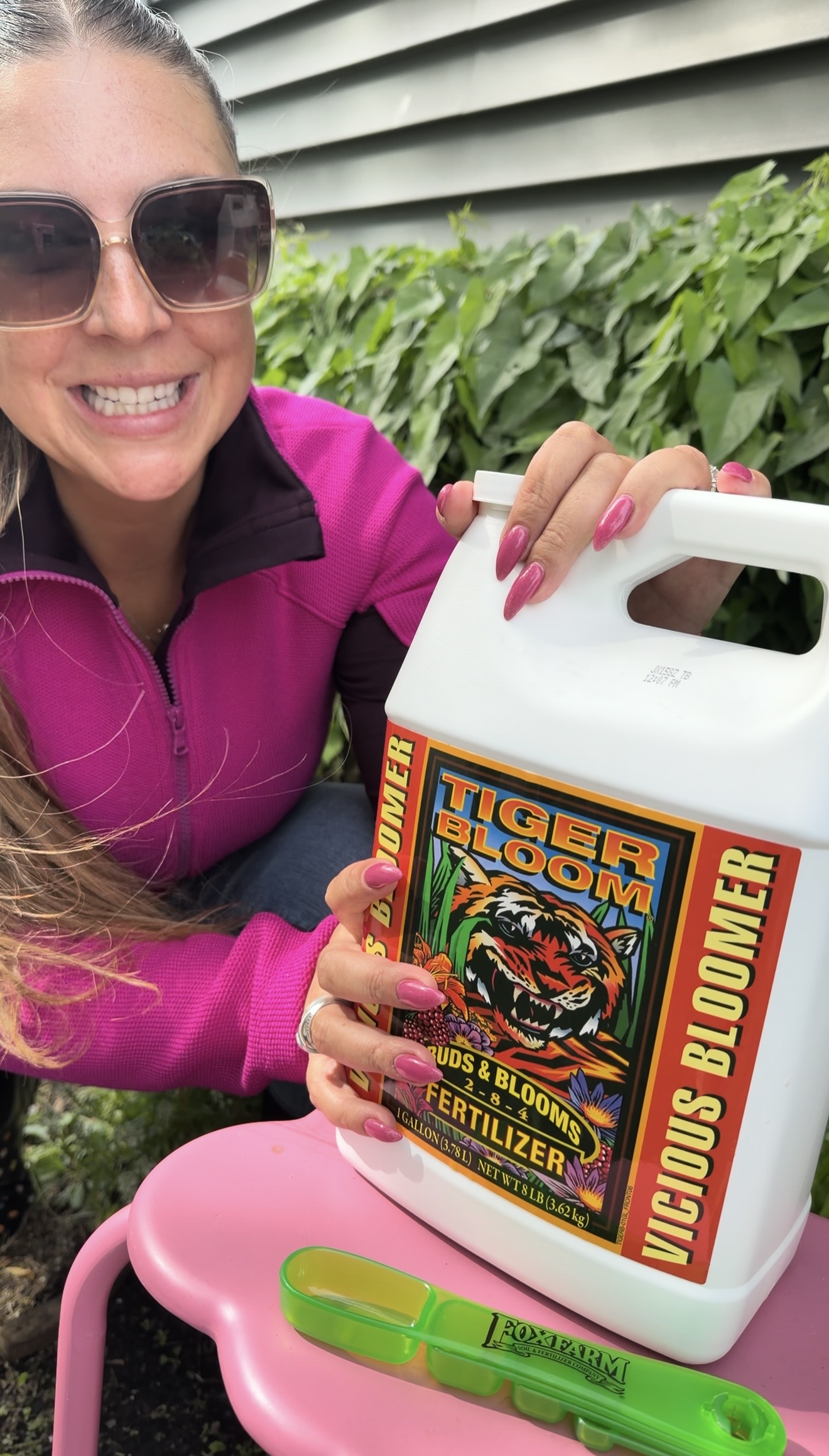
Table of Contents
Why You Will Love This Guide
For seven years, I grew cannabis outdoors without ever buying a bottle of fertilizer. My plants got composted manure from my farm, and that was it.
This year, I finally used a liquid fertilizer for the first time. If you’re a beginner outdoor grower wondering whether you need fertilizer at all, or which one to start with, this is the plain-English guide I wish I’d had.
I’ll keep adding to it as I learn more.
Why I finally started using fertilizer
I started fertilizing because I grew sunflowers in the same raised bed as the cannabis this year, something I’ve never done before. Sunflowers are hungry plants, and I wanted my soil to have extra nutrients to work with.
Composted manure builds healthy soil, and it’s still the foundation of my garden.
Liquid fertilizer does a different job: it gives plants a quick, targeted boost at the stage when they need it most. That’s the gap I wanted to fill.
Fertilizer basics: what the three numbers mean
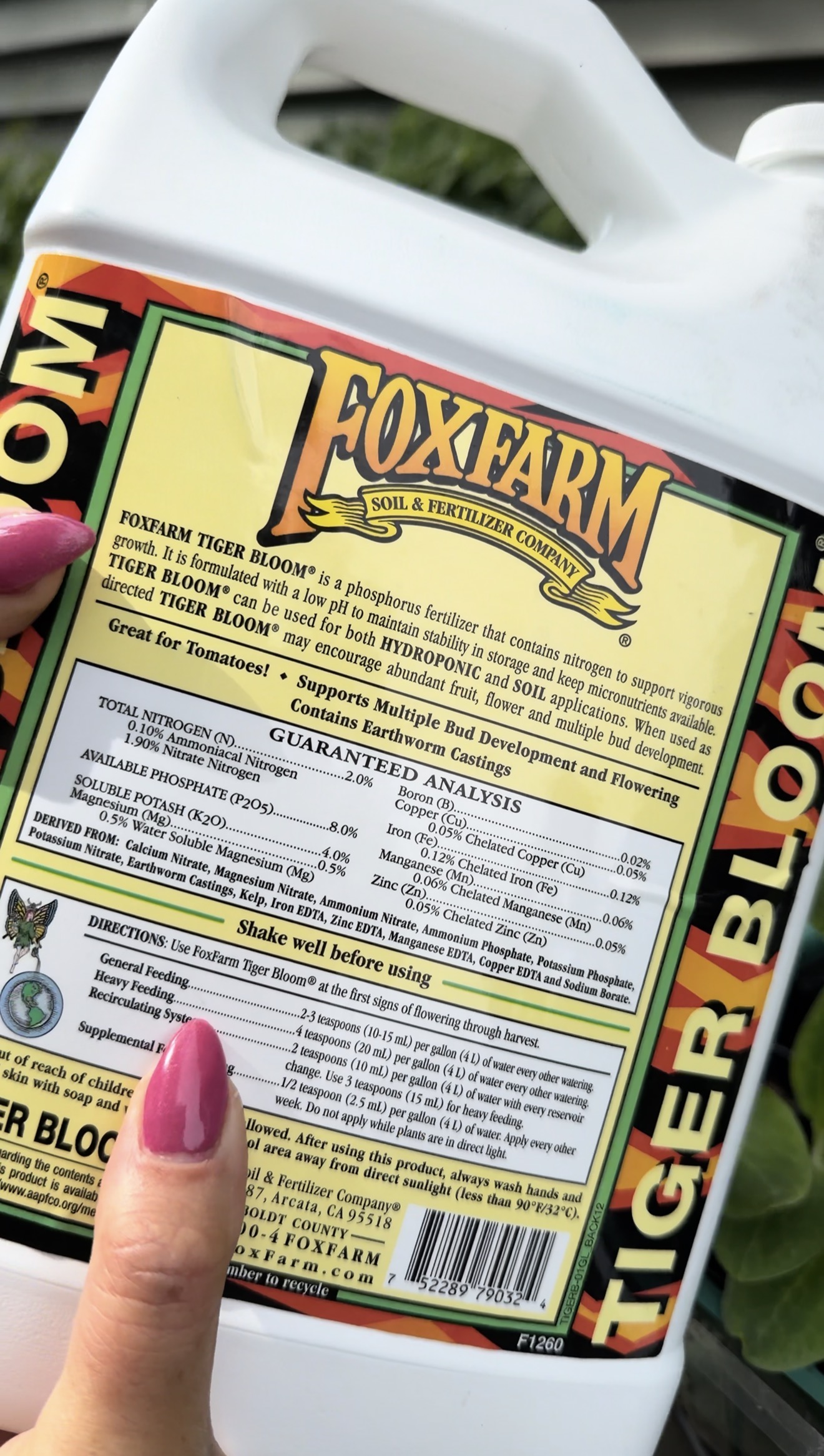
Every fertilizer label has three numbers, like 6-4-4. They’re the percentages of nitrogen, phosphorus and potassium (N-P-K) in the bottle.
- Nitrogen (N): fuels leafy, vegetative growth. Plants want more of it early in the season.
- Phosphorus (P): supports roots and flower development. Plants want more of it once they start to bloom.
- Potassium (K): supports overall plant health and strength throughout the season.
That’s the whole idea behind feeding by stage. Higher nitrogen while your plant is growing, then a switch to higher phosphorus when it starts flowering.
The Two Products I use
I keep it simple with two bottles, one for each half of the season.
| Product | N-P-K | When I use it | Label rate for soil |
|---|---|---|---|
| Grow Big | 6-4-4 | Early in the vegetative season, when plants are building size and structure | 2–3 tsp per gallon of water, every other watering |
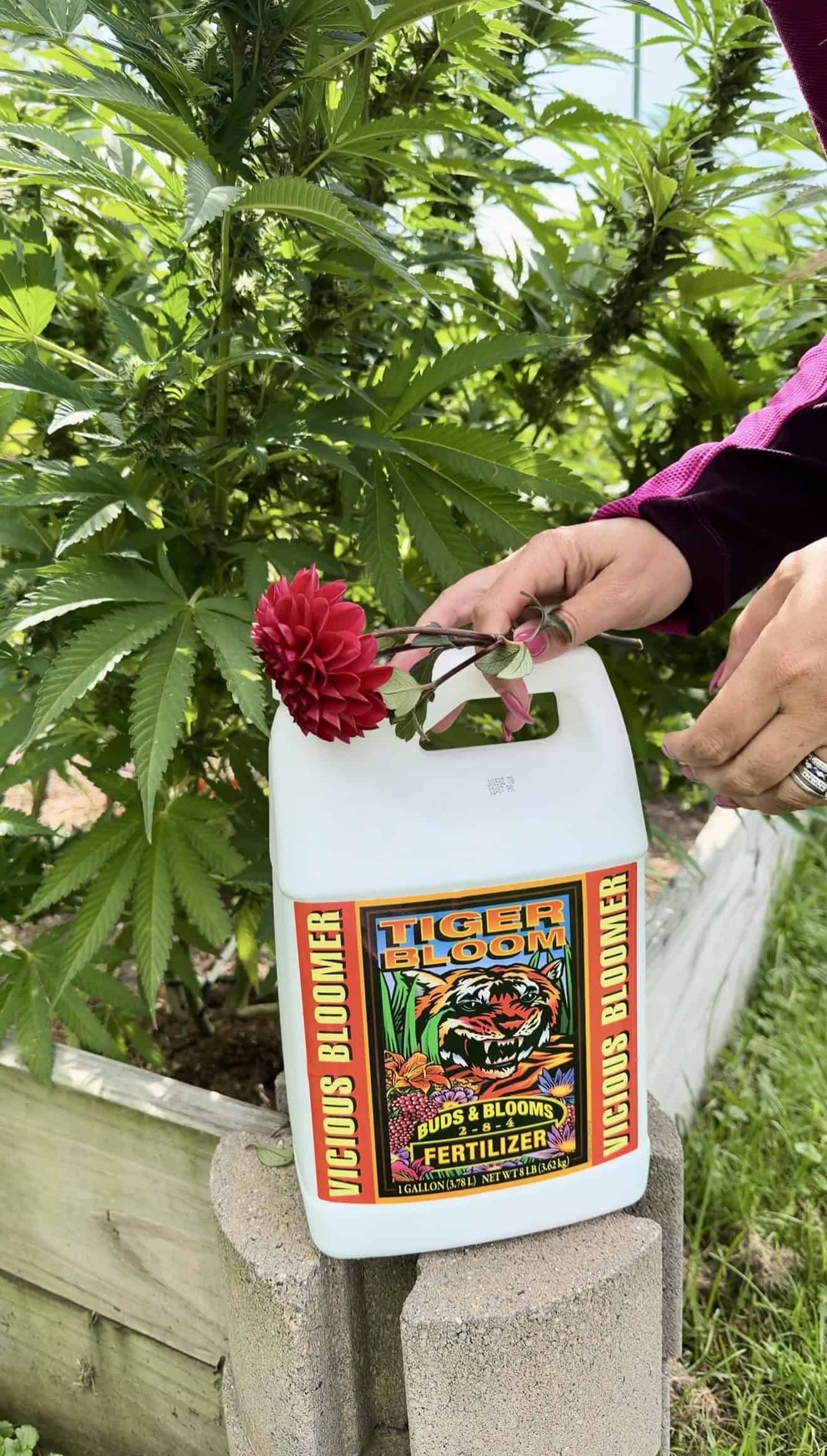
| Tiger Bloom | 2-8-4 | From the first signs of flowering through harvest (I’m using it right now) | 2–3 tsp per gallon of water, every other watering |
Grow Big is the nitrogen-forward one. It supports lush leafy growth early on, which sets up the branching and structure a plant needs to carry flowers later.
SAVE THIS GUIDE 💌
Tiger Bloom is the phosphorus-forward one. It still has some nitrogen, but the higher middle number is there to support flower development once plants are blooming.
Always follow the rates on your own bottle, and start on the lighter side. You can add more later, but you can’t take it back out of the soil.
🫶 A full-circle moment My father-in-law taught me how to grow cannabis, and he was a huge FoxFarm fan. He talked constantly about his “grow juice” and how important it was for his big plants. The bottle of Grow Big I used this year came from his garage, which I found after he passed away. Using FoxFarm in my own garden now feels like coming full circle.
A Note on Organic
I garden organically to the best of my ability, so I want to be upfront: Grow Big and Tiger Bloom are not certified organic. FoxFarm does make products that are OMRI Listed, like Big Bloom, but these two bottles aren’t in that group, and their ingredient lists include some non-organic components.
I still trust them and feel comfortable using them in my garden. I also know how demanding organic certification is, and a product not carrying the label doesn’t automatically mean it’s not a good fit for your garden.
What matters is that you know what’s in the bottle and decide what you’re comfortable with. If you want to stay fully certified organic, look for the OMRI Listed seal on the label.
A simple feeding timeline for beginners
- Build your soil first. Start with compost or composted manure. This is the base everything else sits on.
- Early vegetative growth: once plants are established, feed with Grow Big at the label rate.
- First signs of flowering: switch over to Tiger Bloom and keep going through harvest.
- Watch your plants. Adjust based on how they look, and always follow the label on your bottle.
That’s the whole system I used this year. As I test more products and methods, I’ll add them here.
Where to find them
- Grow Big
- Tiger Bloom
- Big Bloom (Organic)
Not necessarily. I went seven or eight years on composted manure alone. I started adding liquid fertilizer when I planted a hungry crop in the same raised bed again.
At the first signs of flowering. Grow Big is for the vegetative stage, and Tiger Bloom is for flowering through harvest.
Big Bloom is. See the note above.
Yes. Rates and timing are printed on each bottle, and they’re the best place to start.
In the End…
You don’t have to use fertilizer to grow a beautiful garden. Good soil and compost can take you a long way. But if you’re curious and want to give your plants a little extra support, starting simple is the best way to do it.
This is just my process, and it’s what has worked for me. FoxFarm is the brand I trust, and two bottles are all I need to keep things easy. Start small, pay attention to how your plants respond, and adjust from there.
Happy growing, friends!
More Guides You Will Love
Harvesting Cannabis
The Cannabis Bouquet: A Two-in-One Use for Your Trimmings
Articles & How-To Guides
How to Harvest, Wash & Prepare Cannabis Fan Leaves

Articles & How-To Guides
Preparing for Surgery Without Opioids: My Cannabis and Holistic Recovery Plan
Articles & How-To Guides