
Every grower knows the drill: you prune, you tidy, you toss what’s left over. But what if those cannabis trimmings were actually the start of something beautiful? In this post, I’m sharing my favorite art form, turning pruned branches into fresh, gorgeous bouquets, paired with the flowers you’re probably already growing. No floral training needed, just a fresh way to look at what’s already in your garden.
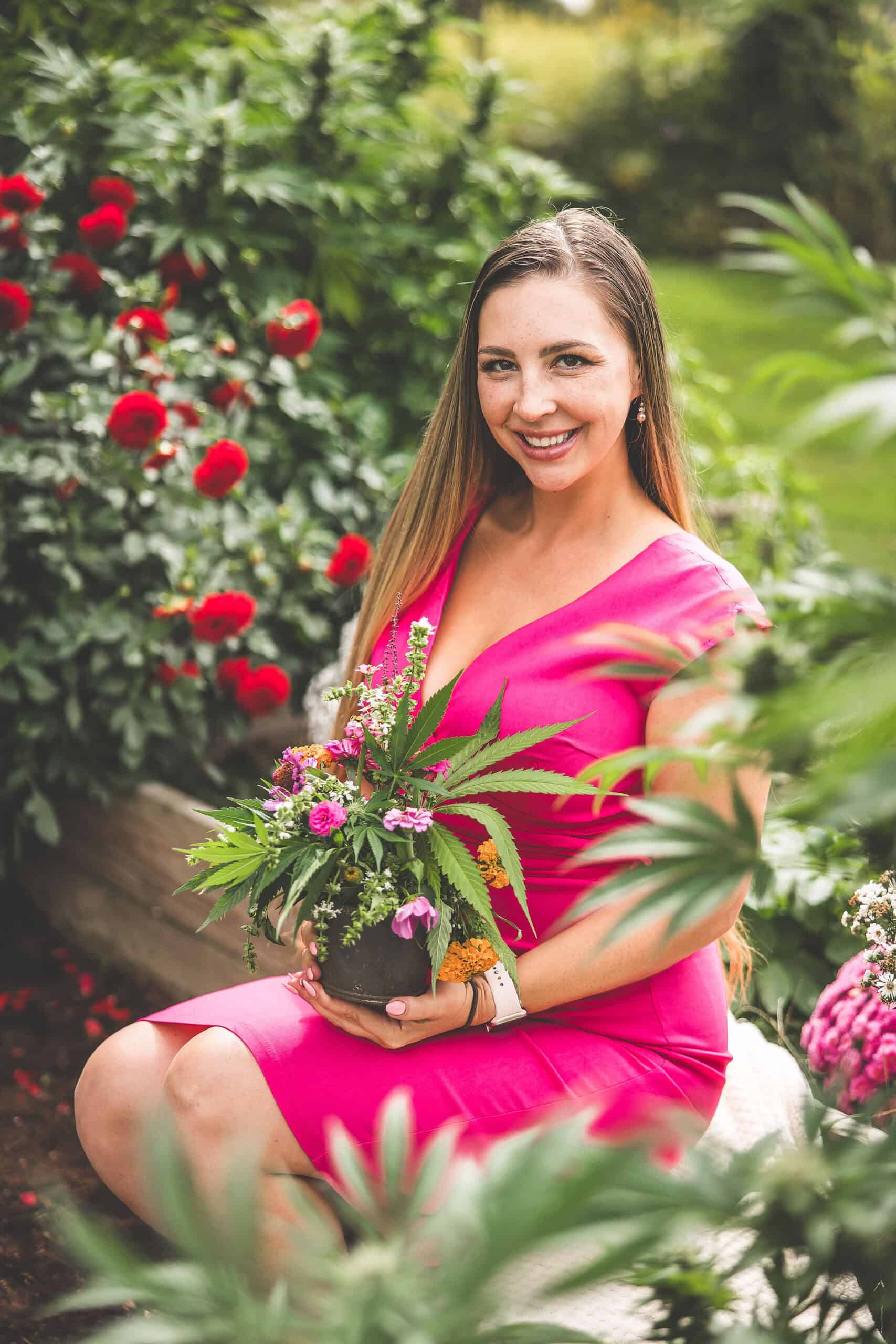
Table of Contents
Why You Will Love This Guide
Flowers have always been the thread running through my family. My great-grandfather worked at a local nursery and would bring gladiolus to my grandma when she was a little girl.
My mother was a Certified Master Gardener, and I grew up building “secret gardens” in the corners of our yard, little hidden worlds made of whatever was blooming that season.
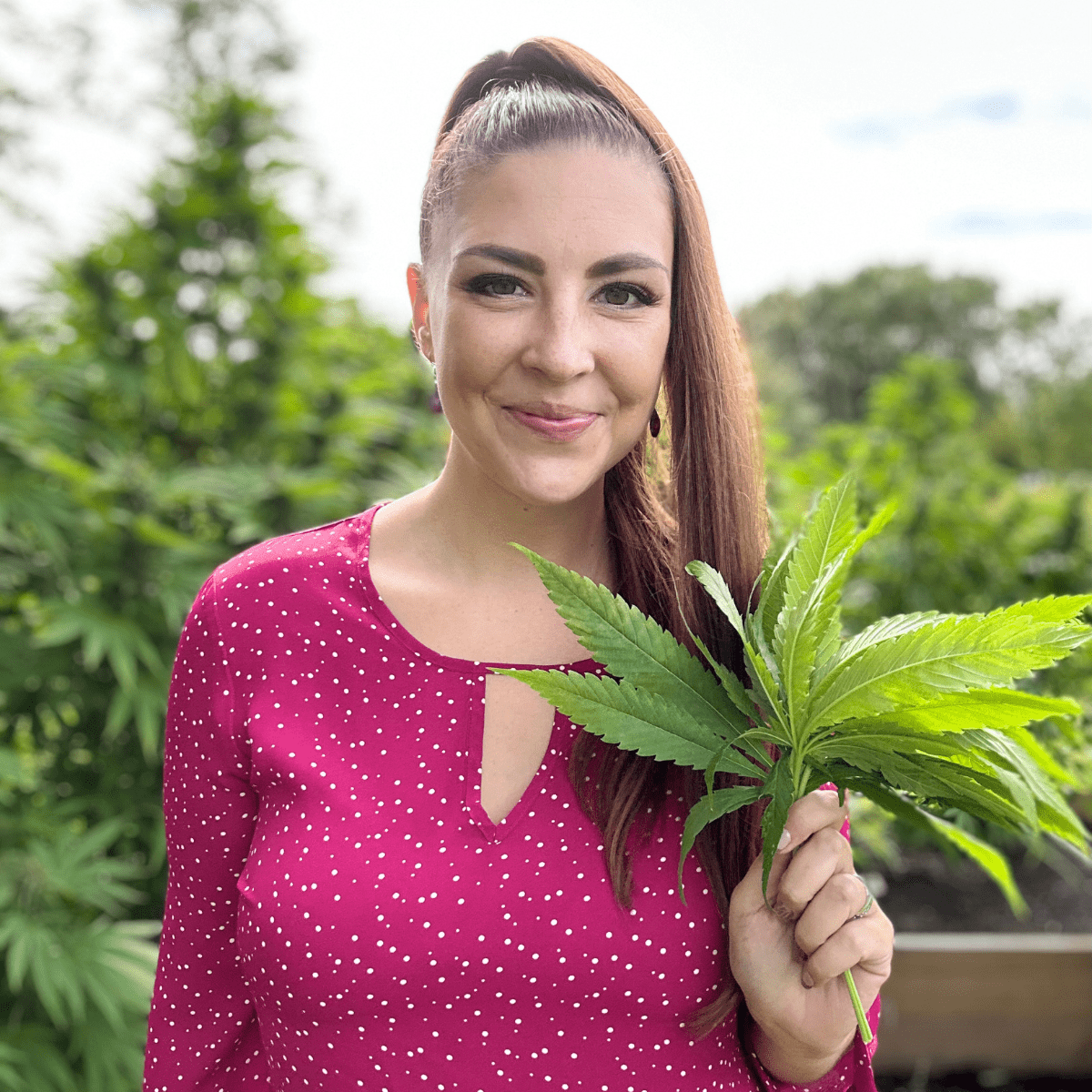
So when people find out I grow cannabis, they’re usually surprised to learn that my favorite thing to do with it has nothing to do with smoking or eating it at all, it’s arranging it into something beautiful.
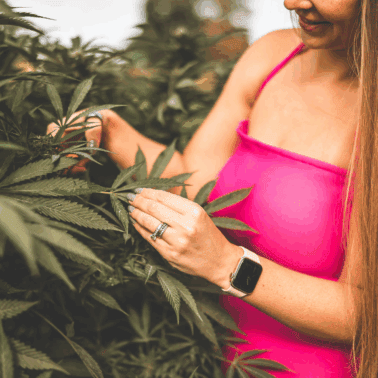
Here’s the thing nobody tells you when you start growing cannabis: you’re going to be pruning it. Regularly. Those extra fan leaves and side branches you snip off to help your plant put its energy where it counts? They don’t have to go in the compost pile.
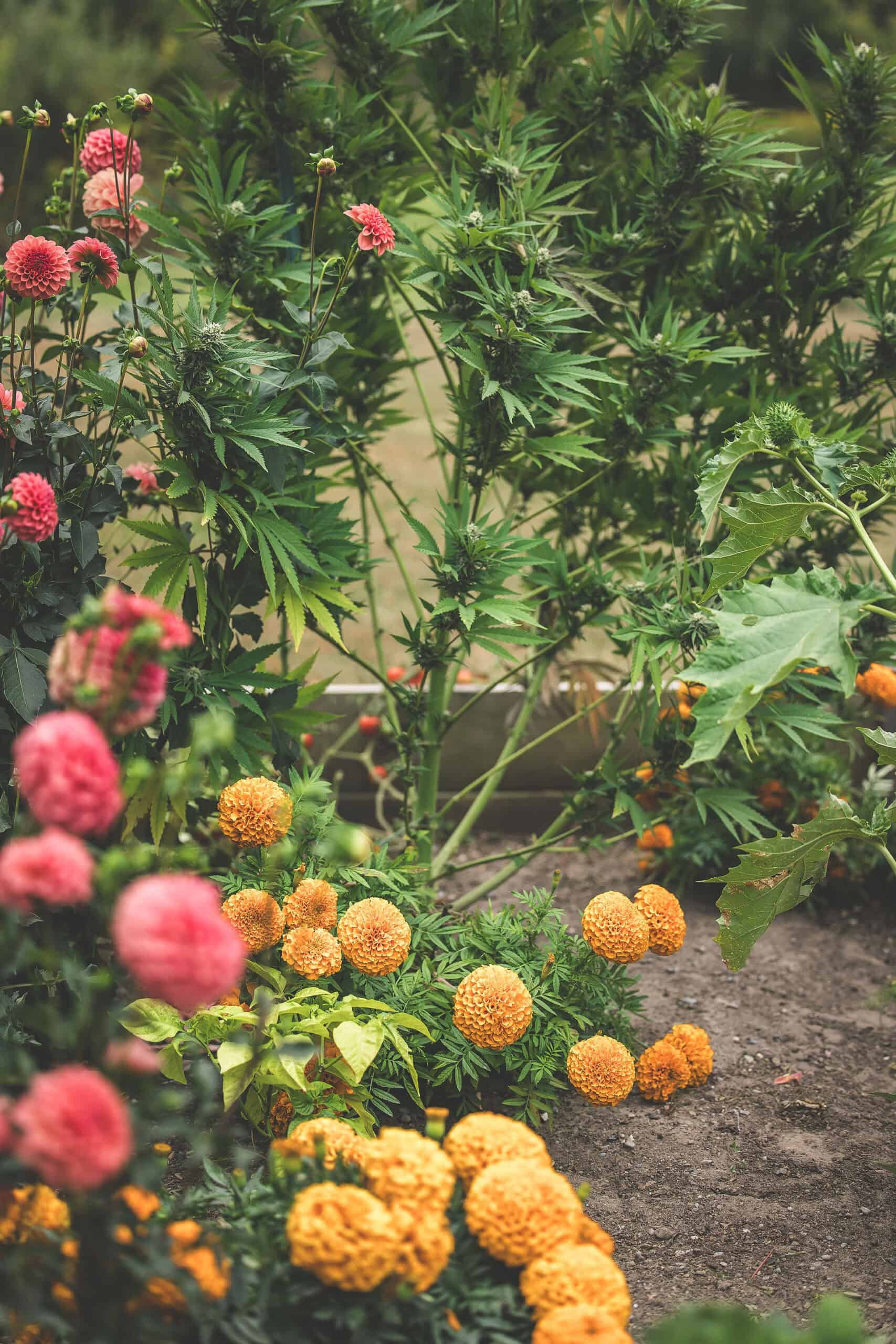
If you’re already growing cannabis outdoors along with zinnias, dahlias, marigolds, or snapdragons, and if you garden (there’s a good chance you are) you already have everything you need to turn a pruning session into a gorgeous bouquet.
🌟 Two tasks, one purpose. That’s the whole idea.
Why Pruning and Bouquet-Making Go Together
Pruning isn’t optional if you want a healthy, high-yielding cannabis plant.
Removing lower fan leaves and select branches improves airflow, redirects energy to your main colas, and reduces the risk of mold and pests. You’re going to be doing this anyway, multiple times over a growing season.
The trimmings from a routine pruning are exactly what you need for greenery in a fresh arrangement: sturdy stems, full palmate leaves with great shape and texture, and, if you snip a small flowering branch, a striking focal point you won’t find at any florist.
Instead of tossing what you cut, set it in a bucket of water while you finish your garden walk. By the time you’re done pruning, you likely already have the makings of a bouquet or a beautiful centerpiece.
What to Cut (and What to Leave)
Not every prune is bouquet-worthy, and not every prune should happen just because you want flowers. A few guidelines:
- Lower fan leaves are the easiest, lowest-risk cut. Your plant sheds energy on these anyway once the canopy fills in, so removing them supports the plant and gives you the most usable material.
- Small side branches (“lollipopping” cuts) that aren’t receiving much light are good candidates, removing them redirects the plant’s energy upward, and they often come with smaller leaves that add nice texture to an arrangement (This is what I do, personally!).
- Avoid over-pruning. Never remove more than the plant can spare in one session. A good rule of thumb is no more than 20–30% of the foliage at a time. If in doubt, prune for the plant’s health first, and treat the bouquet as the bonus.
- A single small flowering branch can work beautifully as a textural, sculptural element, but be mindful, this is the part of the plant with the most value, so only cut a flowering branch if you have plenty to spare, or you’re trimming a branch you’d remove for airflow regardless.
What Pairs Well With Cannabis Foliage
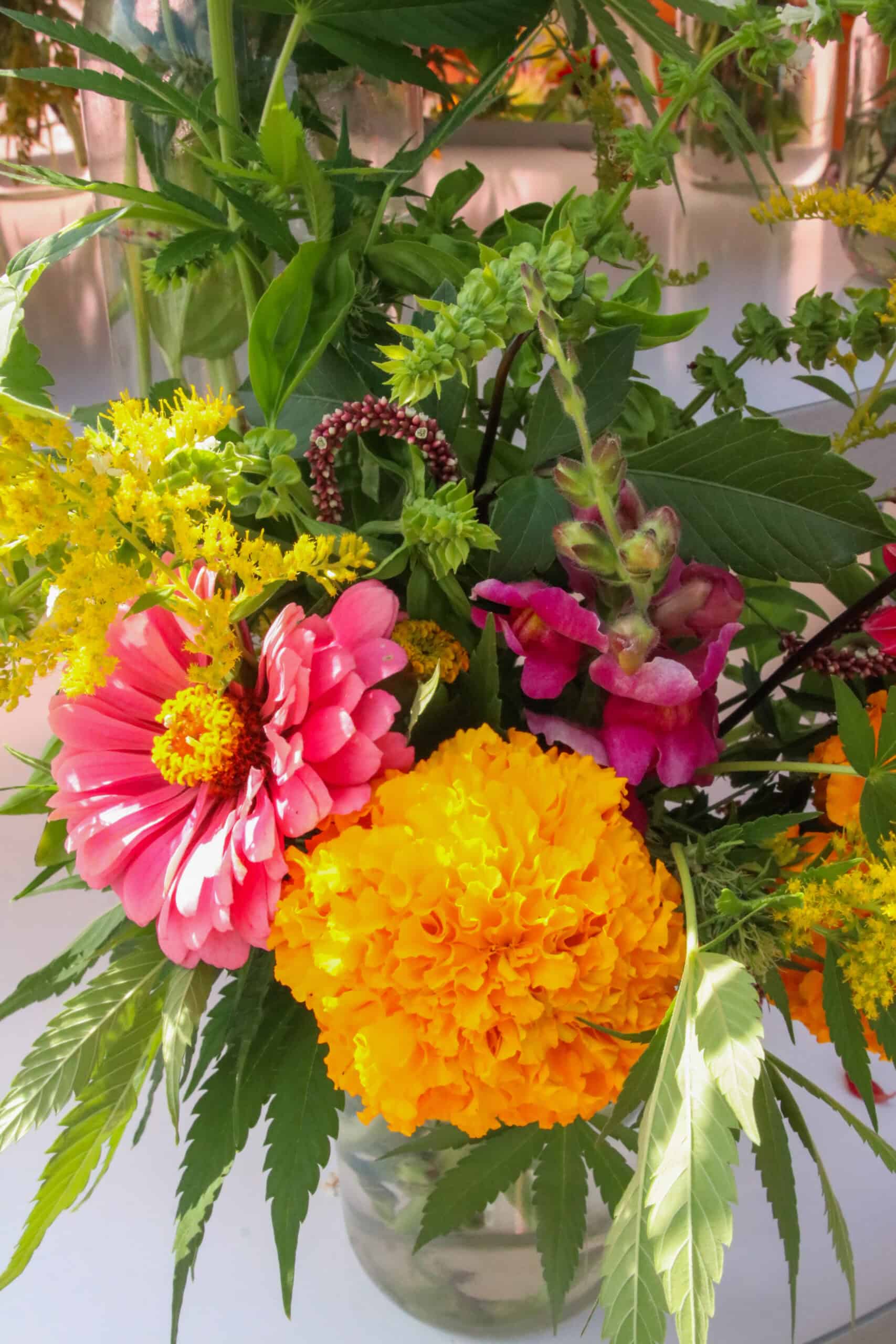
Cannabis leaves have a wonderful jagged, serrated shape and a deep green color that plays surprisingly well as the “greenery” layer of an arrangement, the role eucalyptus or fern usually fills.
If you already grow a cut flower garden, here’s what tends to pair beautifully:
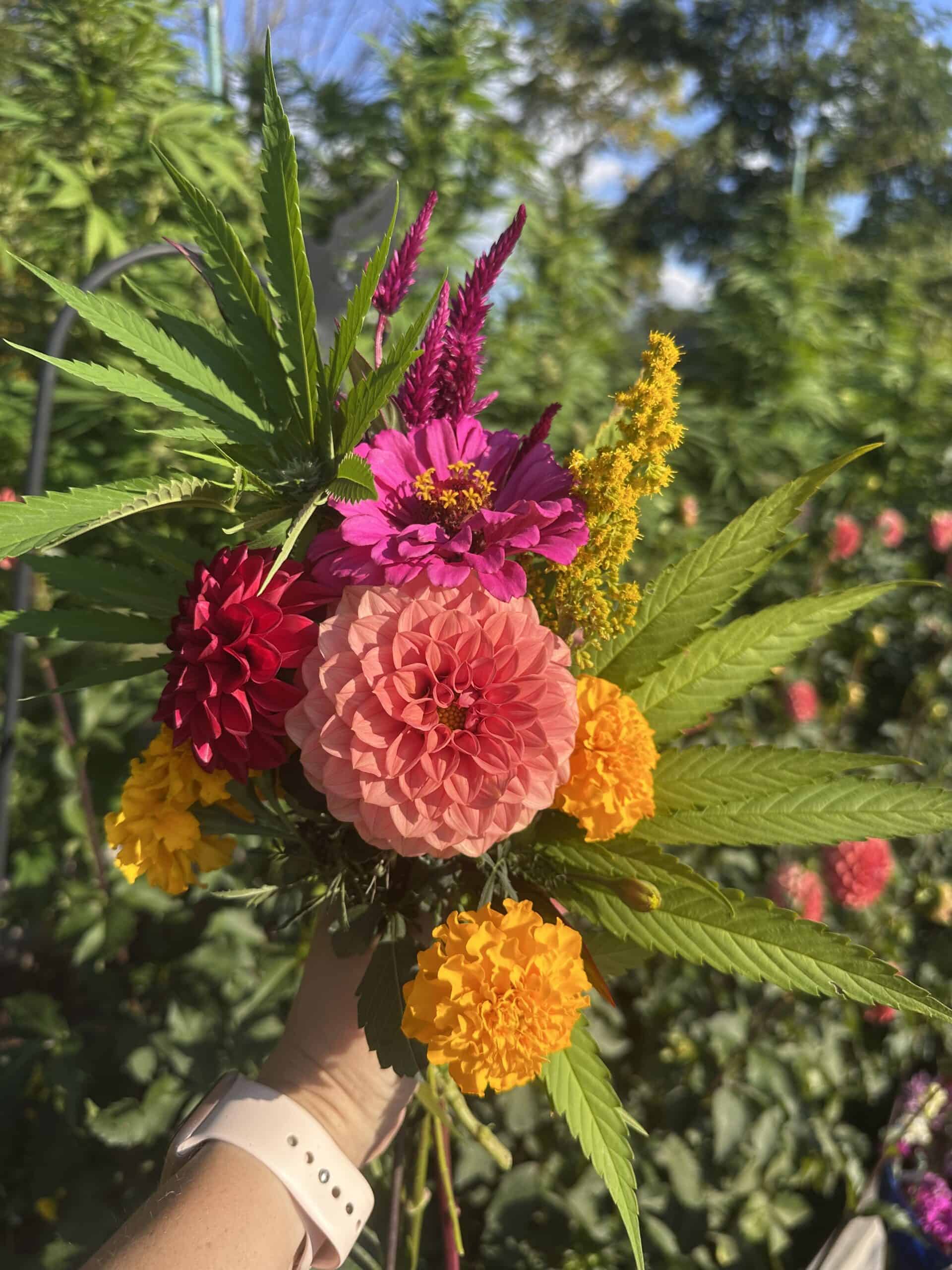
- Zinnias — their bold, saturated color stands out against the deep green
- Dahlias — full, sculptural blooms that anchor an arrangement
- Marigolds — warm gold and orange tones that echo the season
- Snapdragons — height and vertical structure
- Goldenrod — airy texture and a pop of yellow, especially in early autumn
- Celosia or amaranth — unexpected texture if you’re growing it
🌟 If you’re already growing any of these (and many backyard cutting gardens include at least one) you likely don’t need to buy or grow anything new. You just need to look at what’s already in your garden differently.
How to Build the Arrangement
You don’t need floral training for this. Here’s roughly how I build mine:
- Start with your cannabis foliage as the base. Trim stems at an angle and build your structure and shape first, the way you would with any greenery. Put them stems in water straight away so they don’t wilt.
- Add your focal flowers. Zinnias and dahlias work well here, cluster them so they have room to be seen, rather than scattering them evenly.
- Fill in with texture. Goldenrod, celosia, or smaller cannabis branches or fan leaves tuck into the gaps and keep the arrangement from feeling flat.
- Step back and adjust. Turn the vase as you go. Asymmetry usually looks more natural than a perfectly even bouquet.
Keeping Your Bouquet Fresh
A mixed fresh bouquet like this typically lasts 5–7 days with basic care:
- Use a clean vase and fresh water
- Change the water every 2–3 days
- Re-trim stems at an angle each time you change the water
- Keep the arrangement out of direct sun and away from heat sources
If You Ever Want to Sell Yours
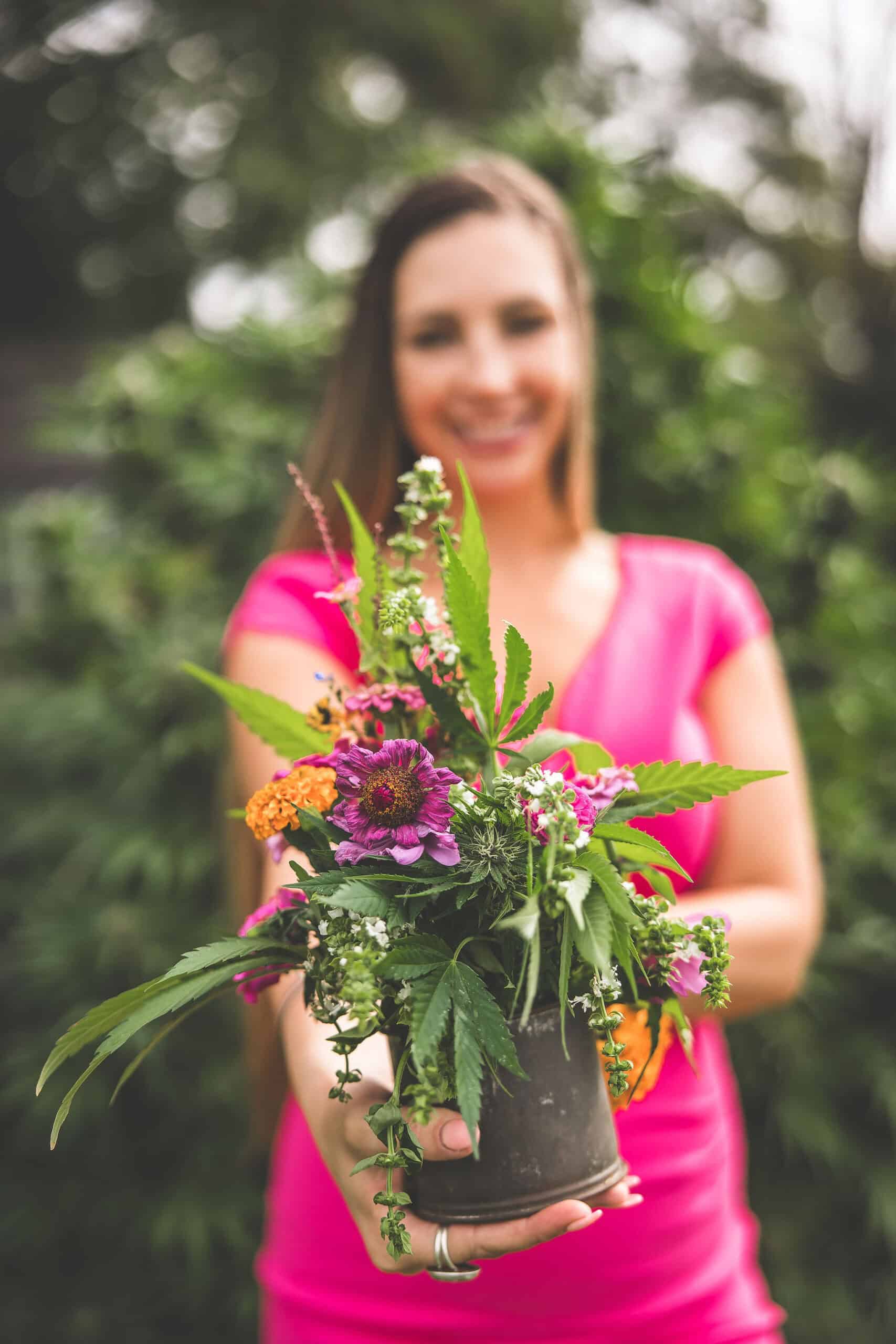
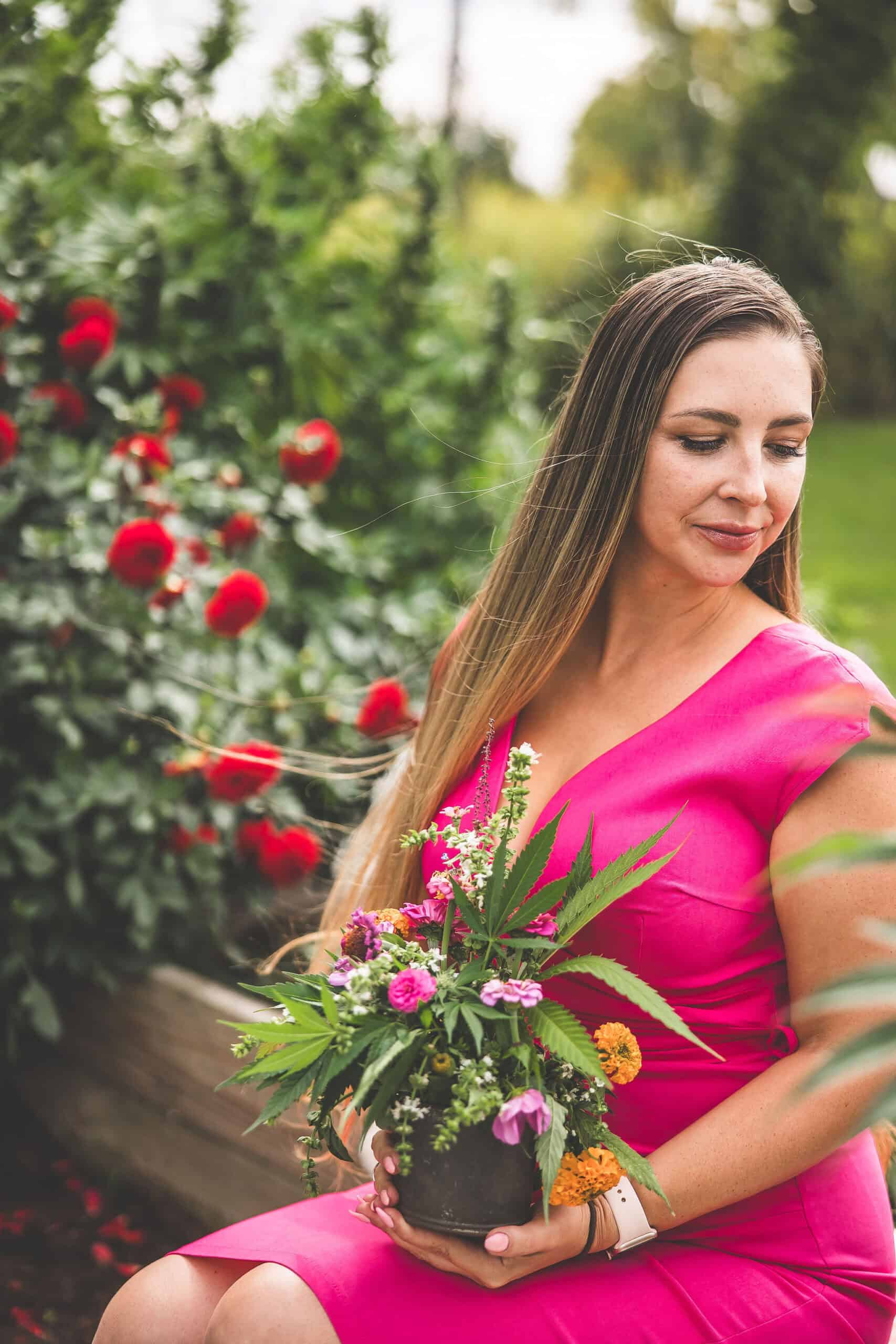
I’ve sold cannabis flower arrangements like this at my local Autumn in the Village festival for three years now, and I’ll say this: people were genuinely delighted to see cannabis foliage used this way.
If you ever want to try selling your extras at a local farmers market or festival, check your local laws around displaying cannabis plant material first.
Then price them in line with what other local flower bouquets sell for in your area, and lean into the story, people respond to the “I grew this myself” angle far more than they respond to a perfect arrangement.
A Quick Note on Display
🌟 Since this uses cannabis plant material, use your judgment about where and how you display it, check your local and state laws, and if you’re sharing photos online, a little discretion goes a long way depending on your audience and platform.

The Bottom Line
You don’t need a special reason to try this, you’re already pruning your plants, and you’re probably already growing flowers that would pair beautifully with the trimmings.
Next time you’re out in the garden with your shears, save what you cut. You might just end up with a bouquet. If so, I’d love to see it! Feel free to share below or over on social media.
More Guides You Will Love
Harvesting Cannabis
How to Harvest, Wash & Prepare Cannabis Fan Leaves
Harvesting Cannabis
Emily’s 10 Favorite Tools for Your Best Cannabis Harvest Yet
Articles & How-To Guides
How to Use Cannabis Fan Leaves in Edibles
Gluten-Free