

Wondering if topping your plant is worth it? I avoided it for years, until last summer when I finally tried it and couldn’t believe the difference. Here’s everything you need to know to try it yourself and what to expect from the process.
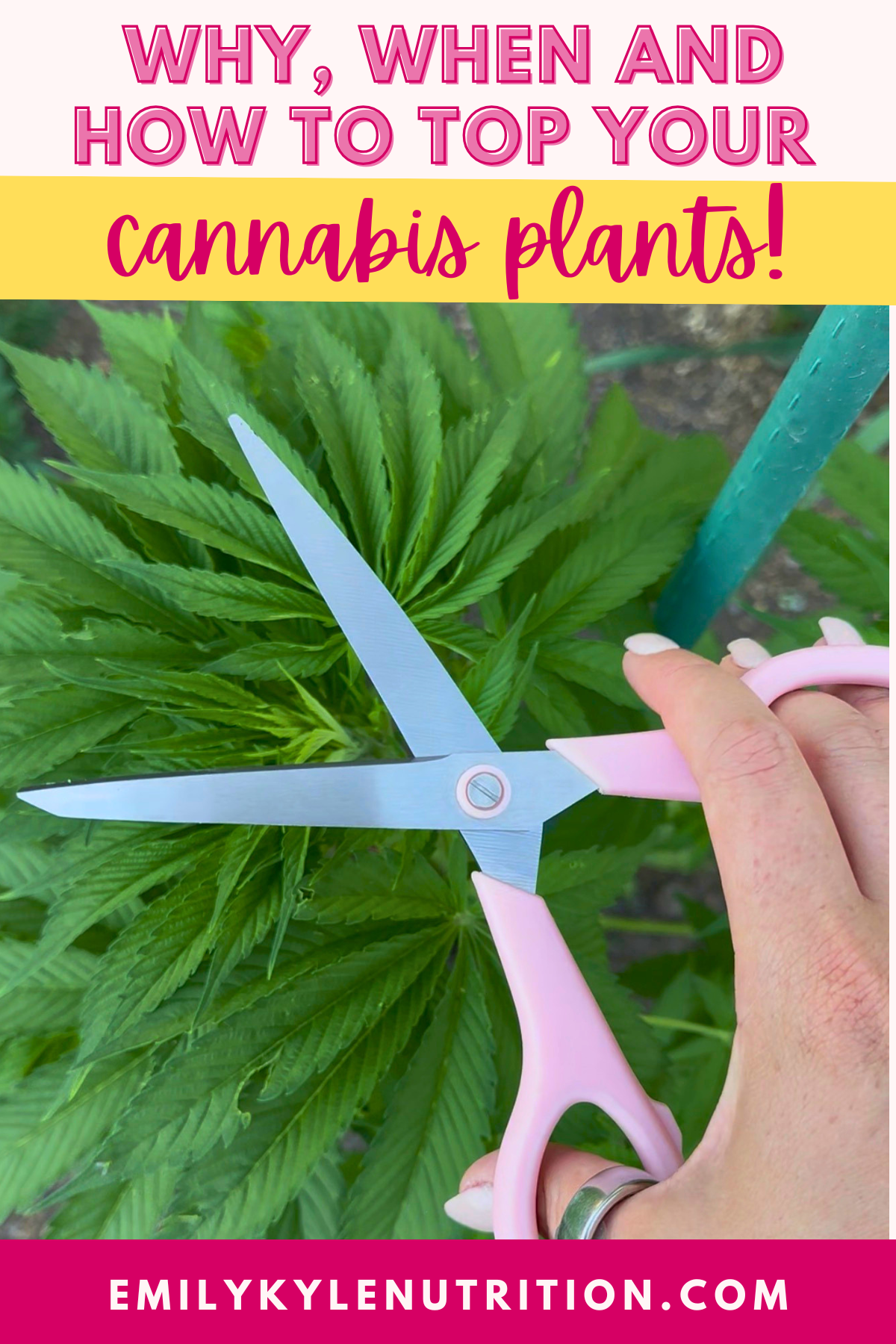
Table of Contents
- Article Features
- Why You Will Love This Guide
- What Does Topping Actually Mean?
- Is Topping Right for Your Plant?
- What Are Nodes and Why Do They Matter?
- When to Top Your Plant
- How to Top a Cannabis Plant Step-by-Step
- Can You Top More Than Once?
- What to Expect After Topping
- Common Mistakes to Avoid
- Is Topping Right for You?
- More Growing Resources for You
Article Features
- What is topping and why would you do it?
- Step-by-step instructions for when and how to top your plant
- Want to skip the hard work? Shop with me and have premium, high-quality cannabis products delivered directly to your door! Now shipping across the US.
Why You Will Love This Guide
I’ll be honest with you, for the first few years of growing, I never topped a single plant.
I was intimidated by the idea of intentionally cutting into a healthy plant, and I figured I was doing just fine without it. And I was! But “just fine” and “twice as many colas” are two very different things.
Last summer, I decided to finally try it. I had two Blue Dream plants growing side by side, and I topped one while leaving the other to grow naturally. The difference was honestly a little shocking.
The topped plant produced noticeably more colas, those beautiful, bud-covered branches, while the untopped plant grew tall and focused most of its energy on just one main cola at the top.
That was all I needed to see. I was completely sold.
Now I want to share everything I learned so you can feel confident giving it a try, too. It’s simpler than it sounds, and the reward is very much worth it.
What Does Topping Actually Mean?
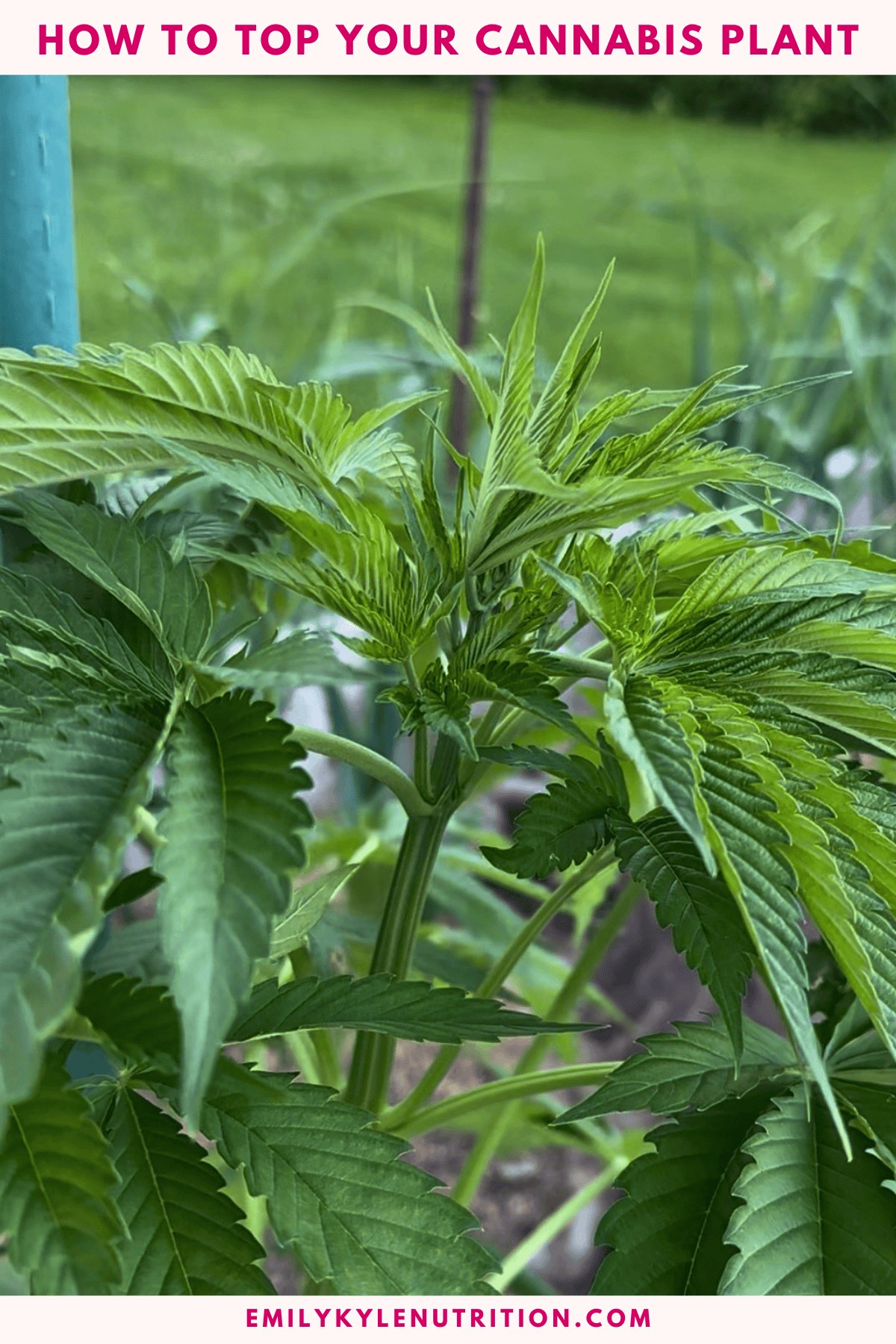
Topping is a high-stress training (HST) technique where you remove the very top of your plant’s main stem during the vegetative stage.
It sounds counterintuitive, cutting your plant on purpose, but there’s real science behind it.
When you remove the apical tip (that’s just the fancy name for the very top growing point), the plant responds by sending its energy outward into two new main branches instead of continuing to push all growth upward into one.
It’s just like pinching the tops of a zinnia or a dahlia flower to get more flowers throughout the season.
The result? Instead of a tall, Christmas tree-shaped plant with one dominant cola, you get a shorter, wider, bushier plant with multiple main colas that can each produce a large, dense bud.
More colas = more bud sites = more yield at harvest. It really is that simple.
🍃 Tip: Topping is different from Low-Stress Training (LST), which involves bending and tying branches without cutting. Both are great techniques, and they can even be used together!
Is Topping Right for Your Plant?
Before we go any further, it’s important to make sure topping is actually the right technique for your grow, because it depends entirely on what type of plant you’re working with.
If you’re growing a photoperiod plant, you’re in the right place. Photoperiod plants have a longer vegetative stage with plenty of time to recover and respond to topping, which is exactly what makes this technique so effective for them.
If you’re growing an autoflowering plant, topping is generally not recommended. ❌
Autoflowers have a compressed life cycle and move from seed to flower on their own timeline, regardless of what you do. Because they spend so little time in the vegetative stage, the stress of topping often does more harm than good, cutting into your yield rather than improving it.
Not sure which type you’re growing? Check out my guide on autoflowering vs. photoperiod plants to find out before you grab those scissors.
🍃 Tip: If you are growing autoflowers and want to increase your yield, Low-Stress Training (LST) is a much gentler option that works beautifully with their fast-paced growth cycle.
What Are Nodes and Why Do They Matter?
Before you can top your plant, you need to understand what nodes are, because they are your roadmap for where and when to cut.
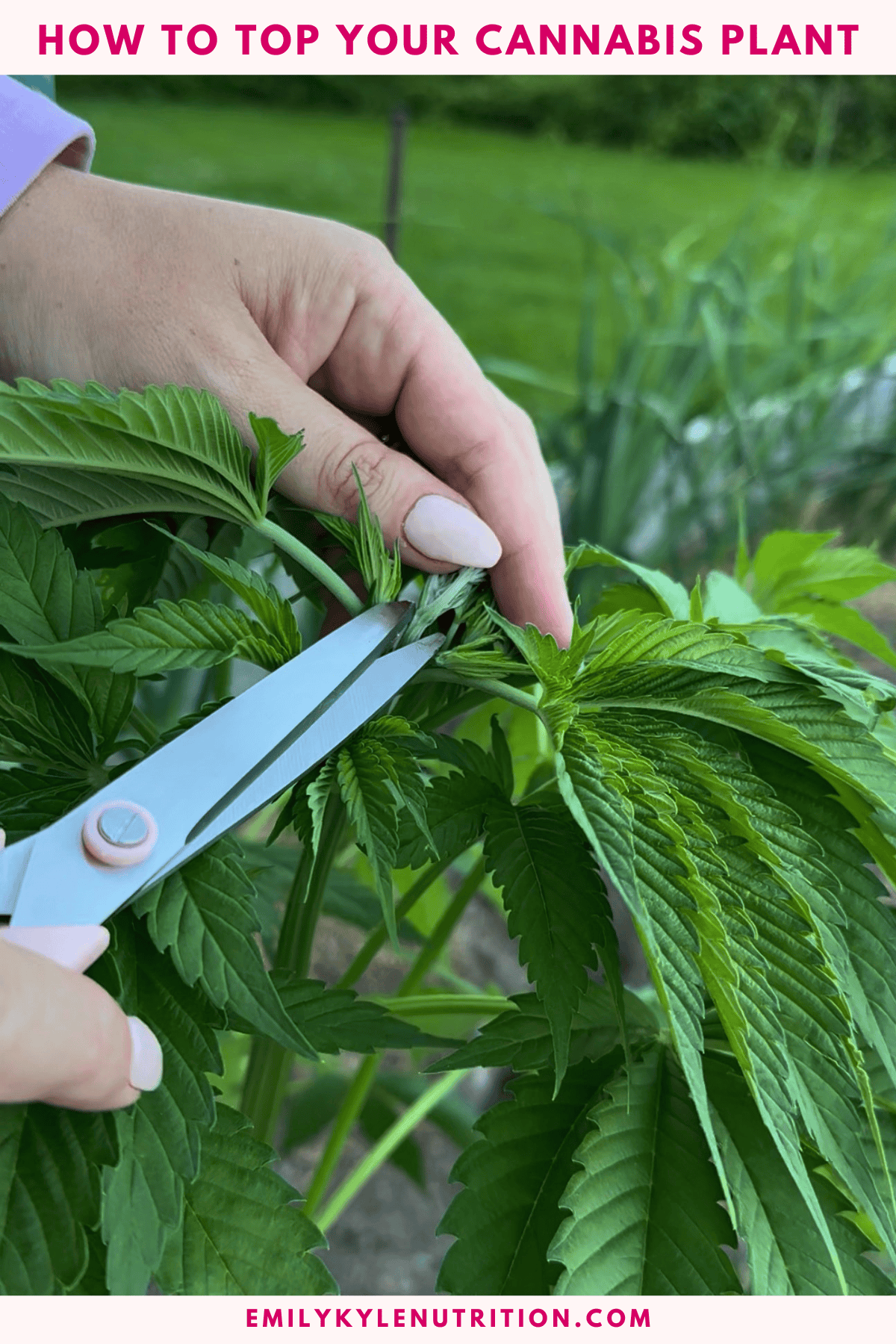
Nodes are the points along the plant’s main stem where new branches, leaves, and bud sites emerge. Picture the stem as a ladder, and each rung of that ladder is a node. As your plant grows taller, it develops more and more nodes, each one representing a new branching point.
In between each node is what’s called an internode, the stretch of bare stem between growth points.
When growers talk about “the 5th node,” they simply mean the 5th set of branches counting up from the base of the plant.
🍃 Tip: You can count your nodes by starting at the bottom of the plant and counting each place where you see a pair of branches or leaves growing out from the main stem.
When to Top Your Plant
Timing is everything when it comes to topping, and this is where many beginners make their first mistake by moving too fast.
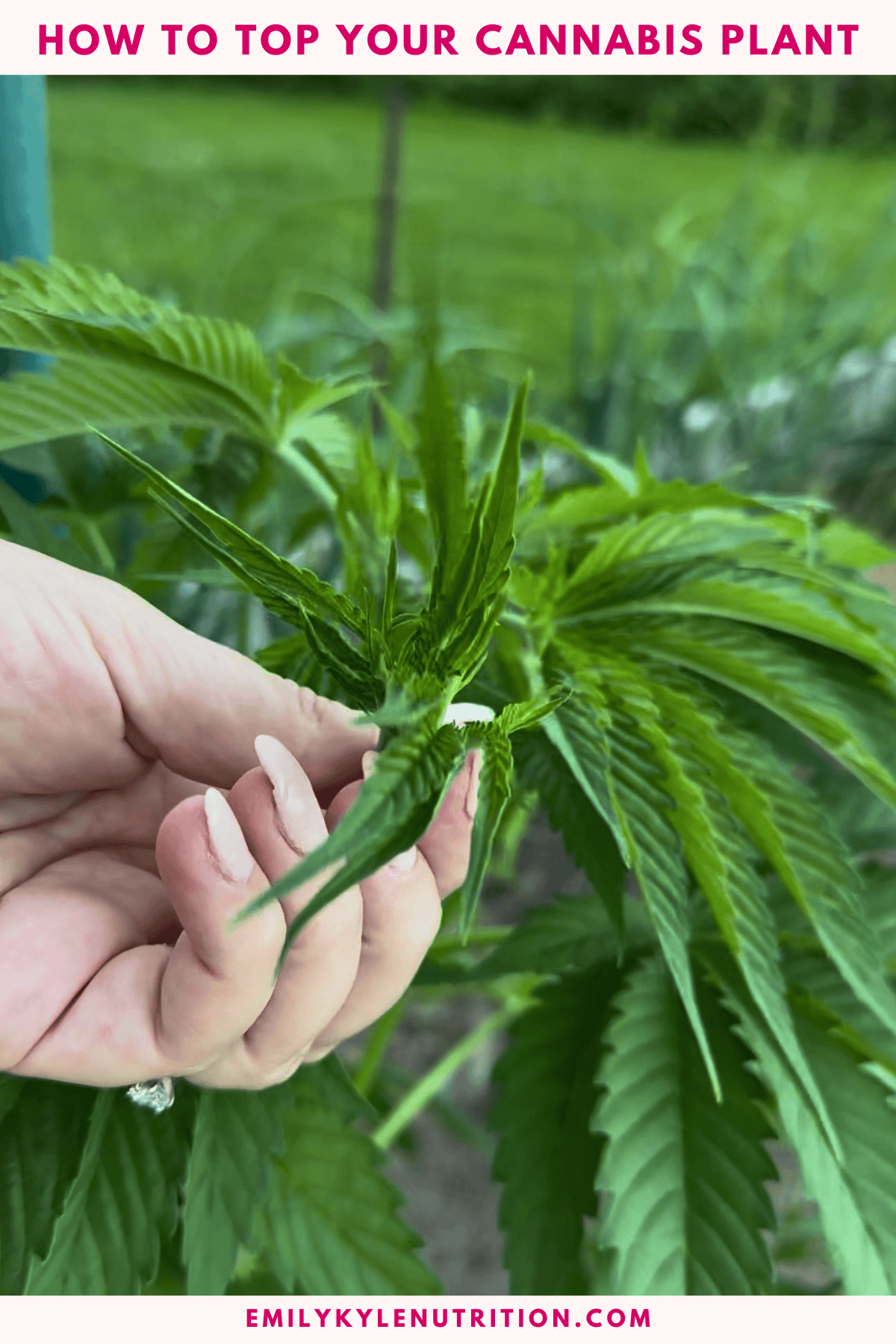
The sweet spot is between the 4th and 5th node.
Here’s why: you want the plant to be established enough to handle the stress of being cut, but still young enough that it bounces back quickly and redirects that energy into new growth.
- Too early (before node 4): The plant is too young and small. Cutting too soon can stunt growth significantly and cause the plant to struggle.
- Too late (after node 6 or 7): The plant has already invested a lot of energy into upward growth, and the recovery time eats into your vegetative window.
In practical terms, you’re looking for a plant that is 4–6 weeks into the vegetative stage when growing from seed, though this can vary depending on your strain and growing conditions. Watch the nodes, not the calendar.
🍃 Tip: Never top a plant that is already stressed, whether from underwatering, nutrient issues, or transplant shock. Always top a happy, healthy plant.
How to Top a Cannabis Plant Step-by-Step
Ready to give it a try? Here’s exactly what to do.
What you’ll need:
- Clean, sharp scissors or pruning shears
- Isopropyl alcohol to sterilize your tools
- A healthy plant at the 4th or 5th node
Step 1: Sterilize your tools. Wipe down your scissors or shears with isopropyl alcohol before cutting. This is important to prevent introducing any bacteria or pathogens into the fresh cut site.
Step 2: Identify your 4th or 5th node. Count up from the base of the plant. You want to make your cut just above the 4th or 5th node, which means you’ll be removing the growth above it.
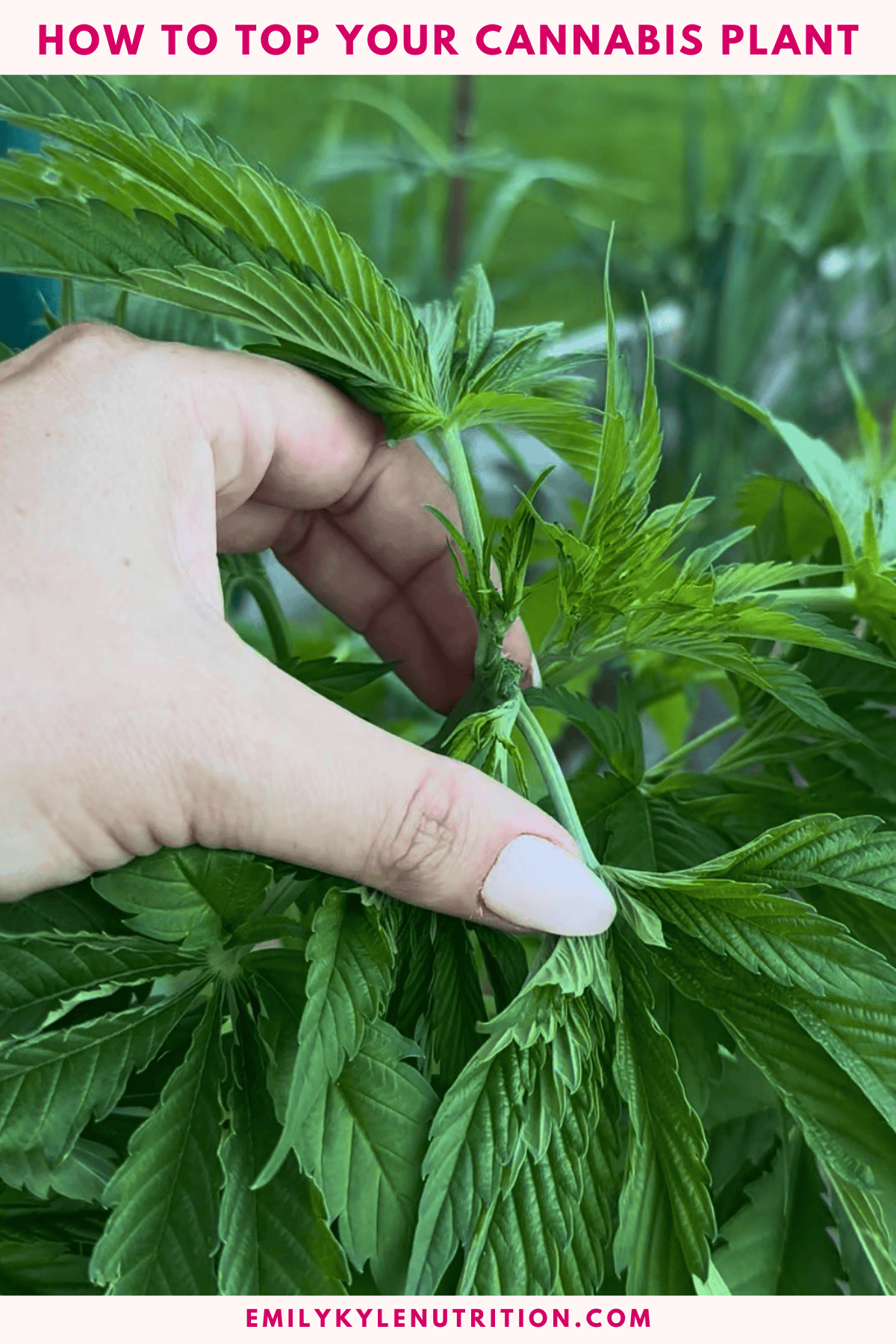
Step 3: Make a clean cut. Cut the main stem cleanly just above the node. You’re removing the new growth tip at the very top, that small, tender cluster of leaves at the apex of the plant. One clean snip is all it takes.
Step 4: Leave the plant alone. This part can feel hard! After topping, resist the urge to fuss over the plant. It may look a little droopy or sad for a day or two as it recovers. That’s completely normal.
Step 5: Watch the magic happen. Within a few days, you’ll start to see two new shoots emerging from the node where you made your cut. These two shoots will grow into your new main branches, eventually becoming two robust colas.
🍃 Tip: The cutting you removed can be used as a clone if you’re interested in propagating your plant! Just trim the lower leaves and place the cut end in water or a rooting medium.
Can You Top More Than Once?
Yes, and many growers do!
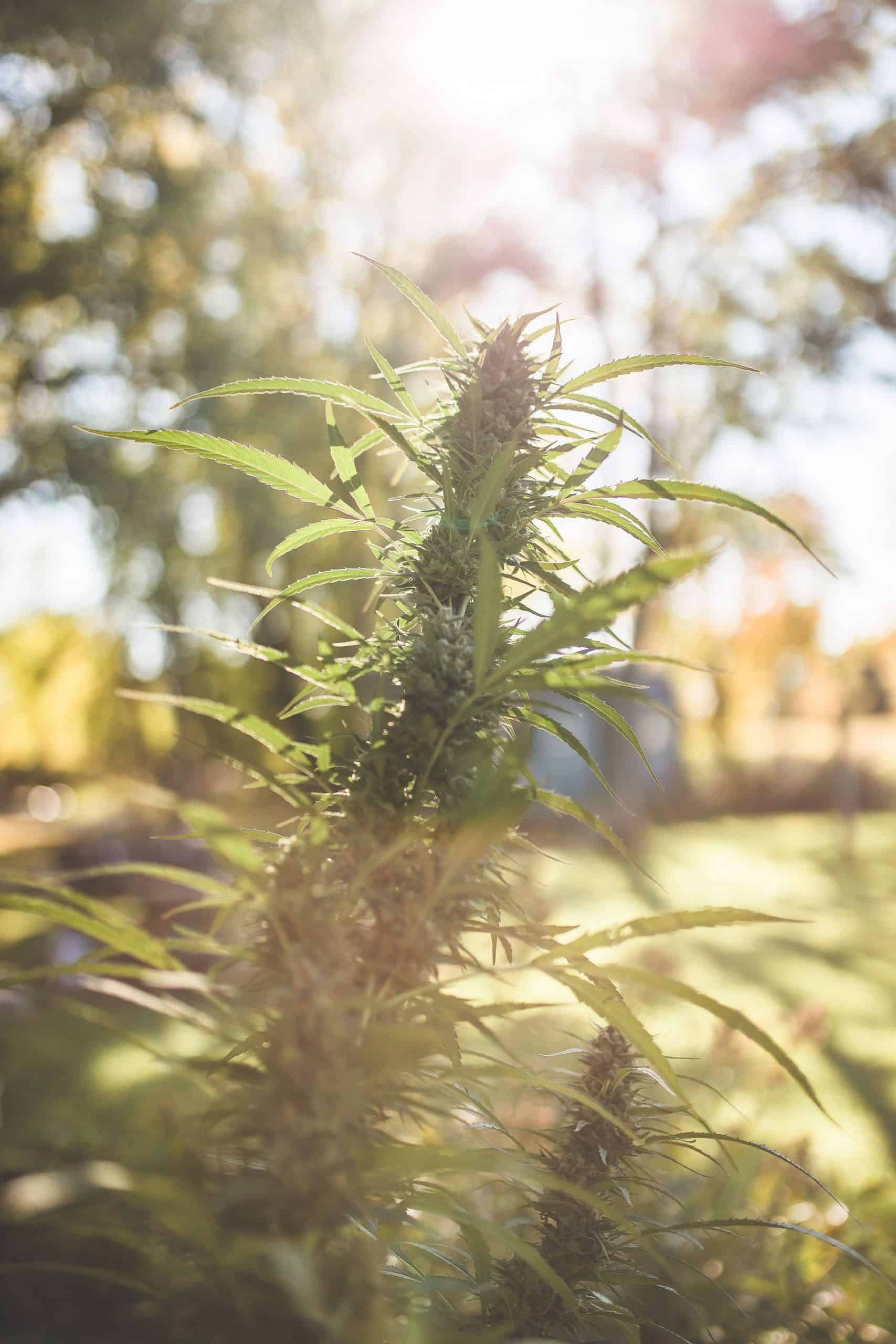
The first topping turns one main cola into two. But you can top again later in the season to turn those two branches into four, and so on.
A few things to keep in mind for a second topping:
- Wait until the plant has fully recovered from the first topping and has developed new healthy growth before cutting again. This usually takes 1–2 weeks.
- The plant should still be in its vegetative stage. Never top once the plant has entered flowering, as this will stress it at a critical time and negatively impact your yield.
- Each topping multiplies your cola count, but also extends the time your plant needs in veg to develop fully. If you’re working with a shorter growing season outdoors, plan accordingly.
🍃 Tip: Many experienced growers top twice, ending up with 4 main colas. This tends to be the sweet spot for a manageable outdoor plant with a significantly improved harvest.
What to Expect After Topping
The days right after topping can feel a little nerve-wracking for first-time growers, so here’s what’s normal and what to watch for.
Normal recovery signs:
- Slight wilting or drooping in the first 24–48 hours
- Slowed upward growth for a few days while the plant adjusts
- Two new shoots beginning to emerge within 3–7 days
Signs something might be wrong:
- The cut site looks brown, mushy, or shows signs of rot (usually caused by unsterilized tools)
- The plant doesn’t show new growth after 7–10 days
- Leaves are yellowing or curling in ways unrelated to the cut site
If your plant is healthy and well-cared-for going into the topping, the recovery is usually smooth and fast. The plants I topped last summer with my Blue Dreams bounced back beautifully within a week and then absolutely took off.
Common Mistakes to Avoid
Topping too early. Patience is key. Wait for that 4th or 5th node.
Using dull or dirty tools. A ragged cut or contaminated blade can cause problems. Always sterilize and always use sharp scissors.
Topping a stressed plant. If your plant is already dealing with a problem, topping adds more stress on top of it. Address any issues first.
Topping during flowering. Once buds have started forming, the plant’s energy is fully committed to reproduction. Topping at this point causes stress without any of the training benefits.
Expecting instant results. The bushy, multi-cola plant you’re picturing takes time to develop. Trust the process!
Is Topping Right for You?
Topping is a wonderful technique, but it’s worth knowing it works best with photoperiod plants, which have a longer vegetative stage to develop and recover.
If you’re growing autoflowering plants, topping is generally not recommended. Autoflowers have a very compressed life cycle and limited time in veg, so the stress of topping often does more harm than good.
For photoperiod growers, especially those growing outdoors with a full season ahead, topping is one of the simplest ways to meaningfully improve your harvest without any extra equipment or complex techniques. All you need is a pair of clean scissors and a little bit of courage.
I wish I had tried it sooner. But last summer showed me exactly what I was missing, and I’ll be topping every season from here on out.
More Growing Resources for You

Articles & How-To Guides
A More Accurate Edible Dosage & Potency Calculator
Articles & How-To Guides
How to Evaporate Alcohol From Tinctures
Holistic Health
Easy, Rejuvenating CBD Caffeine Eye Serum
Articles & How-To Guides
Easy Beginner’s Guide to Cannabis Decarboxylation
Happy growing!










Will you be sharing side-by-side pictures of your Topped/Non-topped Blue Dreams?
I will definitely post a video on social!
Looking to grow my own plant
Hey Chuck, this guide is a great place to start.