

Have you walked out to your garden and noticed white, dusty spots on your leaves, almost like someone sprinkled flour on them? If so, you might be dealing with powdery mildew. I’ve had it once, so I know that sinking feeling well. The good news is that it’s manageable. In this guide, I’ll share what happened in my garden, how to tell powdery mildew apart from other problems, the simple treatment that worked for me, and how to keep it from coming back.
Table of Contents
TL;DR: I got rid of powdery mildew using 3% hydrogen peroxide diluted 1:9 (1 part peroxide to 9 parts water). Spray affected leaves, tops and undersides, every few days until the mildew is gone. Test a few leaves first and spray in the evening or on a cloudy day to avoid leaf burn.
Why You’ll Love This Guide
This guide comes from real experience in my own garden, not a textbook. In seven years of growing, I’ve dealt with powdery mildew just once, and it happened during one of the hardest seasons of my life.
My father-in-law, the person who taught me how to grow, passed away in early June that year. I couldn’t bring myself to start my seeds, so for the first and only time, I bought clones so I’d still have a garden.
Later that August, I spotted white, dusty patches on the leaves. It was my first time seeing powdery mildew on my own plants.
I still don’t know exactly where it came from. It could have been the clones, the soil, or the genetics. What I do know is that I’ve never had it in a season I started from seed. One year of clones and one outbreak isn’t proof, so take my theory as a clue, not a rule.
What I can tell you for sure is that I caught it, treated it, and got rid of it. I’ll walk you through exactly what I did, so if you’re staring at those white spots right now, you’ll know what to do next.
What Is Powdery Mildew?
Powdery mildew is a common fungus that shows up on all kinds of garden plants, including cannabis plants.
If you’ve grown squash, cucumbers, zinnias, or bee balm, you’ve probably seen it before. It grows right on the surface of the leaves as a white, powdery coating.
A few spots won’t ruin your plant. But left alone, powdery mildew spreads from leaf to leaf, blocks the sunlight your plant needs, and can eventually reach your buds late in the season.
How to Spot Powdery Mildew
- White or gray powdery patches, usually on the upper side of the leaves first. It looks like someone dusted the leaf with flour.
- It rubs off, at least at first. Wipe a spot with your finger and you’ll see a chalky smear.
- It spreads. Small round spots grow, merge, and can eventually cover whole leaves.
- Later signs include yellowing, curling, or crispy leaves and slower growth.
Powdery Mildew vs. Trichomes
This is the question I get most, because both look white at first glance. Here’s how to tell them apart, because trichomes are something we do want:
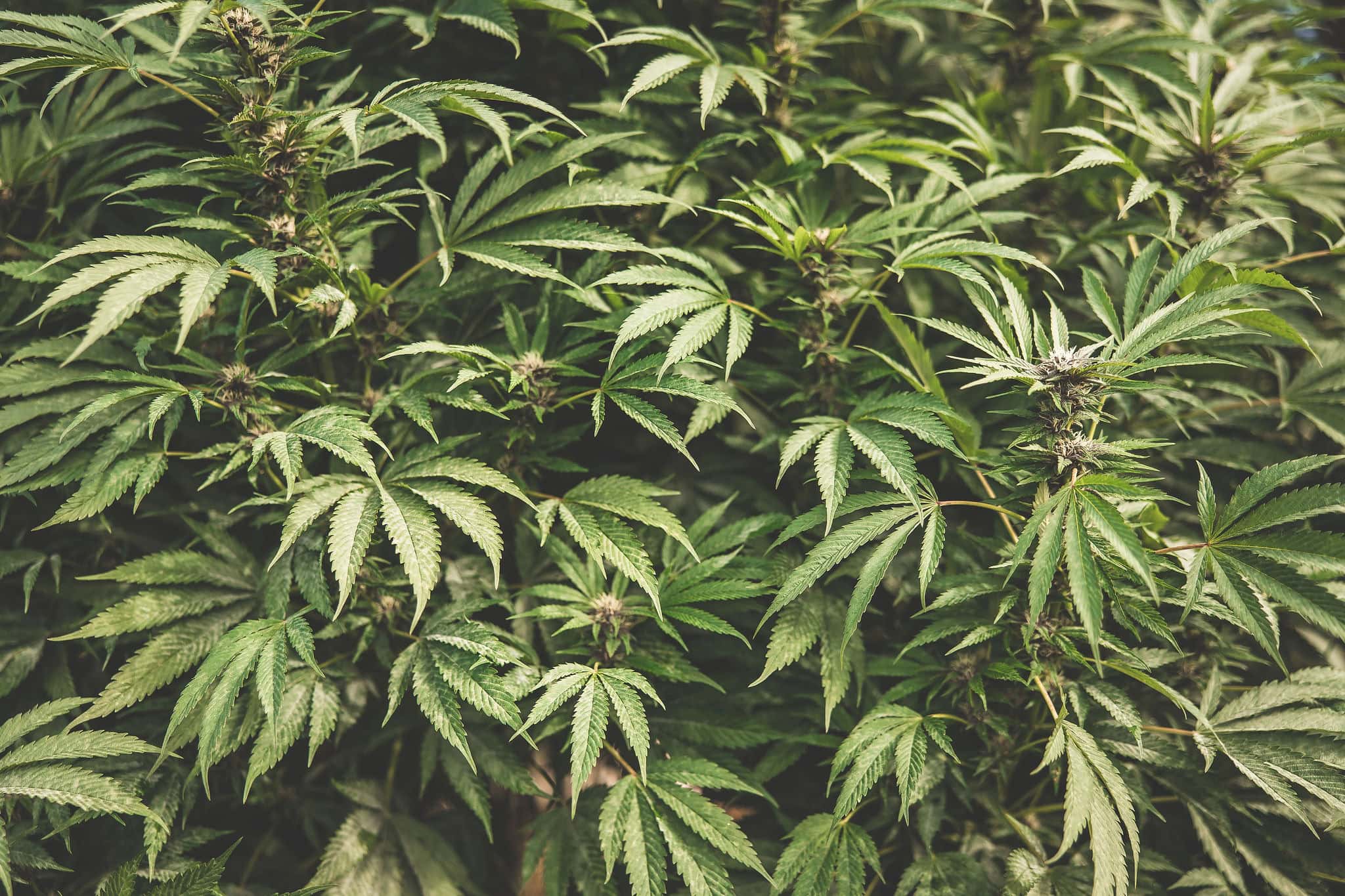
- Where it shows up: Powdery mildew usually starts on the tops of the big fan leaves. Trichomes cover your buds and the small sugar leaves around them.
- How it looks: Powdery mildew is flat, dull, and chalky. Trichomes are shiny and glassy, like tiny crystals.
- The finger test: Powdery mildew smudges off like dust. Trichomes stay put and feel sticky.
- Under a jeweler’s loupe: Trichomes look like tiny mushrooms with a stalk and a round head. Powdery mildew looks like fine, thread-like webbing.
Want to know more about the good stuff? Here’s my guide to cannabis trichomes.
Other Look-Alikes
- Spray or mineral residue doesn’t spread and doesn’t look fuzzy under a magnifier.
- Spider mites leave tiny speckles and fine webbing, not a powder.
- Bud rot is gray, mushy, and starts inside the bud. It’s a much more serious problem. Here’s how to spot bud rot.
Why Powdery Mildew Happens
Unlike bud rot, powdery mildew doesn’t need rain to get started. It thrives with:
- Warm days followed by cool, humid nights
- Humidity swings, especially in the evening
- Poor airflow and crowded plants
- Shade and still air
- Stressed plants
Its spores travel on the air, so it can arrive on new plants like clones, from nearby garden plants, or simply on the wind. That’s why it often shows up in late summer and early fall, right when your plant is flowering.
What Worked for Me: Hydrogen Peroxide
When I found powdery mildew on my plants before they started flowering, here’s exactly what I did:
- Isolate the plant if you can, so it doesn’t spread.
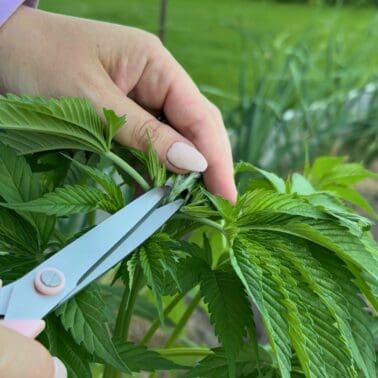
- Remove the worst leaves and throw them away. Bag them before carrying them out so spores don’t spread. Don’t compost them.
- Mix the solution: 1 part 3% hydrogen peroxide to 9 parts water. Mixing in a dedicated spray bottle makes it easier.
- Test first. Spray one leaf and wait a day to make sure it doesn’t burn or spot.
- Spray the tops and undersides of the leaves in the early morning or on a cloudy day, so the leaves dry before nightfall and aren’t in strong sun.
- Repeat every few days, until you’ve gone a full week without any new patches.
Peroxide works best as a surface treatment on early infections. If a plant is heavily covered, it’s much harder to turn around, so catching it early makes all the difference.
Other gentle options: some gardeners use a diluted milk spray or an organic potassium bicarbonate product labeled for powdery mildew. Whatever you choose, follow the label and test a few leaves first.
If Your Plant Is Already Flowering
Don’t spray your buds with anything. Whatever you spray on your plant now will end up in your harvest, and in the oils, butters, and tinctures you make from it. Moisture on dense buds also invites bud rot.
Instead, carefully remove any leaves with mildew, open up the plant for airflow, and watch your buds closely.
If mildew starts spreading onto the buds and most of your trichomes are cloudy, it may be time to harvest. Here’s how to tell when it’s time.
Are Leaves and Buds With Powdery Mildew Safe to Use?
As a dietitian, my advice is to never use anything with visible mildew on it.
That includes fan leaves you were planning to juice, blend, or dry for tea. Remove any affected leaves and throw them away.
The same goes for buds. If a bud has visible mildew, don’t smoke it, eat it, or infuse it. Rinsing won’t make a coated leaf or bud safe, and neither will cooking or decarbing it.
Mold is especially risky for anyone with asthma, allergies, or a weakened immune system.
Buds and leaves from clean parts of the plant are fine to use. Just inspect them closely, and wash your leaves well before using them in the kitchen. My fan leaf prep guide walks you through it.
How to Prevent Powdery Mildew
- Plant in full sun. Powdery mildew loves shade.
- Give plants plenty of space so their branches don’t touch.
- Prune for airflow by removing some lower leaves and crowded inner growth as the season goes on.
- Water the soil in the morning, right at the base of the plant.
- Add a fan if you grow indoors or in a greenhouse.
- Go easy on fertilizer. Soft, extra-lush growth is easier for mildew to take hold of.
- Quarantine new plants. Inspect clones or nursery plants carefully and keep them away from your garden for a week or two. This is the lesson I took from my own outbreak.
- Choose mildew-resistant strains, or start from seed. Here’s where I buy seeds.
- Clean up in the fall. Throw away infected leaves and plant debris instead of composting them.
Frequently Asked Questions
Different plants usually get different types of powdery mildew, so it may not jump from your squash to your cannabis. But the same weather helps all of them grow. If you see it on your other plants, it’s a good time to check yours closely.
Usually not, if you catch it early. A few spotted fan leaves are very manageable. It becomes a bigger problem when it spreads onto the buds, so check your plants often as harvest gets closer.
No. Powdery mildew grows on the outside of leaves, while bud rot grows deep inside the buds. Learn how to spot it in my guide to bud rot.
Only leaves that are completely clean. Skip any leaf with spots, and wash and inspect the rest carefully before using them.
The Bottom Line
Powdery mildew is common, and it doesn’t mean you did anything wrong. It happened to me once, and I got through it.
Learn to tell it apart from trichomes, treat it early, keep air moving through your plant, and never use anything with visible mildew.
When harvest day comes, my step-by-step guide on how to harvest outdoor cannabis plants has you covered, and you’ll find everything else in my harvest guide hub.
More Growing Guides You Will Love
Harvesting Cannabis
Bud Rot: How to Spot It, Stop It, and Save Your Harvest
Growing Cannabis
Fertilizer for Beginner Outdoor Growers: What I Use and Why
Harvesting Cannabis
The Cannabis Bouquet: A Two-in-One Use for Your Trimmings
Articles & How-To Guides











This is the fourth year I have grown cannabis. Four plants. And this year they developed Powderly Mildew. I have already harvested some buds from some of the plants. What I have done is pruning out the leaves. I could not detect the mildew on the buds. Most of the buds go into production of salve. I know I lose some of the trichones in cutting out the leaves. And I save some of the better buds for smoking. Just thought I would share my experience.
Thanks for sharing, Dave! Pruning the affected leaves was smart. I’d look over the buds closely before using them, since mildew can hide deep in the flower.