
You’ve waited all season for these buds, and now there’s a brown, crispy leaf poking out of one that wasn’t there yesterday? Take a deep breath, because bud rot is common in outdoor grows, especially during a damp fall, and catching it early can save the rest of your plant. In this guide, I’ll show you how to spot bud rot, what to cut away, whether any of it is safe to use, and how to protect the rest of your harvest.
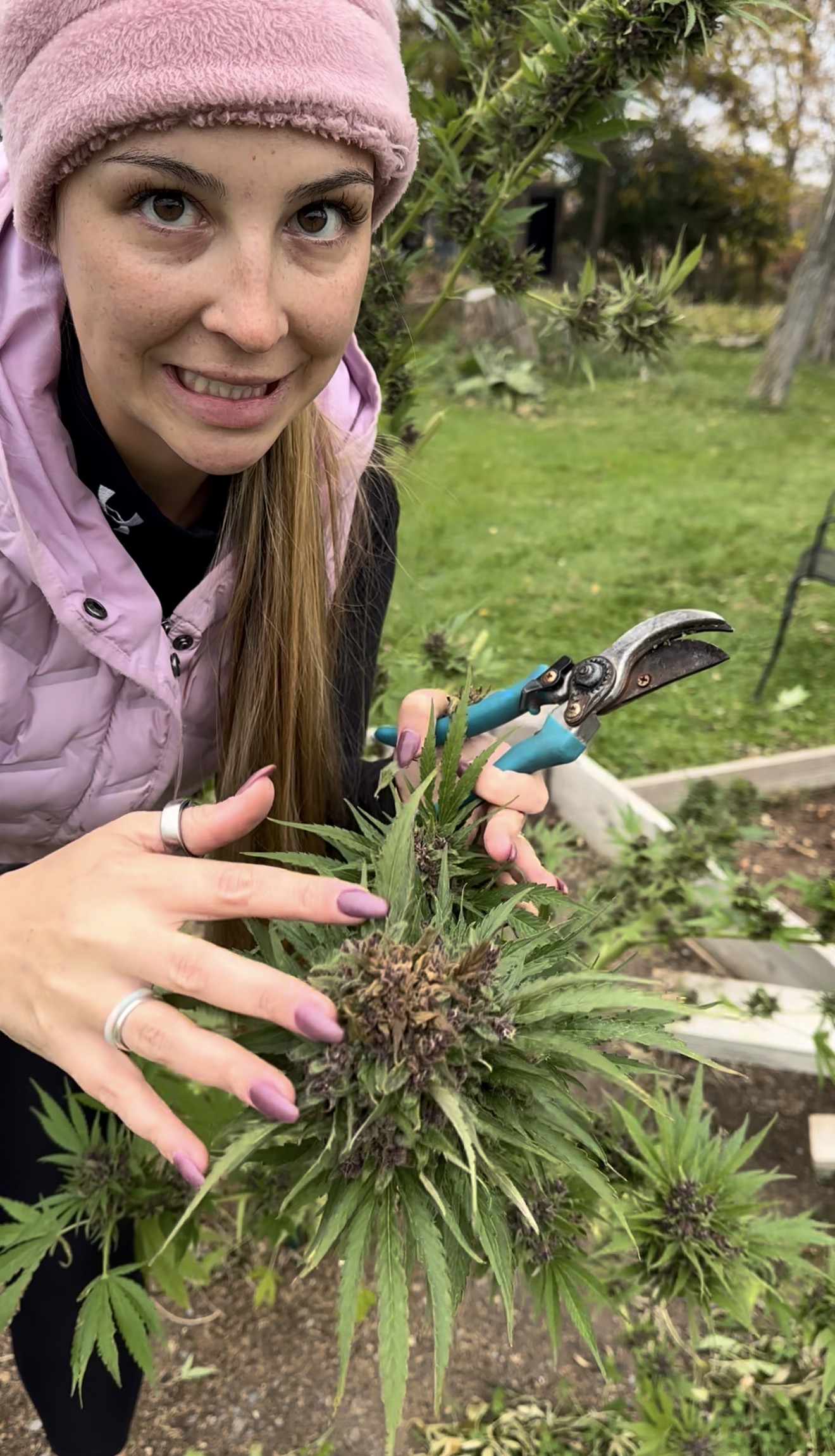
Table of Contents
Why You’ll Love This Guide
I’ll be honest, bud rot has happened to me too. The first time I found it, my heart sank a little. But here’s the good news: it’s not the end of the world. If you catch it early and act fast, you can usually save the rest of your harvest.
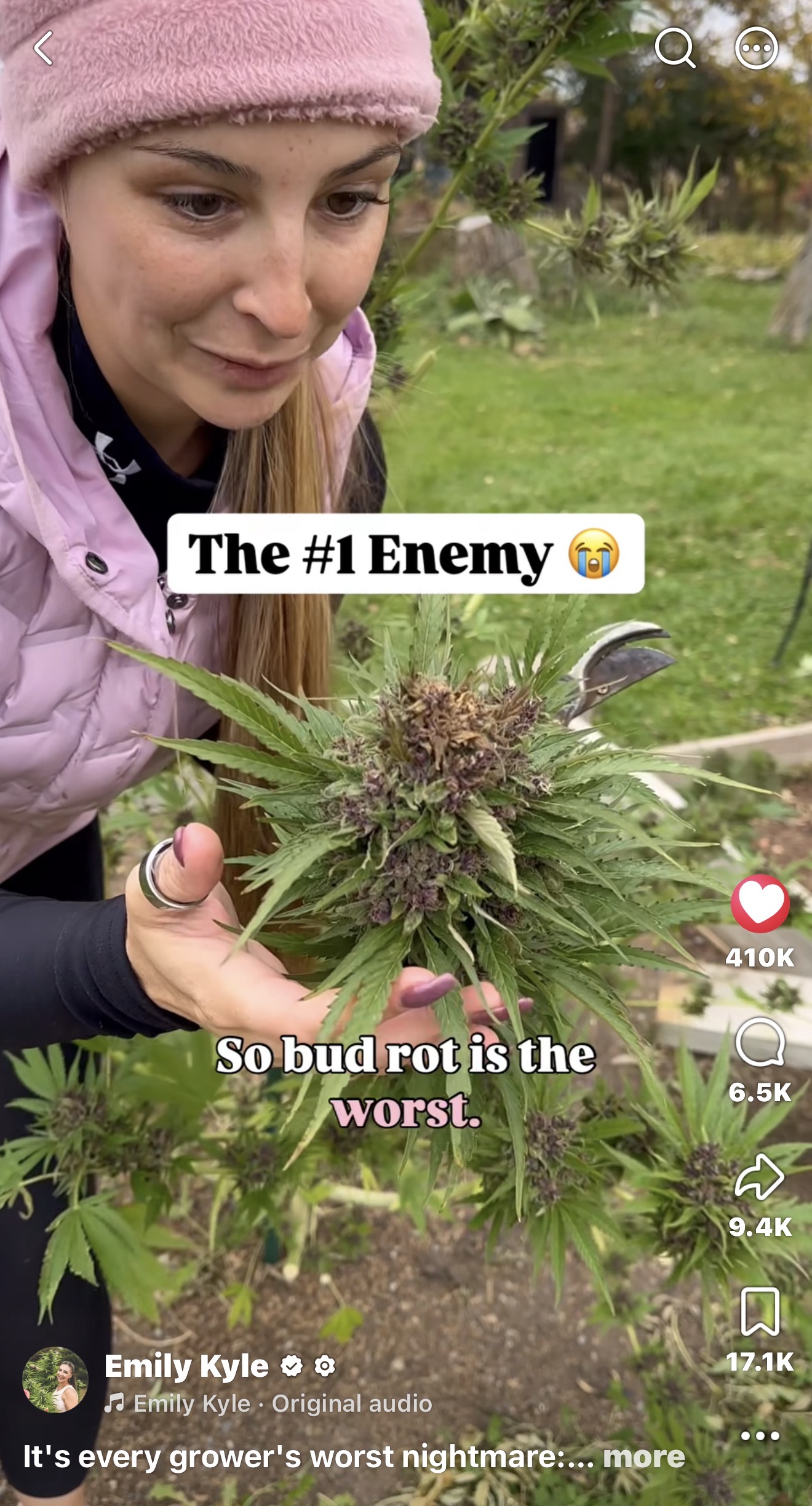
I actually shared a video about this exact problem on Facebook last year, and it ended up getting over 22 million views.
That told me something: this isn’t just my problem, it’s one of the most common heartbreaks growers run into, and most of us are figuring it out the same way, one moldy bud at a time.
This guide walks you through exactly what to look for and what to do, so you can handle it calmly and save the rest of your crop.
What Is Bud Rot?
Bud rot is a gray mold caused by a fungus called Botrytis cinerea. It’s the same fungus that shows up on strawberries, grapes, and peonies in the garden.
Common for outdoor cannabis grows, it starts deep inside the thickest buds, where moisture gets trapped, and slowly works its way out.
That’s what makes it tricky. By the time you can see it on the outside, it has usually been growing on the inside for several days.
Why Bud Rot Happens
Bud rot loves cool, wet weather and still air. That’s exactly what fall brings in many parts of the country: rainy days, heavy morning dew, and chilly nights.
Big, dense buds are most at risk because they hold water in their centers and take the longest to dry out.
Watch closely when you see:
- Several days of rain or fog in a row
- Heavy dew that stays on your buds into late morning
- Cool nights followed by damp, cloudy days
- Crowded plants with little airflow between branches
- Very large, dense top buds (colas)
How to Spot Bud Rot Early
Once your buds are fattening up, check your plants every day, and always after it rains. Here’s what to look for:
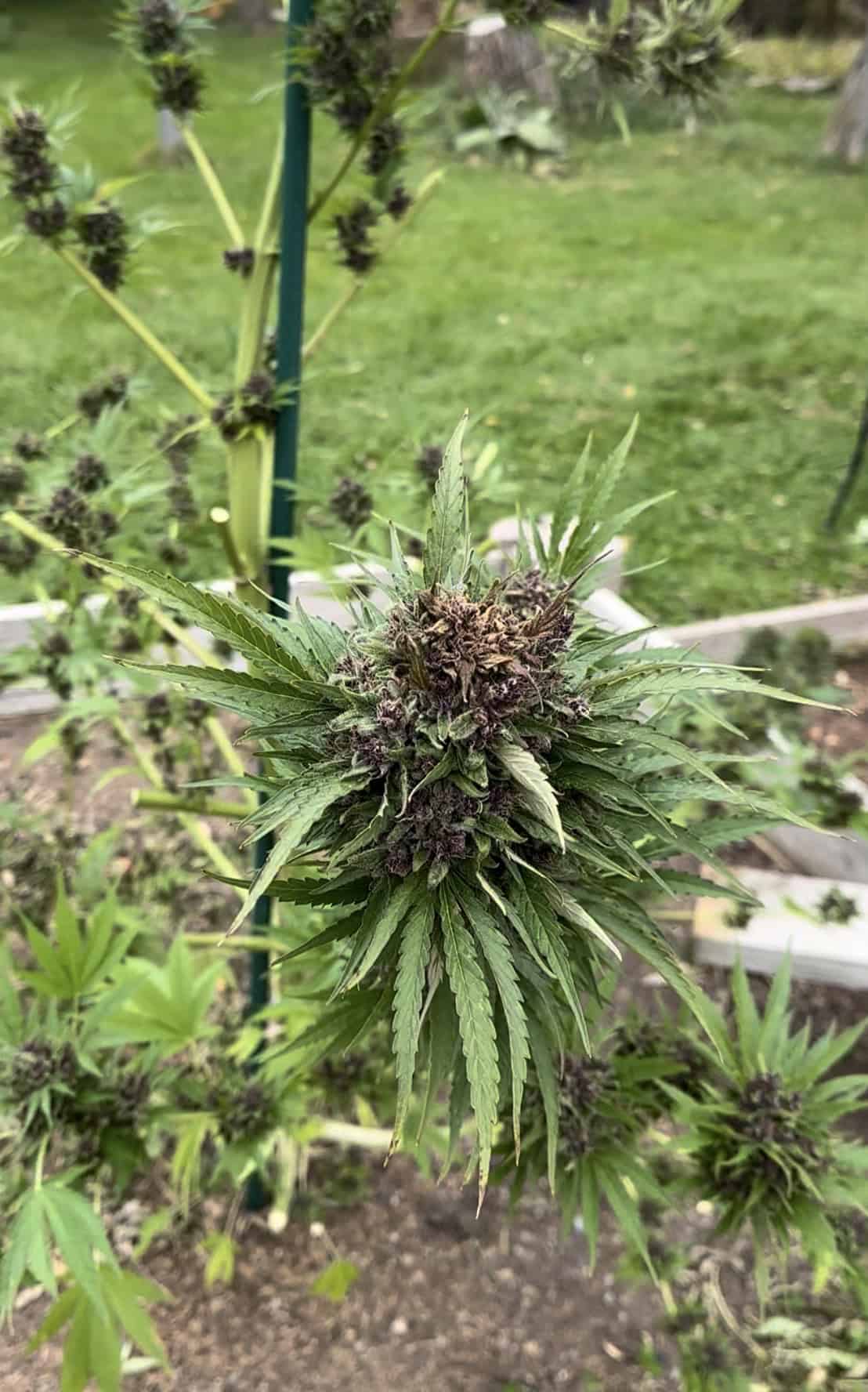
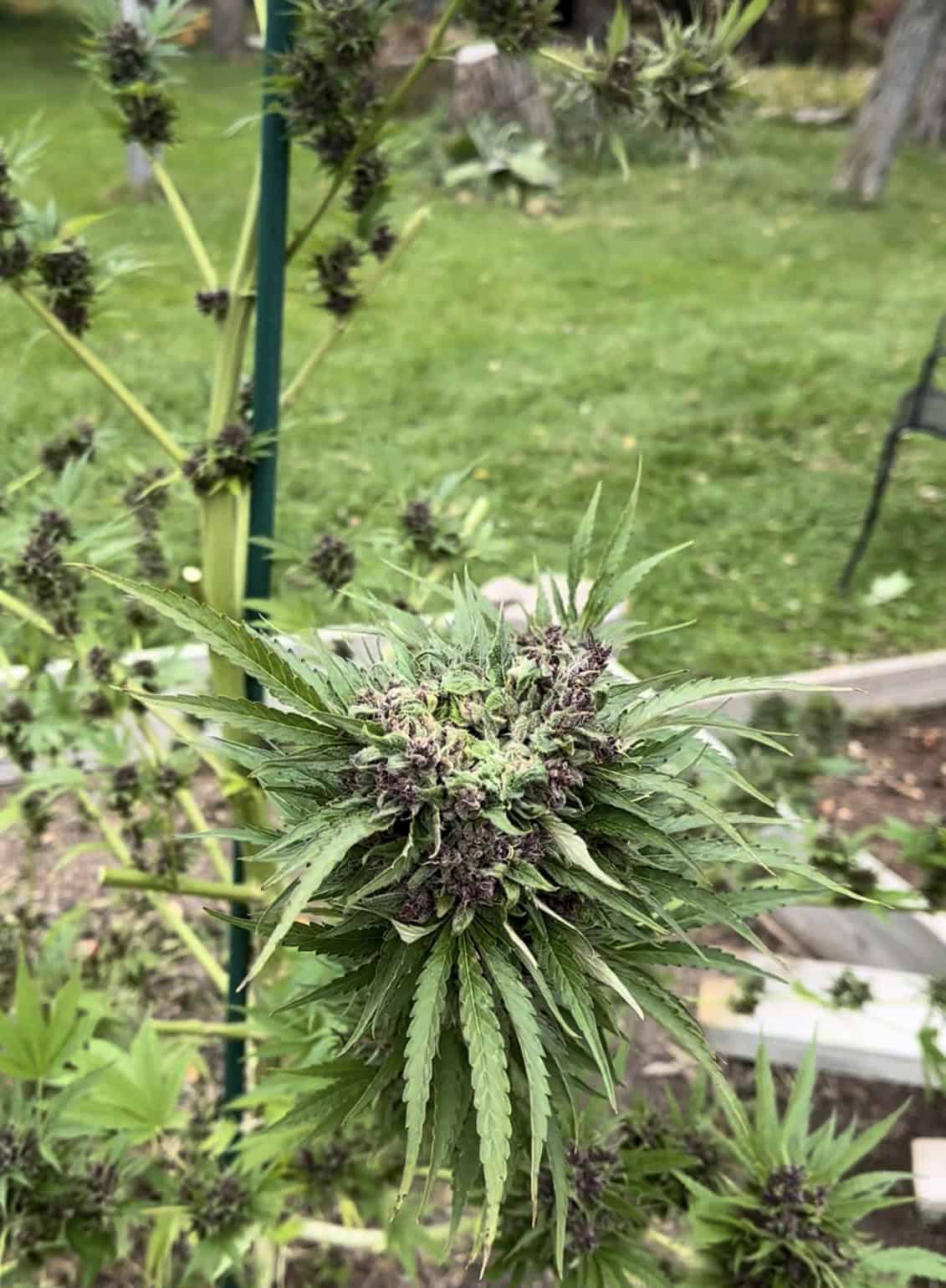
- A single sugar leaf or small leaf sticking out of a bud that turns yellow, then brown and dry, while the leaves around it stay green
- A leaf that pulls right out of the bud with no resistance
- A spot on a bud that looks dull, sunken, or discolored
- Brown, mushy tissue when you gently pull the bud open
- Gray or white fuzz, which means the mold is making spores and can spread easily
My tip: Gently spread open the biggest top bud on each plant. If the inside is brown and soft, you’ve found it. If it’s green and firm, you’re in good shape.
What to Do When You Find It
Don’t panic, and don’t wait. Bud rot won’t go away on its own, so act the same day you find it.
Optional: Wear a mask when you’re removing infected buds. Botrytis spores can trigger allergic reactions or irritate your lungs, especially if you’re sensitive to mold. Better to protect yourself while you’re cutting it out than to deal with a reaction afterward.
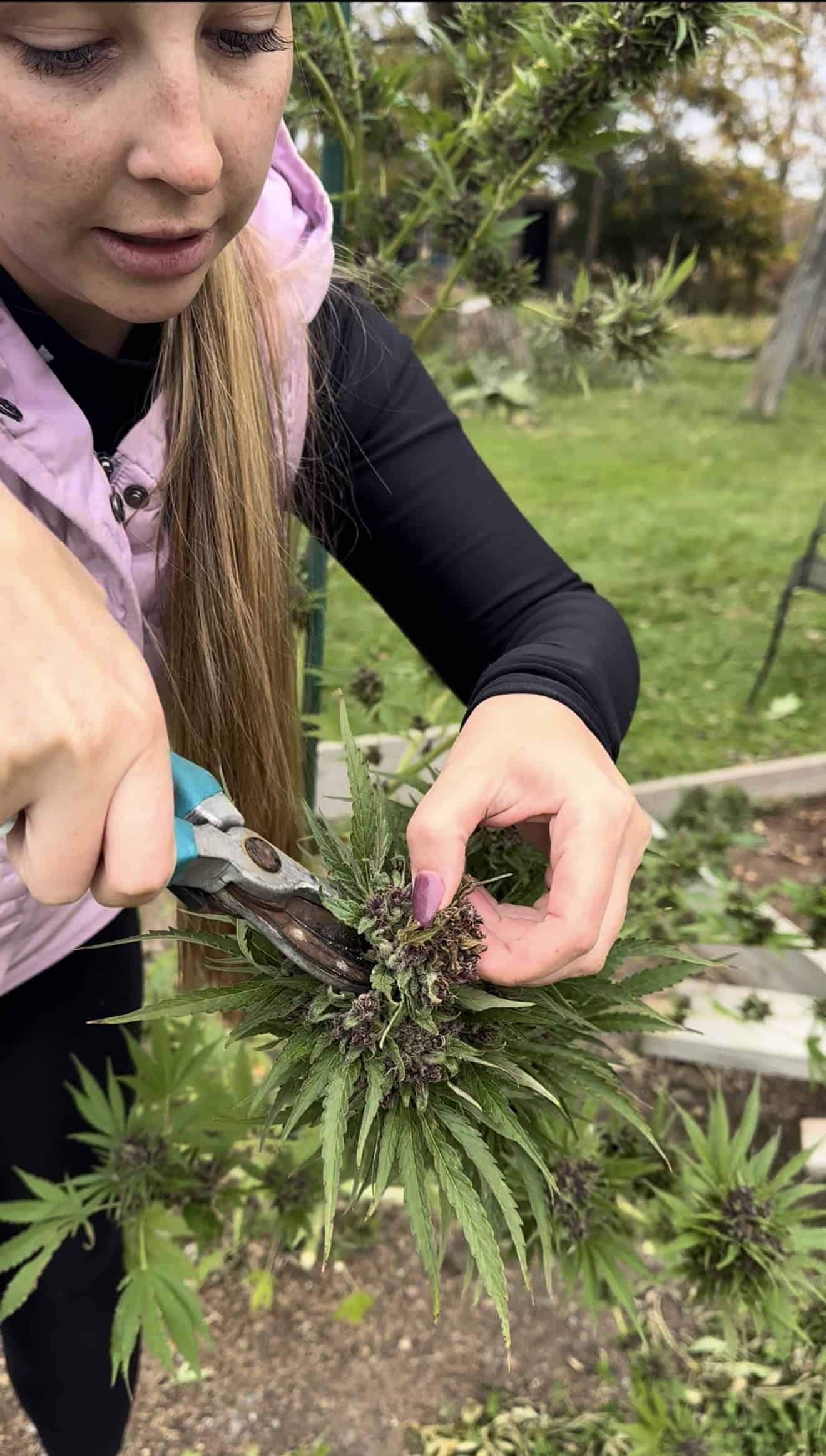
- Grab a paper or plastic bag and a pair of clean snips.
- Slip the bag over the bud before you cut, so spores don’t fall onto the healthy buds below.
- Cut a few inches below the rot, into healthy green stem.
- Check the buds right next to it, since rot often travels along a branch.
- Wipe your snips with rubbing alcohol before you touch anything else.
- Throw the bag in the trash, not your compost pile. This fungus can survive the winter and come back next season.
Is Moldy Cannabis Safe to Use?
As a dietitian, my answer is simple: no. Don’t smoke, eat, or infuse any bud with rot, and don’t try to cut around the brown spot to save the rest of that bud.
Mold is not something you want in your lungs or in your food, and it’s especially risky for anyone with asthma, allergies, or a weakened immune system.
Heat from cooking or decarbing does not make moldy plant material safe. When in doubt, throw it out.
The good news? The healthy buds on the rest of your plant are still perfectly fine to harvest and use.
Should You Harvest Early?
If you find bud rot and the forecast shows more rain, it’s often smarter to harvest now than to risk losing more of your plant.
Check your trichomes with a jeweler’s loupe.
If most of them are cloudy, your buds are ready enough, and you’ll likely lose more to rot than you’d gain by waiting a few more days. Learn how to read them in my guide on when to harvest cannabis.
You can also harvest in stages. Take the biggest, densest top buds first, since they’re most at risk, and let the smaller side buds keep ripening.
How to Prevent Bud Rot
- Prune for airflow. In late summer, remove some lower fan leaves and crowded inner growth so air can move through the plant. Save those fan leaves for the kitchen with my fan leaf prep guide.
- Give plants room. Space plants so their branches don’t touch.
- Shake off the water. After rain or heavy dew, gently shake your plants so water doesn’t sit inside the buds.
- Water the soil, not the plant. Water in the morning, right at the base.
- Cover up during long rainy stretches. A simple rain shelter or tarp over the top helps, as long as the sides stay open for airflow.
- Choose mold-resistant strains next year, especially if you live somewhere with a wet fall. Here’s where I buy seeds.
- Keep your drying room dry, too. Bud rot can start after harvest if buds dry too slowly in a humid room. See my guide to drying cannabis.
Frequently Asked Questions
Yes. If an infected bud goes into your drying room, the mold can keep growing and spread to your other buds. Inspect every bud before you hang it, and keep your drying space well ventilated. Here’s how I set up my drying room.
As plants finish, older fan leaves naturally yellow from the bottom of the plant up. That’s normal. Bud rot looks different: it’s a single leaf dying from inside a bud, usually near the top of the plant, while everything around it stays green. When in doubt, gently open the bud and look.
Healthy fan leaves from other parts of the plant are fine if they have no spots, fuzz, or browning. Skip any leaf that was touching the rotted bud, and wash and inspect every leaf before you use it.
It can. Advanced rot often smells musty, like damp leaves or a wet basement, instead of the plant’s normal fresh scent.
No. Bud rot grows inside the buds, while powdery mildew is a white, dusty coating on the tops of leaves. Learn how to spot it in my guide to powdery mildew.
The Bottom Line
Bud rot is one of the most common ways outdoor gardeners lose part of their harvest, and it happens to experienced growers every year.
Check your plants daily, cut out any rot as soon as you see it, and don’t be afraid to harvest a little early when the weather turns.
When you’re ready, my step-by-step guide on how to harvest outdoor cannabis plants walks you through harvest day, and you’ll find everything else in my harvest guide hub.
More Guides You Will Love
Growing Cannabis
Powdery Mildew on Cannabis: How to Spot and Treat It
Harvesting Cannabis
When to Harvest Cannabis: How to Read Trichome Colors

Harvesting Cannabis
How to Cure and Store Cannabis: Simple Mason Jar Method
Harvesting Cannabis