

Quick answer: To calculate edible potency, multiply the weight of your cannabis by its THC or CBD percentage, adjust for decarb and infusion losses, then divide the total by the number of servings.
Hello and welcome! This calculator does the cannabis math for you, so you can find the exact THC and CBD potency of your homemade edibles in just a few seconds. Start in Step 1 below by entering the details of your infused product, such as cannabutter or cannabis oil. This large batch can later be used in your recipe using the second section of this calculator.
If you’re not sure what information to put here, scroll down and read the How This Calculator Works section below.
📲 Step 1: Calculate Your Batch Potency
|
Starting Amount of Cannabis Product in Grams
Enter the weight of the flower or product you infused, in grams.
|
|
|
THC/THCA %
Enter the percentage from your product label, e.g. 15 for 15%.
|
|
|
CBD/CBDA%
Enter the percentage from your product label, e.g. 5 for 5%. Leave 0 if none.
|
|
|
Type of Oil or Alcohol Used
Pick what you infused into. This sets the absorption rate used in the math.
|
|
|
Amount of Oil or Alcohol Used
How much oil or alcohol you used to make the full batch.
|
|
|
Account for the loss associated with Decarboxylation?
Check this box if you decarbed your product and want to account for the natural loss associated with the process.
|
Potency Results For The Entire Batch
|
Total mg of THC
|
2800
|
|
Total mg of CBD
|
700
|
|
Total mg of THC per teaspoon
|
29.17
|
|
Total mg of CBD per teaspoon
|
7.29
|
How the two steps work together: Step 1 above tells you how strong your whole infusion is. Step 2 below splits that strength across the servings in your recipe, so you can see how much THC and CBD ends up in a single serving.
📋 Step 2: Dose Your Recipe
In this section, you can add the infusion or extraction you made in step one directly into any recipe.
|
How much of your infusion does this recipe use?
How much of that batch goes into this specific recipe.
|
|
|
Total Number of Servings In your Recipe
How many pieces or portions your recipe makes. Used to find the dose per serving.
|
Potency Results Per Serving
Edibles can take 30–120 minutes to take effect.
Estimates only — actual potency varies with your ingredients and method.
|
Total mg of THC in entire recipe
|
145.83
|
|
Total mg of CBD in entire recipe
|
36.46
|
|
Total mg of THC per serving
|
14.58
|
|
Total mg of CBD per serving
|
3.65
|
Please note: This calculator and the information on this page are provided for educational purposes only and are not medical advice. Results are estimates, not lab-tested values. Consult a qualified healthcare professional with any questions about cannabis use.
Table of Contents
How This Calculator Works
This calculator estimates potency using a few straightforward steps. First, it converts the THC and CBD percentages of your flower into milligrams, since one gram of flower at 1% THC contains about 10 mg of THC.
It then accounts for how efficiently your chosen fat or alcohol absorbs those cannabinoids during infusion, different bases (butter, coconut oil, MCT, alcohol, and so on) pull cannabinoids out of the plant at different rates, which is why the type you select changes the result.
If you check the decarboxylation box, it also factors in the natural loss that happens when raw cannabinoids convert into their active form.
Finally, it divides the total across your batch and then across the number of servings in your recipe, so you get an estimated milligram amount per piece.
Why Your Real Results May Vary
These numbers are careful estimates, not lab results. Real-world potency depends on things this calculator can’t see: the exact cannabinoid content of your specific flower, how thoroughly you decarboxylated, your infusion time and temperature, and how evenly everything is mixed into your final recipe.
Treat the result as a well-informed starting point rather than an exact figure.
How to Find Your THC Percentage
The accuracy of your estimate depends most on one number: the THC percentage you enter.
If you bought your flower from a licensed dispensary, this is usually printed right on the label or package, often shown as “Total THC.” If you’re working with flower that didn’t come with a label, you won’t know the exact figure, but most dried cannabis flower falls somewhere in the range of roughly 10% to 25% THC.
When you’re unsure, it’s reasonable to estimate toward the lower end, since underestimating potency is far easier to adjust for than overestimating it.
One quick measuring tip: your cannabis amount is entered in grams, and there are 28 grams in one ounce, so an eighth of an ounce is about 3.5 grams, and a quarter is about 7 grams.
A Worked Example
Let’s walk through a real batch so you can see how the numbers come together. Imagine you start with an eighth of an ounce of flower (about 3.5 grams) that tests at 15% THC, and you infuse it into 1 cup of coconut oil. You then use that entire batch of infused oil to make a recipe with 48 servings.
Here’s what the calculator does with that: the 3.5 grams at 15% works out to about 525 mg of THC in your flower. After accounting for how efficiently coconut oil absorbs cannabinoids, your finished batch of oil contains roughly 434 mg of THC total. Divide that across 48 servings, and each serving comes out to about 9 mg of THC, which the calculator labels “Mild.”
If you split that same batch into fewer, larger servings, each one would be stronger; into more servings, each would be milder. That’s the whole idea: the number of servings you choose is what sets your dose per piece.
Why You Will Love This Tool
Hello and welcome to my dosage calculator designed to help you estimate how much THC or CBD is in your edibles and homemade recipes.
If you’re like the members of my Well With Cannabis Community – chances are you love making your own cannabis-infused edibles!
Not only can you save money when you make incredible recipes at home, but you can also control the ingredients and strength of your edibles.
But how exactly do you determine the potency of your edibles?
If you know the cannabinoid content of your material and how many grams of weed you’ve used, you can use this handy edibles dosage calculator to do the math for you!
This edibles calculator will then help you determine your own edibles’ CBD or THC content based on the number of servings made.
Not only does this help you determine the THC potency of your homemade marijuana edibles, but it also helps you avoid a dose that is too high, which could result in unpleasant side effects.
Frequently Asked Questions
Enter the weight of your cannabis in grams and its THC or CBD percentage, choose the fat or alcohol you infused it in, and enter how many servings the recipe makes. The calculator estimates the total milligrams of THC or CBD in your batch and divides that across your servings.
It gives a well-informed estimate, not a lab result. Real potency depends on your flower, how well it was decarbed and infused, and how evenly the recipe was mixed, so treat the result as a starting point and start with a low dose.
This is the hardest part for many people! If you purchased cannabis flower from a licensed dispensary, that flower should be accompanied by lab testing, which shows the percent of THC or CBD in the flower. Unfortunately, different labeling regulations do not make this information universal. If you grew your own cannabis at home, knowing the potency of THC or CBD will be impossible without lab testing. You can, however, research strain guides that provide a general idea of the total cannabinoids in a specific strain.
If you’re working with dried cannabis flower that has not been decarbed, you will be inputting the value as THCA and checking the checkbox to account for the loss of decarboxylation if you decarb. Suppose you are working with a prepared cannabis product that already has THC present because it has already been decarbed. In that case, you will enter the value as THC and not check the checkbox to account for the loss of decarboxylation (because it has already occurred). If you have both numbers, simply run the calculation twice, once for each option.
If your concentrate already comes with a milligram dosage on the label, you do not need to use this calculator. Simply divide the total THC milligrams by the final servings in the recipe you made. For example, if you have a concentrate labeled with 750mg of THC for the entire syringe and add that syringe to a cookie recipe that makes 24 cookies, you would use the following equation: 750/24 = 31.25mg THC per cookie.
Great question! We are using different values to account for extraction efficiency. For example, olive oil will have a different extraction efficiency than coconut oil. A fat-based product will have a different level of efficiency than alcohol, which is what we are trying to account for here.
If you’re calculating the THC or CBD dosages for a cannabutter recipe, it shouldn’t matter whether you use regular butter or unsalted butter. What will matter is the amount of butter you use.
Everyone is different, and this is general educational information rather than personalized medical advice. The right amount is unique to each person, since we all have endocannabinoid systems that affect our tolerance. If you have done the math above to calculate the total mg of THC but still feel unsure where to start, check out my guide to dosing edibles safely and effectively. Many people choose to start low and go slow, often beginning with the microdosing method, for example, some begin with a small amount such as 1-3 mg of THC and adjust from there. If you are feeling lost, you can also check out my beginner’s guide to using cannabis. If you want to know you’re consuming an exact dose, my most popular edible product, Micro Gummies, can help you get started.
A segment of the population reports feeling no effects from cannabis consumed in edible form or only when a very high dose is consumed. This can depend on a variety of factors, including your individual metabolism, what you’ve eaten, the decarboxylation process, and the potency of edibles consumed. If you do not feel the effects of edibles despite consistent doses and correct time intervals, check out this guide. Ultimately, you may need to explore more efficient ways to consume cannabis, such as cannabis-infused oil used as sublingual tinctures.
My goal in providing this calculator is that you can avoid consuming too high of a THC dose. Consuming too much THC is uncomfortable and can alter your ability to perform basic functions. Adverse effects may include dry mouth, racing heart, and even a panic attack. That is why it is important to exercise caution and use the right amount of cannabis before getting started. Seek professional medical advice if needed.
I have had requests for a topical dosage calculator and a tincture calculator. Still, this calculator here can work and is a great option for calculating total THC for both tinctures and topicals.
This calculator is for educational purposes only, but if you are looking for the best way to take your cannabis education to the next level, my Edibles Made Easy Course was designed for you! This course can transform any home cook into a cannabis chef in a few simple steps. Consider it your complete marijuana handbook for the kitchen!
Shop My Most Popular Products
Shop with Emily
Nourish Your High Masterclass
Shop with Emily
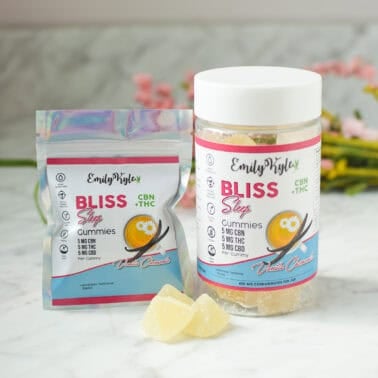
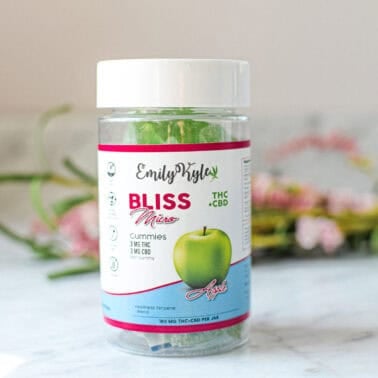
Shop Now: Bliss Sleep Gummies
Shop with Emily
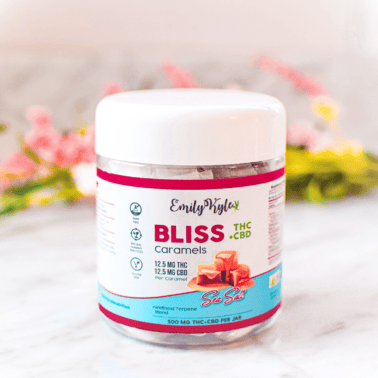
Shop Now: Bliss Caramels
Shop with Emily










Hi, this is my first time making THC lotion for pain. I’ve never used it but I’ve heard it works well. Is 20 grams for 1/2 cup of coconut oil too much? I’m using trim with 24.12% THC and .54% TERPS, whatever that means.
Hey Cheri!nIt’s so great that you’re giving THC lotion a try for pain relief. Regarding your question, 20 grams of trim for 1/2 cup of coconut oil should work fine, especially since trim tends to have lower THC concentrations compared to flower. Considering your trim is 24.12% THC, that’s actually quite potent! Just remember that the dosage can differ based on your tolerance and how much you apply. The terpenes (TERPS) at 0.54% refer to the aromatic compounds in the plant that not only contribute to the scent but may also enhance the effects of THC through what’s called the “entourage effect.” Make sure to decarb your trim first to activate the THC, then combine it with the oil to infuse. As long as you have enough oil to cover the material fully while infusing, you should be good to go. Stir frequently and strain out the plant matter once the infusion is complete. Good luck, and enjoy your lotion!
Emily, Thank you for all your hard work and advice. I am new to making Gummies and have decided to try using the trim from my harvested flowers for the first try. I have decarbed my first batch and used your flower to oil formula to infuse with solid coconut oil. (I smoked some of the trim before decarbing to check the potency, very good) i was wondering if I should increase the flower to maintain a stronger high or go on the side of caution to see what results I get. I just didn’t wnt to waste good flower on a first batch failure.
Thank you so much for reaching out and sharing your progress, Jim. I’m so happy to hear you’ve been using the flower-to-oil formula and had a great experience with your trim! For your first batch, it’s always a good idea to approach with caution and start with a moderate flower-to-oil ratio, especially if you’re experimenting with trim. This way, you can test the potency and overall results without risking too much of your good flower. Once you’re comfortable with the process and the initial outcomes, you can adjust and fine-tune the formula for a stronger infusion next time, if needed. Remember, even a lower potency batch can be enjoyable and a great learning opportunity!
Hello I’m making the oil for first time for my son with autism. He’s 21 and has a high tolerance so I want to make sure oil is potent.
So if I purchase 1 ounce of flower that equals 28 grams correct? My question is then how much mct oil should I be using when infusing? I’m striving for very potent oil
Thank you for your help!
I’m so happy to hear that you’re making oil for the first time and are committed to helping your son. Yes, 1 ounce of flower does equal 28 grams. For guidance on how much MCT oil to use, I recommend checking out my Flower-to-Oil Ratio Guide to help you calculate and create a potent infusion. You can find the guide here: Flower-to-Oil Ratio Guide 🌱
Hello, I just found your wonderful website! I have used Delta 8 & Delta 9 Gummies for about 6 years. I am trying Raw hemp Bids for the 1st time. I decarbed and used your calculator but I can’t figure out why these numbers don’t make sense to me?
Total mg of THC
2800
Total mg of CBD
700
Total mg of THC per teaspoon
29.17
Total mg of CBD per teaspoon
7.29
Step 2: Creation Portions/Servings
In this section section, you can add the infusion or extraction you made in step one directly into any recipe.
Number of Teaspoons Used in Your Recipe
1
Total Number of Servings In your Recipe
POTENCY RESULTS PER SERVING
Total mg of THC in entire recipe
145.83
Total mg of CBD in entire recipe
36.46
Total mg of THC in per serving
14.58
Total mg of CBD per serving
3.65
So the .Potency Results For The Entire Batch is 1teaspoon = 29.7 m65 of 1 THC
however… The recipe results you see here is showing only 14.58 mg of THC Per 1 tsp.
why the discrepancy
Hello Barbara. Thank you so much for reaching out and for using the calculator—it means a lot to me! 😊 From what you’re describing, the discrepancy may come down to how servings are divided in your recipe versus the original infusion potency. The recipe calculations will adjust for the total number of servings you input, which might be why the per-serving potency looks different than the baseline teaspoon value. Double-check your serving size and recipe setup to see if that clears things up. If you need further help, I’m here for you!
Can I evaporate most of the alcohol off before adding to sugar?
Yes, Christine. The alcohol helps evenly distribute the cannabis throughout the sugar so you don’t want to evaporate off too much. Happy infusing!
Excellent work and programs emily. Glad to still follow you despite me getting off of facebook.
We really appreciate your support and kind words, Reed. It means a lot that you’re still following along even after leaving Facebook! 😊
Thank you Emily, your product,advice and calculators have helped me so much on my journey.
Thank you so much for your kind words, Ron! We’re so happy that our products and advice have been helpful on your journey. 😊
which oil should we use when trying to calculate infusing agave? what about honey? thank you.
Thank you so much for your question, Erika! 😊 I do not recommend infusing directly into agave or honey since they lack fat, which is necessary to absorb the cannabinoids. Instead, I suggest making FECO (Full Extract Cannabis Oil) and blending it into your agave or honey at the end for the best results. When calculating for infusion, you typically won’t need a specific oil for agave or honey because the FECO itself will already be your concentrated cannabinoid source.
Thank you, beautiful flower. Useful information. Very professional!
Thank you for the kind words, Daniel! Glad you found it helpful! 🌸
Thanks for the Calculator, aa educated guesstimate is so much nicer than winging it and ending up as a drooling ball of mush. Do you have an offline calculator available?
We’re so happy you found the calculator helpful, Darryl! We don’t have an offline version yet, but it’s a great idea!
So I am getting an infant amount when I use calculator. So here is my receipt. I used 31 grams of distillate at 89% thc which comes to 31150 mg of thc and I made 130 gummies so if I understand that means each gummy would be 239.6 mg each right
Hi Richard. You’re close! Let’s break it down. If you used 31 grams of distillate at 89% THC, that’s 31,000 mg x 0.89 = 27,590 mg of total THC. Dividing that by 130 gummies gives about 212.23 mg of THC per gummy, not 239.6 mg. Hope that helps!
shouldn’t the servings part of the calculator account for the total gr/oz of the product?
if i use 80gr of coconut oil in a jelly recipe of 100gr jelly – 125ml water and make 1 gr gummy bears
is not the same as 80gr oil in 50gr cookies with a total dough weight of 1.3kg
Thank you so much for your thoughtful suggestion, Kine! Here in America, we typically don’t use the metric system, but I think it’s a great idea to include a grams-per-serving output for those who do. I’ll share this feedback with our tech team to see what we can do to make the calculator even more helpful for everyone. 😊
I have a question about potent tinctures. When doing a small amount, 1/4oz, and aiming for 50mg per mil tincture I only need 23ml alcohol. If I tip 23ml into 1/4oz of decarbed cannabis it is all absorbed and held by the flower.
Is there a rule of thumb, extra amount, to add to the dry flower so an accurate final volume can be worked out. In my case I guessed and added a further 30ml and recovered the whole 30ml so I overshot my target by a bit. its hard to estimate especially with small quantities.
I hope my question makes sense.
Hello Malcom. Thank you for reaching out with your question—it absolutely makes sense! When working with small batches, it can be tricky to estimate the exact amount of alcohol due to how much the cannabis absorbs. A good rule of thumb is to add a little extra alcohol beyond your initial calculation to account for absorption, then strain and measure the final volume to figure out how much was retained by the flower. Working with small quantities does require some trial and error, so you’re definitely on the right track with your adjustments. Keep experimenting, and you’ll refine the process over time! 😊
Am I the only one having trouble with the math? How can we compute mg’ s to teaspoons. I used 24.5g flower ([email protected], [email protected]) which I soaked for a week in 200% Culinary alcohol and evaporated down to 5ml. If I add all 5ml to my gelatin and make 82 gummies what is my strength per?
To calculate the strength per gummy, you’ll first need the total THC content of your flower. Multiply the weight of each type by its THC percentage (14g x 36.63% = 5,128.2mg and 10.5g x 29.7% = 3,118.5mg). That gives you 8,246.7mg total THC. Divide this by the final volume (5ml) to get the concentration per ml, then divide by 82 gummies for the dose per gummy. Hope this helps!
One more thing to note is loss from decarb, which is roughly 12% and should be taken into consideration as well.
Thank you so much. I still don’t completely “get it” but I see what you did and I guess it gets me closer to the dosage amount I’m looking for. This is my first feco and I’m very nervous about over dosing. I’ve got a more comfortable idea how to proceed now and I’m thankful.
You’re doing great! It’s natural to feel nervous, but you’re on the right track. Take it slow, and don’t hesitate to ask if you have more questions!
Can I just put my homegrown weed in a brownie mix?
Hi Rebecca! While it might seem easier to skip the infusion process, it’s important to decarboxylate first to activate the THC. Infusing it into butter or oil after that helps evenly distribute the cannabinoids throughout the brownie mix, ensuring better effects and flavor. I hope this helps — happy baking!
How do I determine potency if I use ground decarboxylated cbd flower in a recipe? Is there a guide for converting grams of cbd flower to potency per serving?
I just want to grind and add to recipe as powder but don’t know how potent it will be per serving… brownies? Cookies? Rice Krispy treats?
Great question, Michael! Determining potency when using ground decarboxylated CBD flower in recipes can be straightforward with a little math. Here’s how you can estimate the potency per serving:
Know the CBD percentage of your flower: Check the lab results or packaging for the flower you’re using. For example, if your flower has 20% CBD, this means there are 200 mg of CBD per gram of flower (20% of 1,000 mg = 200 mg).
Account for decarb loss: Decarboxylation can result in about a 12% potency loss. So, after decarbing, you’ll have approximately 88% of the original potency.
200 mg CBD x 0.88 = 176 mg CBD per gram after decarb.
Determine how much flower you’re using: Let’s say you’re adding 2 grams of decarbed CBD flower to your recipe.
2 grams x 176 mg = 352 mg CBD in the entire batch.
Divide by the number of servings: If your recipe makes 12 brownies, divide the total CBD by the number of servings.
352 mg ÷ 12 servings = ~29 mg CBD per brownie.
By following this process, you can calculate the approximate potency for any recipe. Just adjust the numbers based on your flower’s CBD percentage, the amount used, and the servings in your batch. Happy baking! 🍪