

Quick answer: To calculate edible potency, multiply the weight of your cannabis by its THC or CBD percentage, adjust for decarb and infusion losses, then divide the total by the number of servings.
Hello and welcome! This calculator does the cannabis math for you, so you can find the exact THC and CBD potency of your homemade edibles in just a few seconds. Start in Step 1 below by entering the details of your infused product, such as cannabutter or cannabis oil. This large batch can later be used in your recipe using the second section of this calculator.
If you’re not sure what information to put here, scroll down and read the How This Calculator Works section below.
📲 Step 1: Calculate Your Batch Potency
|
Starting Amount of Cannabis Product in Grams
Enter the weight of the flower or product you infused, in grams.
|
|
|
THC/THCA %
Enter the percentage from your product label, e.g. 15 for 15%.
|
|
|
CBD/CBDA%
Enter the percentage from your product label, e.g. 5 for 5%. Leave 0 if none.
|
|
|
Type of Oil or Alcohol Used
Pick what you infused into. This sets the absorption rate used in the math.
|
|
|
Amount of Oil or Alcohol Used
How much oil or alcohol you used to make the full batch.
|
|
|
Account for the loss associated with Decarboxylation?
Check this box if you decarbed your product and want to account for the natural loss associated with the process.
|
Potency Results For The Entire Batch
|
Total mg of THC
|
2800
|
|
Total mg of CBD
|
700
|
|
Total mg of THC per teaspoon
|
29.17
|
|
Total mg of CBD per teaspoon
|
7.29
|
How the two steps work together: Step 1 above tells you how strong your whole infusion is. Step 2 below splits that strength across the servings in your recipe, so you can see how much THC and CBD ends up in a single serving.
📋 Step 2: Dose Your Recipe
In this section, you can add the infusion or extraction you made in step one directly into any recipe.
|
How much of your infusion does this recipe use?
How much of that batch goes into this specific recipe.
|
|
|
Total Number of Servings In your Recipe
How many pieces or portions your recipe makes. Used to find the dose per serving.
|
Potency Results Per Serving
Edibles can take 30–120 minutes to take effect.
Estimates only — actual potency varies with your ingredients and method.
|
Total mg of THC in entire recipe
|
145.83
|
|
Total mg of CBD in entire recipe
|
36.46
|
|
Total mg of THC per serving
|
14.58
|
|
Total mg of CBD per serving
|
3.65
|
Please note: This calculator and the information on this page are provided for educational purposes only and are not medical advice. Results are estimates, not lab-tested values. Consult a qualified healthcare professional with any questions about cannabis use.
Table of Contents
How This Calculator Works
This calculator estimates potency using a few straightforward steps. First, it converts the THC and CBD percentages of your flower into milligrams, since one gram of flower at 1% THC contains about 10 mg of THC.
It then accounts for how efficiently your chosen fat or alcohol absorbs those cannabinoids during infusion, different bases (butter, coconut oil, MCT, alcohol, and so on) pull cannabinoids out of the plant at different rates, which is why the type you select changes the result.
If you check the decarboxylation box, it also factors in the natural loss that happens when raw cannabinoids convert into their active form.
Finally, it divides the total across your batch and then across the number of servings in your recipe, so you get an estimated milligram amount per piece.
Why Your Real Results May Vary
These numbers are careful estimates, not lab results. Real-world potency depends on things this calculator can’t see: the exact cannabinoid content of your specific flower, how thoroughly you decarboxylated, your infusion time and temperature, and how evenly everything is mixed into your final recipe.
Treat the result as a well-informed starting point rather than an exact figure.
How to Find Your THC Percentage
The accuracy of your estimate depends most on one number: the THC percentage you enter.
If you bought your flower from a licensed dispensary, this is usually printed right on the label or package, often shown as “Total THC.” If you’re working with flower that didn’t come with a label, you won’t know the exact figure, but most dried cannabis flower falls somewhere in the range of roughly 10% to 25% THC.
When you’re unsure, it’s reasonable to estimate toward the lower end, since underestimating potency is far easier to adjust for than overestimating it.
One quick measuring tip: your cannabis amount is entered in grams, and there are 28 grams in one ounce, so an eighth of an ounce is about 3.5 grams, and a quarter is about 7 grams.
A Worked Example
Let’s walk through a real batch so you can see how the numbers come together. Imagine you start with an eighth of an ounce of flower (about 3.5 grams) that tests at 15% THC, and you infuse it into 1 cup of coconut oil. You then use that entire batch of infused oil to make a recipe with 48 servings.
Here’s what the calculator does with that: the 3.5 grams at 15% works out to about 525 mg of THC in your flower. After accounting for how efficiently coconut oil absorbs cannabinoids, your finished batch of oil contains roughly 434 mg of THC total. Divide that across 48 servings, and each serving comes out to about 9 mg of THC, which the calculator labels “Mild.”
If you split that same batch into fewer, larger servings, each one would be stronger; into more servings, each would be milder. That’s the whole idea: the number of servings you choose is what sets your dose per piece.
Why You Will Love This Tool
Hello and welcome to my dosage calculator designed to help you estimate how much THC or CBD is in your edibles and homemade recipes.
If you’re like the members of my Well With Cannabis Community – chances are you love making your own cannabis-infused edibles!
Not only can you save money when you make incredible recipes at home, but you can also control the ingredients and strength of your edibles.
But how exactly do you determine the potency of your edibles?
If you know the cannabinoid content of your material and how many grams of weed you’ve used, you can use this handy edibles dosage calculator to do the math for you!
This edibles calculator will then help you determine your own edibles’ CBD or THC content based on the number of servings made.
Not only does this help you determine the THC potency of your homemade marijuana edibles, but it also helps you avoid a dose that is too high, which could result in unpleasant side effects.
Frequently Asked Questions
Enter the weight of your cannabis in grams and its THC or CBD percentage, choose the fat or alcohol you infused it in, and enter how many servings the recipe makes. The calculator estimates the total milligrams of THC or CBD in your batch and divides that across your servings.
It gives a well-informed estimate, not a lab result. Real potency depends on your flower, how well it was decarbed and infused, and how evenly the recipe was mixed, so treat the result as a starting point and start with a low dose.
This is the hardest part for many people! If you purchased cannabis flower from a licensed dispensary, that flower should be accompanied by lab testing, which shows the percent of THC or CBD in the flower. Unfortunately, different labeling regulations do not make this information universal. If you grew your own cannabis at home, knowing the potency of THC or CBD will be impossible without lab testing. You can, however, research strain guides that provide a general idea of the total cannabinoids in a specific strain.
If you’re working with dried cannabis flower that has not been decarbed, you will be inputting the value as THCA and checking the checkbox to account for the loss of decarboxylation if you decarb. Suppose you are working with a prepared cannabis product that already has THC present because it has already been decarbed. In that case, you will enter the value as THC and not check the checkbox to account for the loss of decarboxylation (because it has already occurred). If you have both numbers, simply run the calculation twice, once for each option.
If your concentrate already comes with a milligram dosage on the label, you do not need to use this calculator. Simply divide the total THC milligrams by the final servings in the recipe you made. For example, if you have a concentrate labeled with 750mg of THC for the entire syringe and add that syringe to a cookie recipe that makes 24 cookies, you would use the following equation: 750/24 = 31.25mg THC per cookie.
Great question! We are using different values to account for extraction efficiency. For example, olive oil will have a different extraction efficiency than coconut oil. A fat-based product will have a different level of efficiency than alcohol, which is what we are trying to account for here.
If you’re calculating the THC or CBD dosages for a cannabutter recipe, it shouldn’t matter whether you use regular butter or unsalted butter. What will matter is the amount of butter you use.
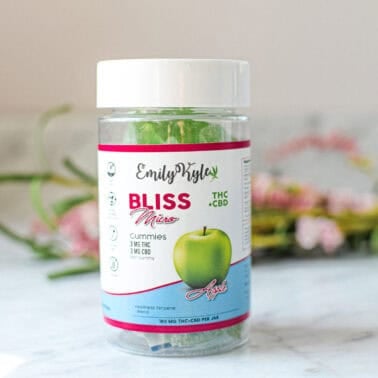
Everyone is different, and this is general educational information rather than personalized medical advice. The right amount is unique to each person, since we all have endocannabinoid systems that affect our tolerance. If you have done the math above to calculate the total mg of THC but still feel unsure where to start, check out my guide to dosing edibles safely and effectively. Many people choose to start low and go slow, often beginning with the microdosing method, for example, some begin with a small amount such as 1-3 mg of THC and adjust from there. If you are feeling lost, you can also check out my beginner’s guide to using cannabis. If you want to know you’re consuming an exact dose, my most popular edible product, Micro Gummies, can help you get started.
A segment of the population reports feeling no effects from cannabis consumed in edible form or only when a very high dose is consumed. This can depend on a variety of factors, including your individual metabolism, what you’ve eaten, the decarboxylation process, and the potency of edibles consumed. If you do not feel the effects of edibles despite consistent doses and correct time intervals, check out this guide. Ultimately, you may need to explore more efficient ways to consume cannabis, such as cannabis-infused oil used as sublingual tinctures.
My goal in providing this calculator is that you can avoid consuming too high of a THC dose. Consuming too much THC is uncomfortable and can alter your ability to perform basic functions. Adverse effects may include dry mouth, racing heart, and even a panic attack. That is why it is important to exercise caution and use the right amount of cannabis before getting started. Seek professional medical advice if needed.
I have had requests for a topical dosage calculator and a tincture calculator. Still, this calculator here can work and is a great option for calculating total THC for both tinctures and topicals.
This calculator is for educational purposes only, but if you are looking for the best way to take your cannabis education to the next level, my Edibles Made Easy Course was designed for you! This course can transform any home cook into a cannabis chef in a few simple steps. Consider it your complete marijuana handbook for the kitchen!
Shop My Most Popular Products
Shop with Emily
Nourish Your High Masterclass
Shop with Emily
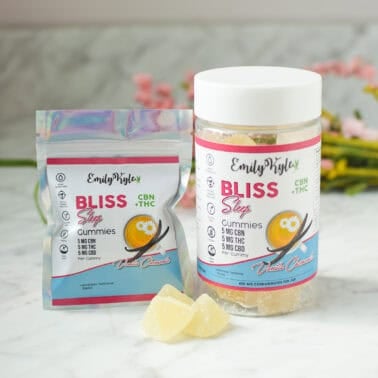
Shop Now: Bliss Sleep Gummies
Shop with Emily
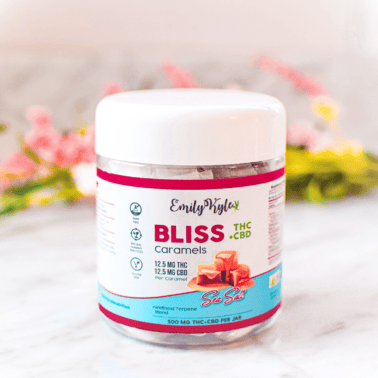
Shop Now: Bliss Caramels
Shop with Emily










Hello,
Thank you for all of the information that you are providing.
I made the cannasugar I used your freezer recipe
2 cups of sugar, 1 cup of 190 proof alcohol, 14 g of flower at 25% THC.
If I use the Calculator right, it looks like it’s going to be 60 MG per teaspoon for the entire batch? Is that correct? Now I want to use some of the sugar to coat my gummy’s. I am not sure how I figure out the potency of the sugar once it is on the gummy? I realize that I would add whatever that number is of sugar to the potency of the gummy. I just want to make sure I’m starting out with the right number for the sugar.
Hello Peggy! Based on the information you’ve shared – using 2 cups of sugar, 1 cup of 190 proof alcohol, and 14g of flower at 25% THC – and assuming you’ve followed the calculations correctly, a potency of around 60 MG per teaspoon for the entire batch does sound within the realm of possibility. However, it’s always good to approach these calculations with a bit of caution, as the actual potency can vary based on a few factors, including the efficiency of your extraction. When it comes to coating your gummies with the cannasugar, calculating the added potency can be a bit tricky since it depends on how much sugar sticks to each gummy. A practical approach would be to start by estimating the amount of sugar (in teaspoons) that coats a single gummy. Once you have that, you can multiply it by the potency of your sugar (60 MG per teaspoon) to get an estimate of how much THC is added to each gummy. Remember, when making and consuming edibles, starting with a lower dose and going slow is key to finding the right balance for you, especially when combining different infused ingredients like gummies and sugar.
And of course, sharing your creations with others involves clear communication about their potency to ensure everyone can enjoy them safely and responsibly. I hope this helps clear things up a bit! If you have any more questions or need further assistance, feel free to reach out. Happy cooking, and I can’t wait to hear how your gummy adventures turn out! 🍬
Hello Emily,
Thank you for the best tools and information out there. It’s been a great help to a newbie infuser.
My question is, if I use 1 cup of MCT oil or butter in my infusion, and end up with 2/3 cup after straining, what would be the total thc in the finished product be based on…Total oil used (1 cup), or the yield after the infusion (2/3 cup)?
Also, I own an Edioven, and their instructions state to decarb in the unit for 70 minutes at 240° – and to infuse oil at 180° for one and a half hours. Most infusion recipes I’ve read say to infuse for 2 to 4 hours, and decarb instructions I’ve read recommend around 40 minutes.
In your opinion, should I infuse for longer and/or decarb for less time to get the best results?
Hello Michael, great questions! When it comes to calculating THC content in your infused oil, you would base it on the yield after the infusion, which is 2/3 cup in your case. As for your second question, the decarb and infusion times can vary based on different factors, such as the type of cannabis you’re using, its THC content, and the specific appliance you’re using. While the Edioven instructions recommend certain times and temperatures, other sources may suggest different ones. It might be worth experimenting with different times and temperatures to see what works best for you. Without lab testing, it’s just a big guess. I hope this helps! Happy infusing! 🌿
Emily, Firstly, Thank you for a brilliant site. Can I add though, it would be so good if instead of ‘cups’ in the oil / butter section you used grams and instead of teaspoons in the servings you used grams. This makes the weight universal and precise as cup and spoon sizing differ depending on your country. Bakers will only use weight in a recipe but this calculator switches between grams and cups / spoons making it variable.
Thank you so much for sharing your thoughts, Gab. This is an excellent suggestion and I will send this off to the team to see if we can’t get grams added 😀 Makes more sense for sure!
Hi Emily
I’m hoping that you can help.
I love your calculators for dosage calculations.
I make tincture using 2 cups 93% alcohol with 1oz of flower.
I then cut the alcohol with water so the tincture has a 20% alcohol.
Is there a way to calculate THC / CBD after the water is added?
Thank you for any assistance you can give.
Richard
Hello Richard! We’re thrilled that you’re finding our calculators helpful for dosage calculations. Just to clarify, the total THC/CBD content will remain the same, but the strength per serving will be affected. For example, if you start with 2 cups of tincture at 500mg and divide it into 20 servings, each serving would contain approximately 25mg. Now, if you add 2 cups of water, the total content will still be 500mg, but the liquid volume will increase to 4 cups. As a result, each serving would be diluted to about 12.5mg. I hope this makes sense! Feel free to reach out if you need further clarification! Happy Extracting!
Hi Emily! First off let me say I love that you provide this for free! Thank you so much!
For the second part of the equation do I need to put in how many teaspoons of cannabutter I’m using or how many teaspoons my entire recipe is, like the total liquid amount of a batch of gummies?
Hi Jennifer. Thank you for your kind words!! We love that you love it!! For “Number of Teaspoons Used in Your Recipe”, you want to enter the amount of cannabutter you’re using in the recipe. Happy cannabis cooking!
First I would like to compliment you guys on the first rate presentation of and broad range of information.
Curious how you would use the calculator when infusing cocoa butter.
Hello there, Richard! Thank you so much for your kind words; they mean a lot to us! To use the calculator with cocoa butter, simply input the amount of cocoa butter for regular butter. This will give you the ballpark measurements you need for calculating the potency of your infusion. If you have any other questions, feel free to ask. We’re here to help! Keep exploring and happy infusing! 🍫🌿
I love this calculator… Thank you for providing it.
I have one question if you don’t mind, where would you put syrups and honey on the chart so I can accurately make calculations?
Hi Dewey. Typically, when infusing honey or syrup, you are adding cannabis concentrates and not having to strain anything out so all the cannabis ends up in the final product. To use the calculator to determine the strength of your final product, you’ll want to select No Oil or Solvent Used, but still enter the amount of syrup or honey used along with the amount and percentage of cannabis used.
I hope this helps. Sending good vibes for your infusion journey!
Can I substitute CBG for CBD in the calculator to get CBG potency, I am using White CBG flower – would I total the CBG and CBGA values or just use the CBGA? Thank you.
Hi there Daniel, thank you for reaching out with your question. You’re absolutely right! The calculator can indeed be used interchangeably for CBD and CBG – great deduction on your part! If you’re using White CBG flower, you would want to total both the CBG and CBGA values to get the most accurate potency result. This is because both compounds contribute to the overall potency of the flower. If you have further questions or need more clarity, don’t hesitate to ask. We’re here to help you navigate this process. Take care and happy calculating!
Your calculator never considers using just chocolate, no oil, no infusion, just chocolate and cannabis
Hi there Susan, if you’re making a simple mixture of just chocolate and cannabis, you can select the “No Solvent” option on the calculator. This will help you calculate the strength of your homemade edible based on the potency of your cannabis and the weight of the chocolate you’re using. Remember, the results will be estimates and the actual potency of your edible can vary based on many factors, like the quality of your cannabis and how evenly it’s distributed in the chocolate. If you have any other questions or need further clarification, please don’t hesitate to reach out.
I am getting an infinity result using the calculator, trying to figure out how much 3 grams of 25% thc, 1tsp infused in water (as a tea) would yeild
Hi there Holly,
Thanks for reaching out and I’m sorry to hear you’re having trouble with the calculator. Let’s see if we can troubleshoot this together!
First, it’s important to note that THC isn’t water-soluble. This means that if you’re infusing your cannabis directly into water to make tea, much of the THC (and other cannabinoids) won’t be able to dissolve into the water and will instead remain in the plant material. Because of this, you won’t get a very strong infusion just using water.
However, if you’re using a fat-based medium like coconut oil or butter along with the water to help extract the THC, then we can use the calculator to estimate the potency.
Assuming you’re using 3 grams of cannabis with a THC percentage of 25%, that means you have about 750mg of THC in total (3000mg x 0.25). If you’re making 1 teaspoon of infused oil with this, and assuming complete extraction (which is unlikely but gives us a maximum potential), you’d have a very potent oil indeed!
Please remember these are rough estimates and actual results can vary based on many factors. And always start with a small dose to see how it affects you before consuming more.
I hope this information helps! Please feel free to reach out if you have any more questions or if there’s anything else we can assist you with.
Hi Guys,
Three part question for you.
1. Can I use your calculator to work out the dosage of my homemade oil? Aiming to calculate the strength of each drop
2. I want to make a high strength cbd with a fairly low non intoxicating thc level. I will be using approx 10 grams of 40% cbd weed and approx 3.5 grams of 15% thc weed in approx half cup of MCT oil. When using the calculator to determine the strength should I enter the cbd and thc in two separate calculations and add them together because I’m not using equal weights of both.
3. After making the oil and straining the plant material out should I do the calculation again to allow for the 10% or so loss in liquid left with the plant material
Thanks so much
Hi there Eoghan,
Thank you for your excellent questions! I’m glad you’re finding our resources helpful and are taking the time to carefully plan your homemade oil.
Yes, our calculator can certainly help you determine the dosage of your homemade oil. Just remember that the results will be estimates based on the information you input. The strength of each drop will depend on the total volume of your oil, so you may need to do some additional calculations if you want to get very specific.
Your approach sounds solid. The calculator has an option to input both CBD and THC at the same time, but since you’re using different amounts of CBD-rich and THC-rich cannabis, it would be best to perform two separate calculations to determine the total amount of each cannabinoid in your oil. Then you can add these together to get the total potency.
As for your third question, it’s true that some of the oil will remain trapped in the plant material after straining. If you’d like to account for this loss in your calculations, you could estimate a 10% reduction in the total volume of your oil. However, keep in mind that the actual loss may vary depending on factors like the fineness of your grind and the method you use to strain the oil.
I hope this helps! Feel free to reach out if you have any other questions or if anything needs further clarification. We’re here to support you in your journey towards creating the perfect homemade oil.
Best of luck with your cooking!
How would we determine the CBN yield in MG after we decarb and infuse – assuming we know all other factors like THC%?
Hi Cody. If you decarb properly for CBN – 240ºF for 180 minutes – you can expect close to 100% conversion which should match the same percentage as the THC. I hope this helps!
Hi Emily. Where can I purchase the dosage calculator ?
Hi Saidah. Our edible dosage calculator is free to use online. Thank you for your interest!
Hi Emily, I am using Bacardi 151 to try the QWET method for the first time only because that is what I have on hand. Do you know how to calculate how much less potent the batch should be vs using 190 proof?
Hi Cheryl. 190-proof is roughly 20% stronger than 151, so after you determine the strength using the 190-proof option, subtract 20% from your final number. I hope this helps!
Hey Emily
Can I add citric acid and sugar to this gummy recipe?
I’m going to try it with coconut oil ( solid )
I would like to make a sour gummy.
Regards
Colin Alexander
Hi Colin. We have not experimented with coating the gummies in critic acid/sugar, so I don’t have an exact amount to use, but I would start with 1:1 ratio of the two and adjust according to personal preference. Be careful and make sure the gummies are 100% air-dried before adding the citric acid or sugar, or else the gummies will melt. Enjoy your gummy-making experience!