

Cannabis coconut oil is one of the most adaptable and rewarding infusions you can add to your homemade wellness toolkit. Whether you want to create delicious edibles or soothing topicals, this easy recipe gives you full control over strength, ingredients, and quality. Not only is it completely plant-based and allergy-friendly, but it also offers a reliable, cost-effective way to experience the benefits of cannabis in your everyday life.
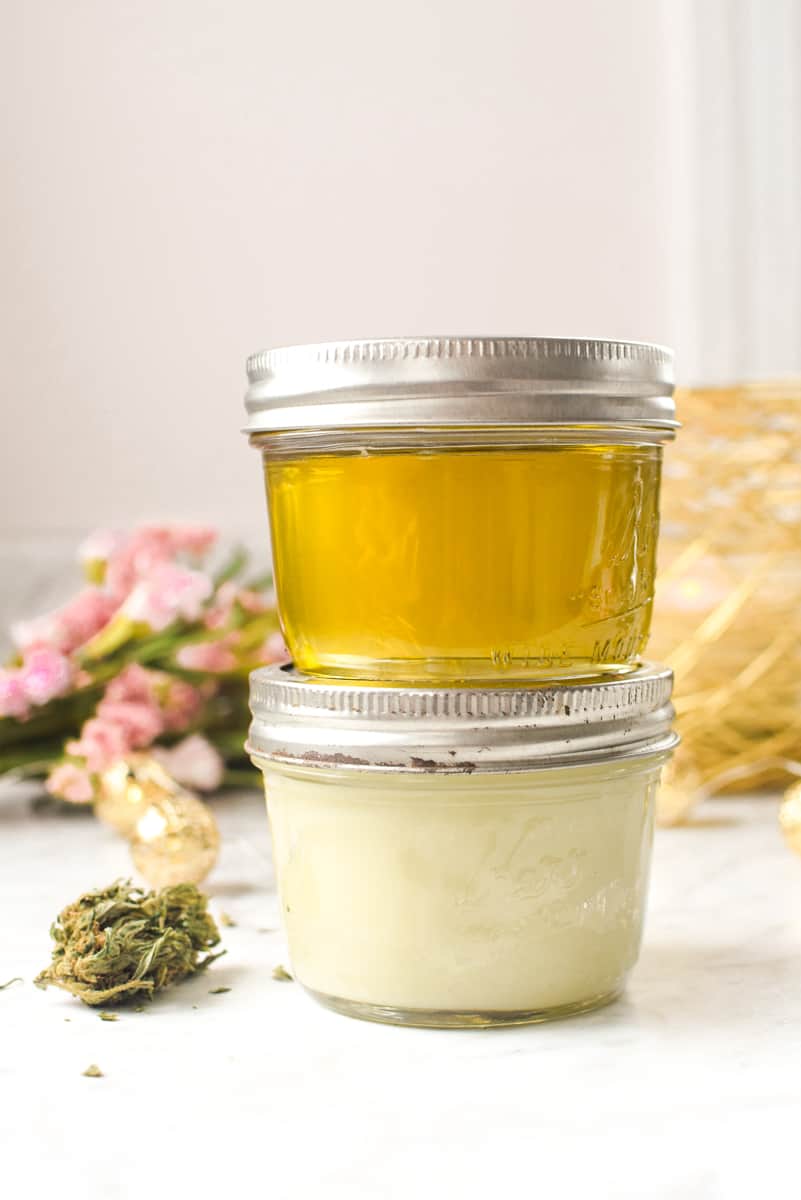
Table of Contents
Recipe Features
- ⭐⭐⭐⭐⭐ This recipe is one of the most popular infusions in my community, with over 1,100+ happy reviews!
- Two Simple Ingredients: All you need is your favorite cannabis flower and a jar of coconut oil.
- Multiple Methods: I’ll show you how to make it using a Crock-Pot, Instant Pot, or right on the stovetop.
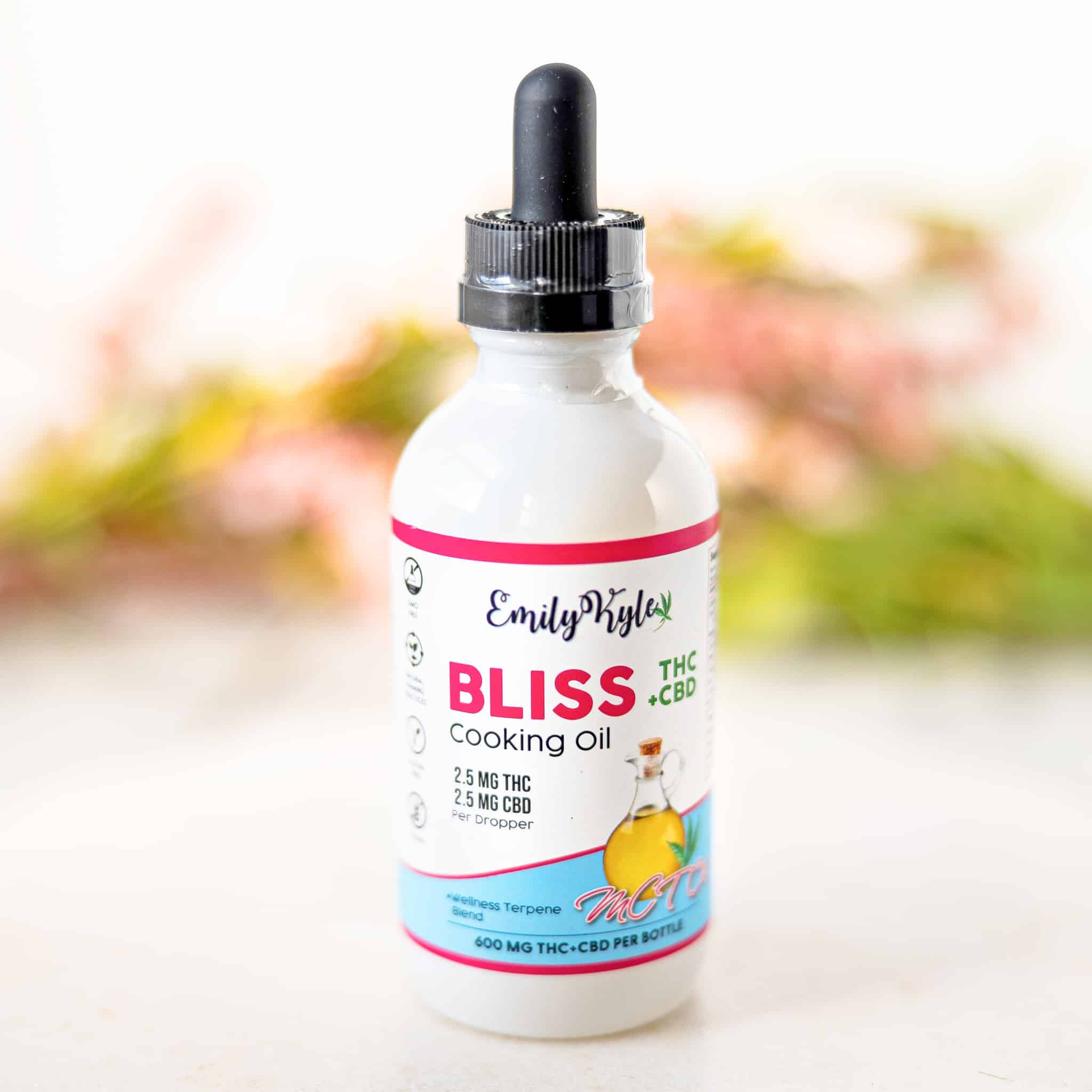
- Want it fast? If you’re not ready to DIY, you can order my pre-made Bliss MCT Oil and have it delivered directly to your door.
Why You Will Love This Recipe
If I had to choose just one staple to keep in my cannabis kitchen, it would be a jar of homemade cannabis coconut oil.
When I first started making my own infusions, I quickly realized how incredibly versatile it is. I use it for everything, from baking a batch of gooey brownies to making a soothing salve for my sore muscles. It’s the ultimate two-for-one, nourishing my body from the inside and out.
What I love most is that it’s completely plant-based, dairy-free, and works for almost every dietary need, which is a huge priority for so many members of my Well With Cannabis Community.
Coconut oil’s high saturated fat content makes it a perfect vehicle for pulling all those wonderful cannabinoids from the flower, creating a potent and effective infusion every single time.
Today, I’m excited to share my personal, step-by-step process for making cannabis coconut oil. Whether you’re a total beginner or just looking to refine your technique, I’ll walk you through everything you need to know.
Easy Crockpot Cannabis Coconut Oil
Video
Ingredients
- 1 ounce cannabis flower pre-decarb
- 16 ounces coconut oil
- 1 teaspoon liquid sunflower lecithin optional
Instructions
- Lay a clean tea towel down on the bottom of your crockpot. This will create a buffer between your mason jars and the crockpot, potentially preventing any jar from moving or cracking during cooking.
- Fill your crockpot with enough warm to hot water to cover the top of the mason jars you plan on using by an inch to create a water bath.
- Place the digital instant-read thermometer into the water. Start the crockpot heat on high. When a temperature of 185° F is reached, turn the crockpot to low.
- While the water bath is heating in the crockpot, measure and decarb the cannabis flower in the oven at 240°F for 40 minutes (for THC-flower). Click here for a full cannabis decarboxylation tutorial, if needed.
- Evenly divide the coconut oil between the mason jars you plan on using. You can either use pint-sized or half-pint-sized jars, it's you're preference, just be sure they fit in your crockpot. No matter the size, be sure to leave a 1/2 inch headspace from the top.
- If you plan on using sunflower lecithin, add it to the mason jars now.
- Evenly divide the decarbed flower between the coconut oil-filled jars. Wipe the rim of the jars with a clean paper towel and place the lid on. Tighten the metal ring to finger-tip tightness, it does not have to be tightened all the way. Do not tighten too tightly.
- Once the water bath reaches a temperature of 185° F, carefully place the jars into the water bath. Place the lid on the crockpot and leave alone to infuse for 4 hours.
- After 4 hours, carefully remove the lid, followed by the jars from the hot water. Set them aside to cool.
- Once cool enough to handle, you will want to strain the cannabis oil through a paper filter and funnel, cheesecloth, or French press to separate the plant-matter from the coconut oil.
- Save the leftover cannabis pulp for use in future recipes. Then return the prepared cannabis coconut oil to whatever jar you would like to store it in. We use a mason jar.
- Store the prepared cannabis coconut oil in a cool, dry place. It will last longer if stored in the refrigerator and even longer if stored in the freezer.
Notes
SAVE THIS GUIDE 💌
What You’ll Need
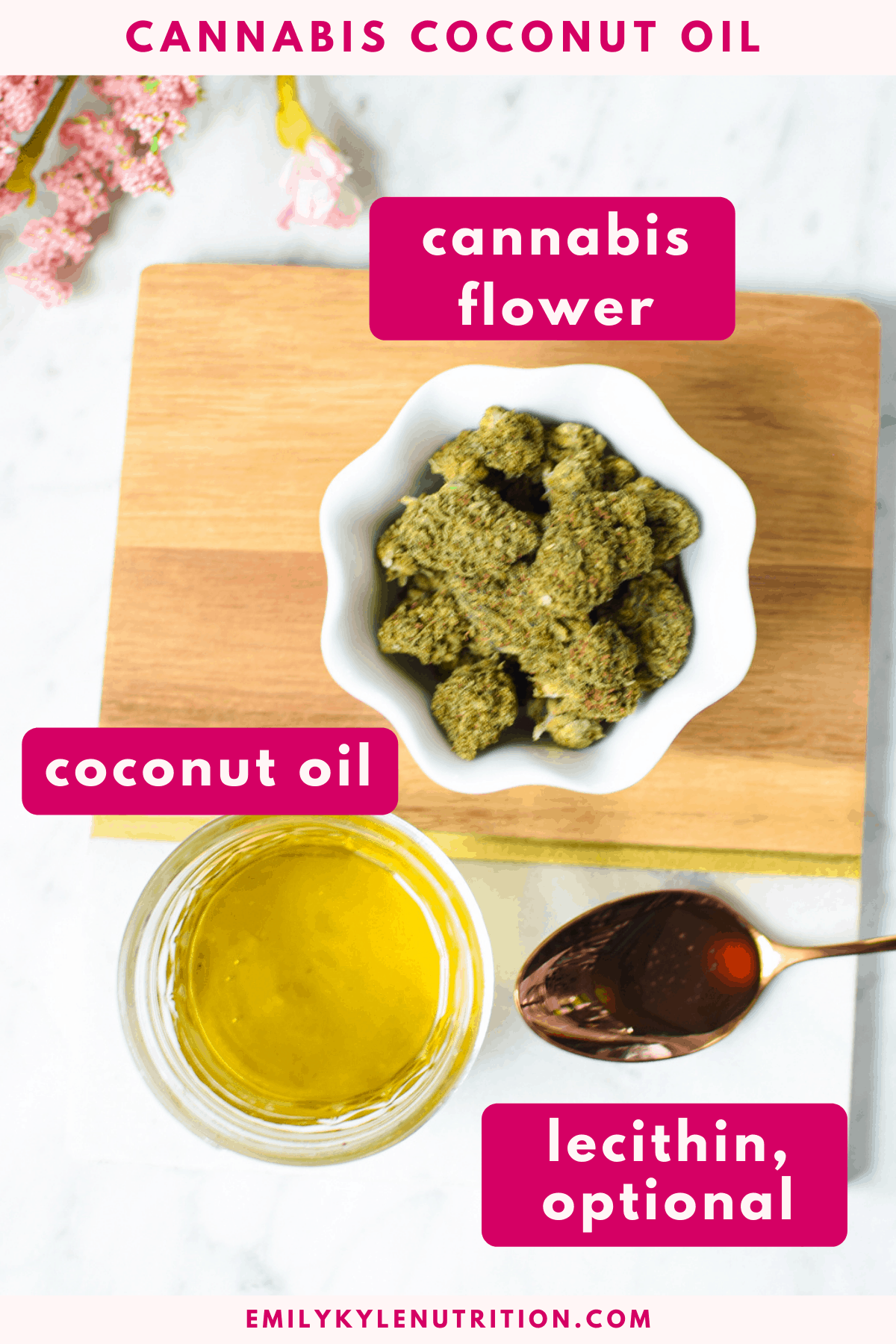
Let’s gather our simple ingredients. The quality of your flower and oil will directly impact your final product, so choose wisely!
- Coconut Oil – You’ll need to decide between refined, unrefined, or MCT oil. I’ll break down the differences below to help you choose.
- Cannabis flower – You can use THC-dominant flower for psychoactive effects, or CBD flower, or CBG flower for non-intoxicating benefits. The amount to use depends on your desired potency. You can use any amount of flower, ranging from 3.5 grams up to 1 ounce.
- Lecithin – This is my secret weapon for edibles. Lecithin is a natural emulsifier that helps your body absorb the cannabinoids more effectively, potentially making your oil feel more potent. It’s not a deal-breaker, but I always add a teaspoon of liquid sunflower lecithin to my infusions. Learn more about adding lecithin to edibles here. You can purchase liquid or powdered lecithin online.
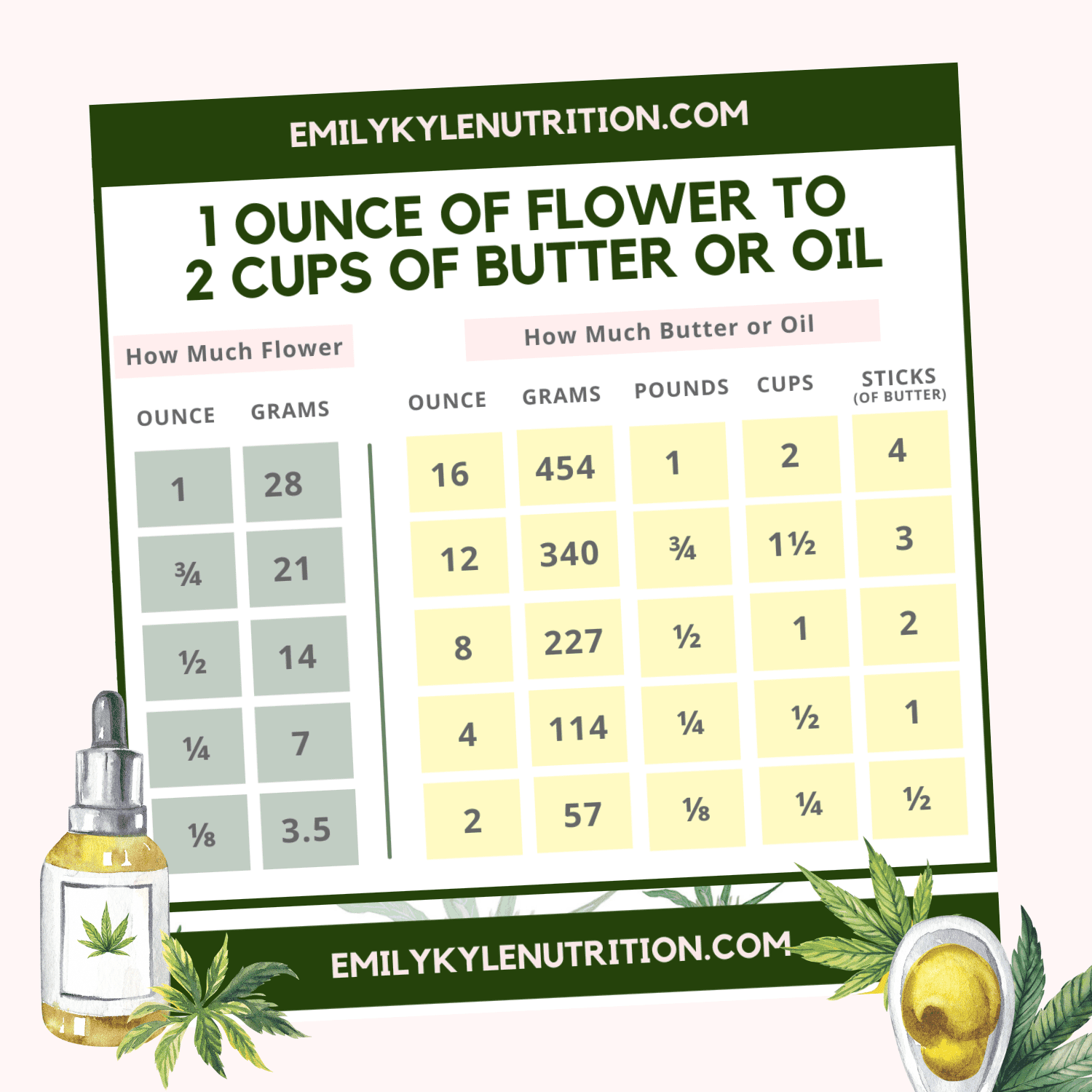
Note: Determine how much to use for each ingredient below with this flower-to-oil ratio guide.
The Step-by-Step Process
My favorite method for infusing is using a Crock-Pot to create a stable water bath. It’s a set-it-and-forget-it approach that gives me consistent results every time. Alternatively, here are instructions for using an Instant Pot or the stovetop.
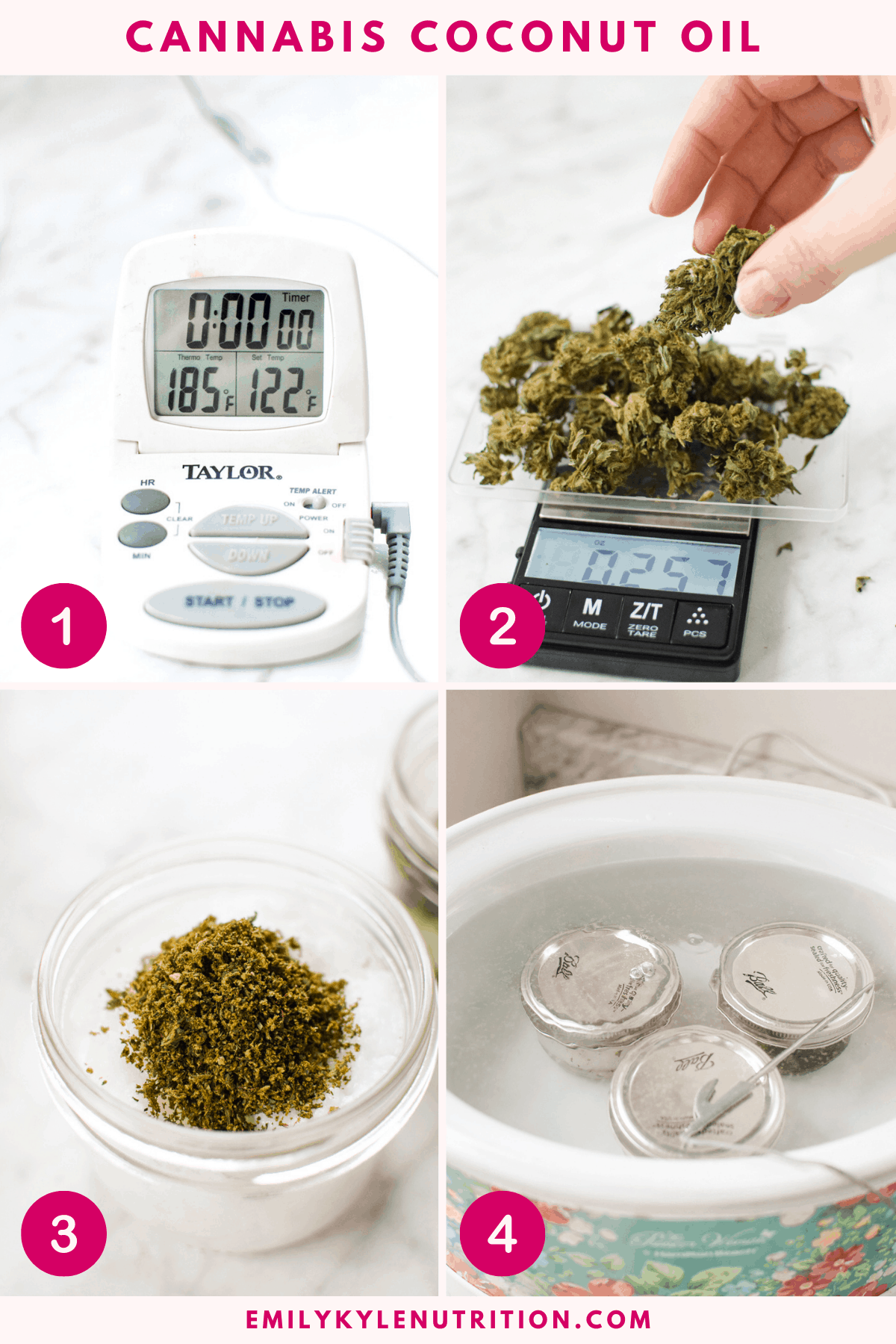
- Prepare the Water Bath: Lay a tea towel on the bottom of your Crock-Pot (this prevents the jars from rattling) and fill it with warm water. Set it to high until the water reaches 185°F, then turn it to low to maintain that temperature.
- Decarb Your Flower: This is the most important step! To activate the THC or CBD, you need to decarboxylate your cannabis. I put my flower in an oven-safe baking dish and bake it at 240°F for about 40 minutes. Your kitchen will smell amazing, but if you need a more discreet method, you can decarb in a mason jar or an Instant Pot. Do not grind the flower; just break it up into smaller, popcorn-sized pieces.
- Combine Ingredients: Add your decarbed flower and coconut oil to a mason jar. If you’re using lecithin, add it now. Seal the jar “fingertip tight”, you want it closed but not so tight that pressure can’t escape.
- Infuse: Carefully place the jar in the water bath and place the lid on the crockpot. Leave it alone to infuse for 4 hours. After 4 hours, remove the jars from the water to cool. This low and slow heating gently extracts the cannabinoids without burning them.
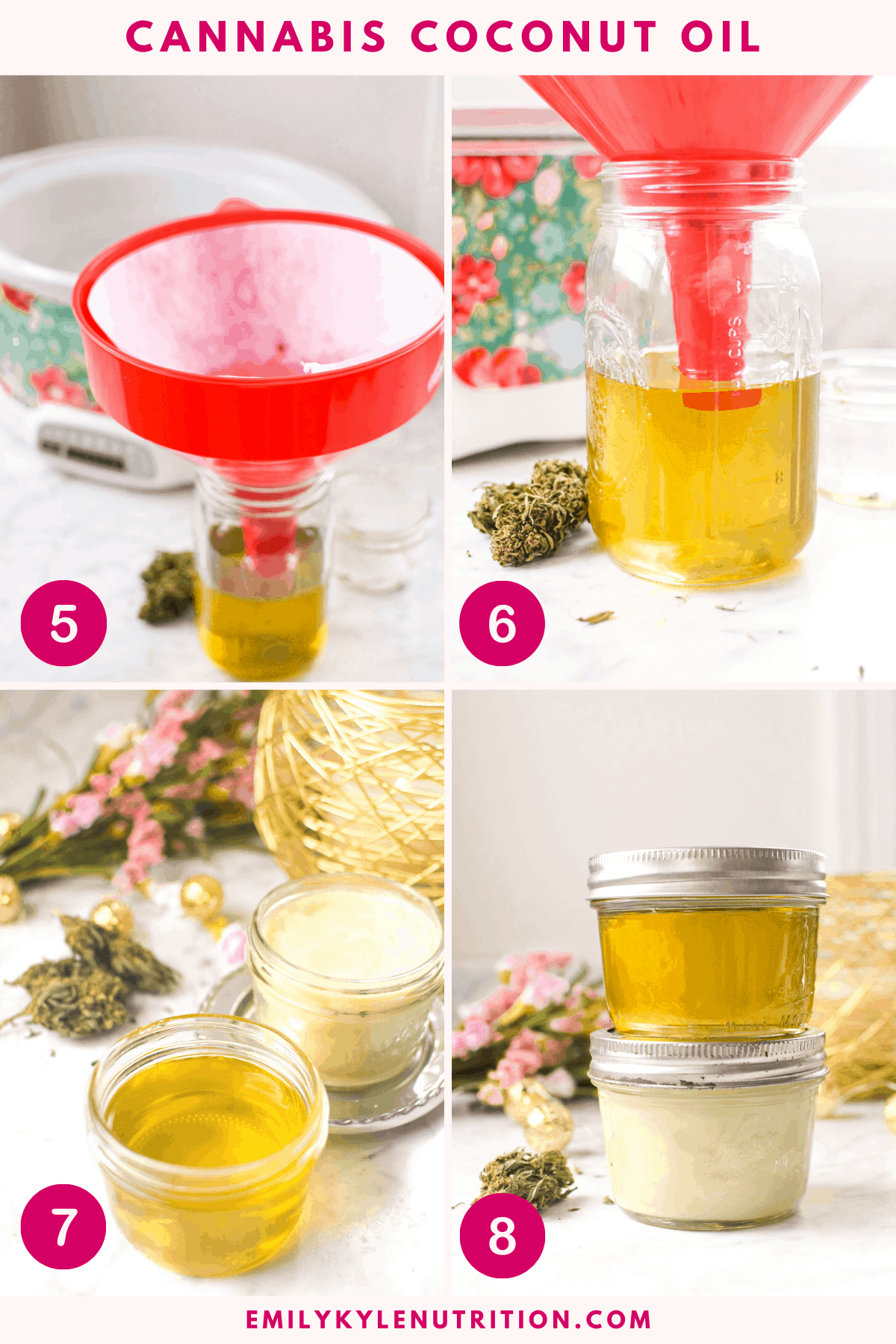
- Prepare to Strain: Whether it be a paper filter and funnel, cheesecloth, French press, or a simple coffee filter, you will want to set up a straining station to separate the plant matter from the oil.
- Strain the Oil: After infusing, let the jar cool until it’s safe to handle. Then, you’ll need to strain out the plant material. Squeeze gently to get all the oil out. Don’t throw away the leftover cannabis pulp! It can be used in other recipes.
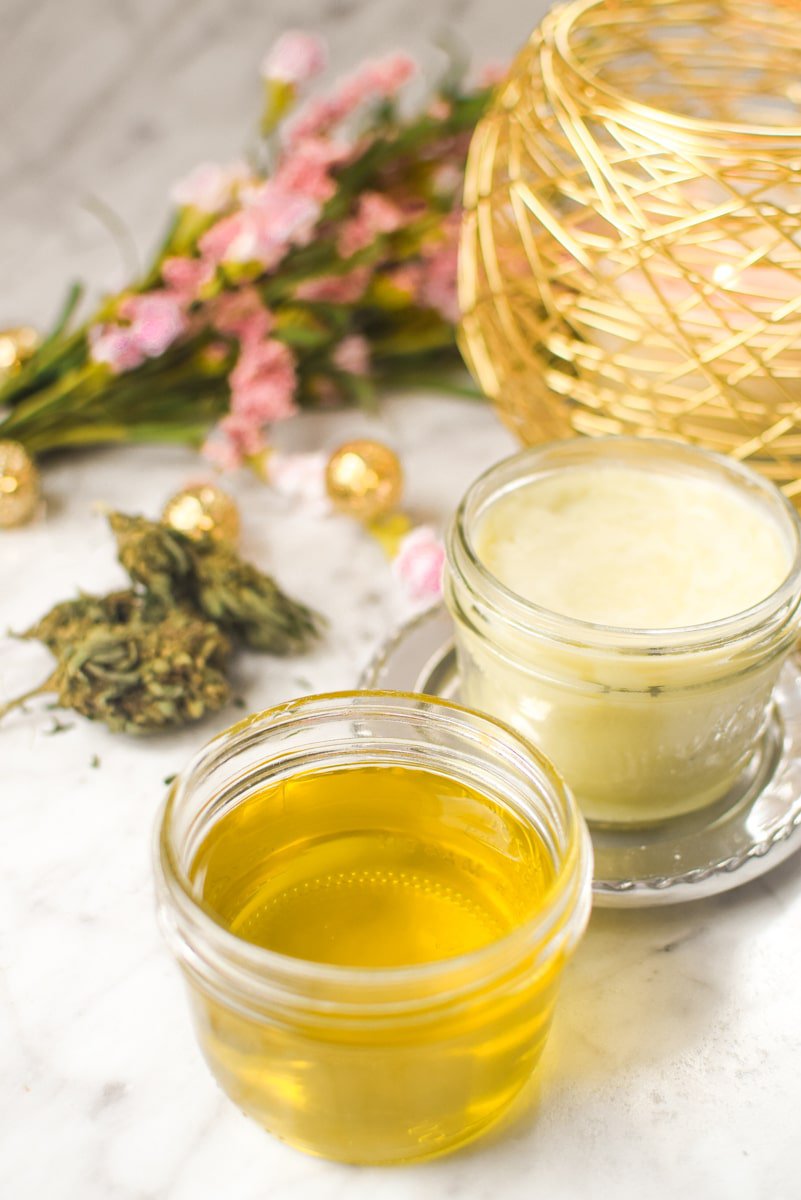
- Store the Oil: Return the prepared oil to whatever jar you would like to store it in; a mason jar works well. Store the prepared cannabis coconut oil in a cool, dry place.
- Long Term Storage Instructions: Store your prepared oil in a cool, dry place. It will last longer if stored in the refrigerator and even longer if stored in the freezer. Keep the jar out of direct sunlight, and keep it in a cool, dark cupboard or even the refrigerator.
⚠️ If you store coconut oil in the refrigerator, know that it will solidify into a solid mass. This is normal, however, in order to get it back to a workable state, you will need to let it sit out to soften. Never use the microwave to warm cannabis infusions. Learn more about how to store cannabis edibles here.
Why Coconut Oil Is Great For Infusions
Coconut oil is a nutritional powerhouse, but its real magic for cannabis infusion lies in its high concentration of saturated fats.
Cannabinoids are fat-soluble, which means they need to bind to fat molecules to become available for your body to use. The fatty acids in coconut oil are exceptionally good at this, leading to a very efficient extraction and a potent final product.
Its versatility is what made it a staple recipe for me. It seamlessly replaces butter in any recipe and serves as the perfect base for homemade topicals.
SAVE THIS GUIDE 💌
Choose A Type of Coconut Oil
The coconut oil aisle can be confusing. Here’s a quick breakdown to help you decide:
- MCT Oil: This is a liquid extract from coconut oil. It stays liquid at room temperature, making it perfect for tinctures or for adding to your morning coffee. Just be aware that for some people, large amounts of MCT oil can cause digestive upset.
- Unrefined (or Virgin) Coconut Oil: This is my personal favorite. It’s cold-pressed and has a distinct, tropical coconut flavor and aroma. I love using this for edibles where the coconut taste is a welcome addition, like in a batch of no-bake cookies.
- Refined Coconut Oil: This oil has been processed (usually with steam) to remove the coconut flavor and smell, making it completely neutral. If you are making a savory dish or don’t want any coconut taste, this is your best bet. It infuses just as effectively as unrefined oil.
Don’t Forget To Decarb
I can’t stress this enough: decarboxylation is the non-negotiable first step for making potent edibles.
Raw cannabis contains THCA and CBDA, the acidic forms of the cannabinoids. Your body can’t process them effectively to produce the desired effects. Heating the cannabis converts THCA into THC and CBDA into CBD, “activating” them for your body.
If you forget this step, your oil will be far less potent.
While you will get some decarb action from the infusion process itself, it won’t be nearly as complete. To get the most out of your flower, always decarb first.
If You Forget to Decarb
While I recommend going through the full decarb process for maximum benefits, truthfully, if you accidentally skip the decarboxylation process, we can fix it.
You will simply increase your infusion time which will help you achieve decarboxylation over time. If you don’t decarb first, I recommend infusing the coconut oil for longer than the typical 4 hours, going for at least 8-12 hours.
This longer cooking time helps to decarboxylate the flower for you. If you accidentally forget to decarb, you can relax, all is not lost.
Additional Factors to Consider
Perfecting your infusion is both an art and a science. Here are a few things that can influence your final product:
- Temperature Controls: The key to a good infusion is maintaining a consistent temperature. If the oil gets too hot (above 300°F), you risk burning off the delicate cannabinoids and terpenes. Using a water bath method is the best way to ensure gentle, even heating.
- The Strain of Cannabis Used: The strain you choose will dictate the effects of your oil. A sativa-dominant strain might produce a more energetic, uplifting oil, while an indica-dominant one will likely result in a more relaxing, body-focused effect.
- The Freshness of Product: Using fresh, properly cured flower will yield a more potent and flavorful oil than using old, dried-out trim. However, infusing trim is a fantastic way to be resourceful and reduce waste!
Notes & Expert Tips
- Floating Jars: Sometimes the mason jar will float when placed in the water bath. This is no need for concern, simply put something heat and water safe over the top of the jar to weigh it down, a clean rock works well.
- Alternative Carrier Oils: Don’t love coconut oil? You can use this process with any oil. Alternative carrier oil options include: olive oil, avocado oil, hemp seed oil, grapeseed oil or MCT oil
- Don’t Grind Your Flower: Grinding cannabis into a fine powder releases more chlorophyll, which can give your oil a grassy, bitter taste. Instead, break it up by hand into small pieces. This provides enough surface area for infusion without the unpleasant flavor.
- Water Curing for a Milder Taste: If you are very sensitive to the taste of cannabis, you can “water cure” your flower before decarbing. This involves soaking the buds in distilled water for a few days (changing the water daily) to remove the chlorophyll. Your oil will have a much milder, cleaner flavor.
- The Magic of Lecithin: I mentioned it before, but adding a teaspoon of sunflower lecithin really may make a difference. It helps emulsify the oil and water in your body, which can improve absorption and make the effects feel stronger and more consistent.
Frequently Asked Questions
In theory, using lecithin will make valuable cannabinoids like CBD and THC more bioavailable or ready for use by the body, ultimately making the edible stronger. You will definitely still have a great infused cannabis oil if you don’t use lecithin, it’s not a make or break ingredient for this recipe.
Yes, you can infuse coconut oil with full-extract cannabis oil, FECO (or RSO), instead of flowers. If you want to infuse with this type of oil, here is my guide on making FECO.
After the straining process to separate the plant matter from your infused oil, you will be leftover with a ball of spent cannabis flower, also called leftover pulp or sludge.
Yes, just use the cannabis flower to oil ratio chart below to choose the batch size that is right for you.
Recipes To Make With Coconut Oil
Cannabis Dessert Recipes
How to Make Weed Brownies with Cannabutter or Oil
Cannabis Topicals
Easy Homemade Cannabis Salve Recipe
Cannabis Drink Recipes
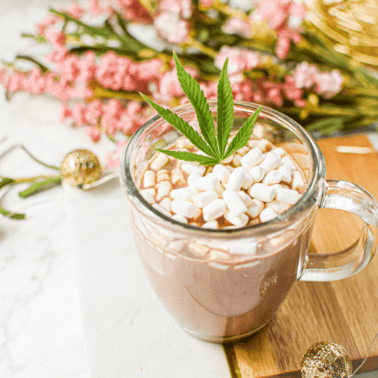
Creamy Cannabis Hot Chocolate
Cannabis Dessert Recipes










Hi, this is a great simple guide to make the oil. The oil is extremely versatile. It is the way cannabis is supposed to be… I harvest my own product, and spend less that 40 minutes getting everything together. I just let the crock pot do the rest. It is a nice inexpensive way for a retired guy like me to save money and get inexpensive quality medicine without having to inhale it.
I’m so glad you found the guide helpful and that making your own oil has been such a game-changer for you – it’s amazing how a simple, inexpensive process can yield such a versatile and effective medicine, especially for those of us looking to avoid smoking!
Been my go to for years, honestly don’t need to read it anymore.
That makes me so happy to hear, memorized by heart <3 Thanks Mickey!
I buy pre rolls at the dispensary which is already grinded. Should I skip the decarb and just infuse for 8-12 hours?
Hey Morgan, you certainly can do this. However, to ensure the best results, it’s recommended to decarboxylate the cannabis before infusing it, even if it comes from a pre-roll. This step ensures you’re maximizing the potency of your infusion, and allows you to drop the time to only 2-4 hours. Taking this extra step will help ensure your final product is both potent and effective, while reducing the amount of chlorophyll (green color and taste) that ends up in your infusion.
I notice in some guides you completely submerge the mason jars (as if canning) and in others you do not. Which way is correct?? Thanks!
That’s a great question! You don’t actually need to fully submerge the mason jars. While some guides might suggest immersing the jars completely, it’s not necessary unless you’re specifically canning. For most purposes, like infusing or storing, keeping the jars upright and ensuring they’re airtight is what really matters. I hope this clears things up for you!
What do I do AFTER I decarb the flower, how do I extract the THC?
Hi, Charles, after you decarb the flower, you will combine it with the coconut oil in a jar and proceed with infusing them together with the help of the water bath. The infusion process outlined here is what extracts the THC from the plant matter and into the oil. It’s important to maintain a consistent low heat during the water bath to ensure efficient extraction without burning or degrading the cannabinoids. Once the infusion is complete, you’ll strain the oil through a fine mesh or cheesecloth to remove any plant material, leaving you with a smooth, THC-infused coconut oil ready for use.
If I want to infuse liquid coconut oil to add to my gummy mix do you recommend the 2cups liquid coconut oil and 1oz flower recipe in the crockpot?
Hi Robin. The 2 cups of liquid coconut oil to 1 oz of flower recipe in the crockpot is a popular choice and works well for infusing oil and it should work great for your gummy mix. Enjoy!
Hello. Thanks so much for all the info on this site; very helpful. I do have a question about this recipe; if using a double boiler method for infusion of cannabis oil, assuming I decarb first, is 4 hours necessary for maximum infusion? I usually only do 2 hours (not counting the 40 min decarb), and I am pleased with how it turns out, but if it will be more potent with a longer time, then I will certainly start. What is your opinion, if you don’t mind me asking?
Hi Kyra! I’m really glad you’re finding the information here helpful. It’s great you’ve had success with a 2-hour infusion time. Generally, the 4-hour recommendation is aimed at achieving maximum potency, but if you’re pleased with the results from a 2-hour infusion, you might already be hitting the sweet spot for your needs. The extra time can indeed increase potency, but it’s also about finding the right balance for your personal preference. If you’re curious, it could be worth experimenting with a longer infusion time on a small batch to see if you notice a significant difference. Remember, it’s all about what works best for you!
Do the jars have to be completely covered in water?
Yes Inez, it’s important to ensure that the jars are completely submerged in water. This helps to maintain an even temperature around the jar, ensuring your infusion process is consistent.
How do you get the oil so clear and golden? Mine turned out dark greenish brown.
Hi Deb. The color is dependent on a few things, but has a lot to do with the cannabis flower itself that is used. Some Well With Cannabis community members like to wash their cannabis before infusing to help with the final color and taste of their infusion.
Soak your cannabis bud for 2-3 days with distilled water in a french press. The water will turn brown, dark gold, green, clear or cloudy and should be changed every 12 hours. After 2-3 days the water should run clear. You’ll need boiling water and a bowl of ice water for the next step.
Once clear, transfer the cannabis to a tea strainer and boil for 5 minutes before removing and placing in ice water for one minute. The next step would be to dry the bud before moving forward with the edibles process. I prefer to air dry personally, but many members have used salad spinners to spin out the excess water. Once dry, you can decarb and use in your edibles for a light-tasting final product.
I just want to note that when you wash away the chlorophyll and impurities, you are also washing away the terpenes and flavonoids. For some that is no big deal, but for others, it can be a deal breaker.
I hope this information helps!
Can you use an Instapot for this recipe? If so how would you modify settings?
Hi Erika. You can use an Instant Pot, but you would want to use the Slow Cook option for infusion and run for 4 hours. Here is a guide and recipe to walk you through it: Instant Pot Cannabutter or Oil » Easy Guide. I hope this heps!
Hello Emily! I love your website! It has so much great and easy to follow information! I am a new grower and have a lot of trim (sugar leaf and some small buds that were sifted from my trimming bowl) as well as kief that I sifted from the trim also. I want to make gummies with the trim and maybe add a little kief to add to potiency. I’m trying to figure out the strength since some of the trim is small buds. Do you have any suggestions on this as well as how much kief I should add? Thank you so much for this great website!! Wendy Jane
Hi Wendy Jane! I’m thrilled to hear that you’re finding the website helpful and are diving into the world of growing your own! 🌿 When it comes to making gummies with trim and kief, potency can vary A LOT. As a starting point, I’d suggest using a little less kief than you think you might need, then adjust based on the results. Remember, it’s easier to add more potency, but you can’t take it away once it’s in there! Good luck!
Tried your recipe out today, very excited to try in some drinks, was wondering what is the outcome of THC content, like 1 tsp equals???
Hey CJ, so sorry for the late response. If you tell me how much flower you used in grams and the %THC, I can help you do the calculation to help determine how much 1tsp equals.
I tried this recipe for the first time and my husband and I love it! I then also tried to make gummies using your recipe and they turned out just as good. I did add flavoring to the gummy mix & next time I plan on adding more flaoring. I was thinking I might have done something wrong because the gummies seemed to be sweating alot. I left them out a day or 2 longer for drying & they seemed to be fine. I am definitely going to be making more of these & I plan to try more of your recipes!! 🙌🫶
Hi Stephanie. Thank you so much for your comment. We’re thrilled to hear that you loved the recipe and that your gummies turned out great too. Have fun exploring our other recipes. Enjoy your cooking adventures!
Hi Emily. I am using harlequin, which is a sativa strain. It has a 1 to 1 ratio. It is now the 1st week of October. My trichomes are mostly cloudy. What percentage of cloudy to amber trichomes should I be looking for for higher CBd? Also when decarbing in oven, what temperature and time should I be referring to for higher CBd. Also if you cut down the time frame, will you get a higher thc content? Thanks
Hi Danny. The trichome color dictates the overall cannabis experience you will have. Some prefer the uplifting effects of mostly clear trichomes while others prefer the more sedating effects from mostly amber trichomes. It all depends on what effects you are trying to achieve. When all trichomes are cloudy, they have reached their maximum THC levels, which means you’ll get the most psychoactive effects. As trichomes mature even further, they transition from cloudy to an amber color. This stage is associated with a higher presence of CBN. Harvesting at this stage can result in a more relaxing or “body” high.
To activate the CBD, you want to decarb for 90 minutes at 240º, which will also activate the THC. Happy Harvesting!