

Cannabis coconut oil is one of the most adaptable and rewarding infusions you can add to your homemade wellness toolkit. Whether you want to create delicious edibles or soothing topicals, this easy recipe gives you full control over strength, ingredients, and quality. Not only is it completely plant-based and allergy-friendly, but it also offers a reliable, cost-effective way to experience the benefits of cannabis in your everyday life.
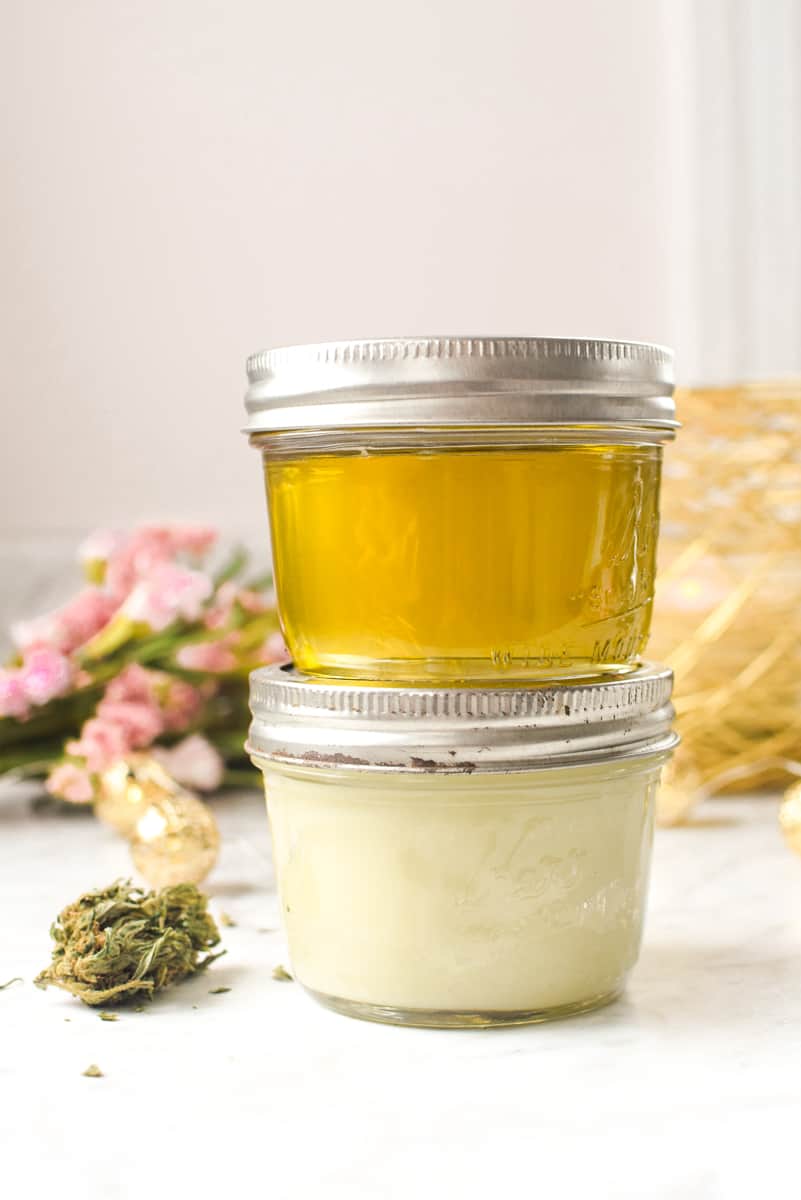
Table of Contents
Recipe Features
- ⭐⭐⭐⭐⭐ This recipe is one of the most popular infusions in my community, with over 1,100+ happy reviews!
- Two Simple Ingredients: All you need is your favorite cannabis flower and a jar of coconut oil.
- Multiple Methods: I’ll show you how to make it using a Crock-Pot, Instant Pot, or right on the stovetop.
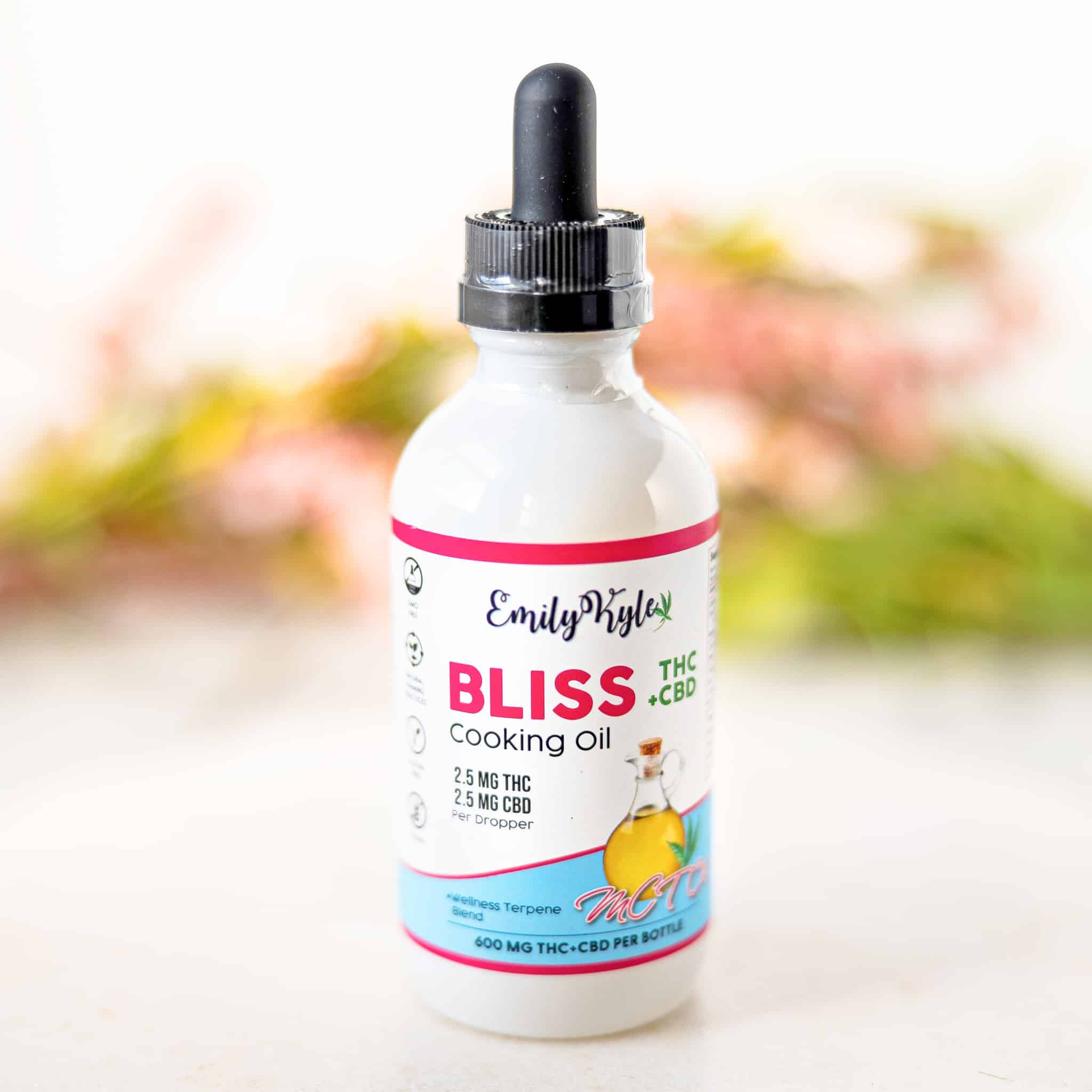
- Want it fast? If you’re not ready to DIY, you can order my pre-made Bliss MCT Oil and have it delivered directly to your door.
Why You Will Love This Recipe
If I had to choose just one staple to keep in my cannabis kitchen, it would be a jar of homemade cannabis coconut oil.
When I first started making my own infusions, I quickly realized how incredibly versatile it is. I use it for everything, from baking a batch of gooey brownies to making a soothing salve for my sore muscles. It’s the ultimate two-for-one, nourishing my body from the inside and out.
What I love most is that it’s completely plant-based, dairy-free, and works for almost every dietary need, which is a huge priority for so many members of my Well With Cannabis Community.
Coconut oil’s high saturated fat content makes it a perfect vehicle for pulling all those wonderful cannabinoids from the flower, creating a potent and effective infusion every single time.
Today, I’m excited to share my personal, step-by-step process for making cannabis coconut oil. Whether you’re a total beginner or just looking to refine your technique, I’ll walk you through everything you need to know.
Easy Crockpot Cannabis Coconut Oil
Video
Ingredients
- 1 ounce cannabis flower pre-decarb
- 16 ounces coconut oil
- 1 teaspoon liquid sunflower lecithin optional
Instructions
- Lay a clean tea towel down on the bottom of your crockpot. This will create a buffer between your mason jars and the crockpot, potentially preventing any jar from moving or cracking during cooking.
- Fill your crockpot with enough warm to hot water to cover the top of the mason jars you plan on using by an inch to create a water bath.
- Place the digital instant-read thermometer into the water. Start the crockpot heat on high. When a temperature of 185° F is reached, turn the crockpot to low.
- While the water bath is heating in the crockpot, measure and decarb the cannabis flower in the oven at 240°F for 40 minutes (for THC-flower). Click here for a full cannabis decarboxylation tutorial, if needed.
- Evenly divide the coconut oil between the mason jars you plan on using. You can either use pint-sized or half-pint-sized jars, it's you're preference, just be sure they fit in your crockpot. No matter the size, be sure to leave a 1/2 inch headspace from the top.
- If you plan on using sunflower lecithin, add it to the mason jars now.
- Evenly divide the decarbed flower between the coconut oil-filled jars. Wipe the rim of the jars with a clean paper towel and place the lid on. Tighten the metal ring to finger-tip tightness, it does not have to be tightened all the way. Do not tighten too tightly.
- Once the water bath reaches a temperature of 185° F, carefully place the jars into the water bath. Place the lid on the crockpot and leave alone to infuse for 4 hours.
- After 4 hours, carefully remove the lid, followed by the jars from the hot water. Set them aside to cool.
- Once cool enough to handle, you will want to strain the cannabis oil through a paper filter and funnel, cheesecloth, or French press to separate the plant-matter from the coconut oil.
- Save the leftover cannabis pulp for use in future recipes. Then return the prepared cannabis coconut oil to whatever jar you would like to store it in. We use a mason jar.
- Store the prepared cannabis coconut oil in a cool, dry place. It will last longer if stored in the refrigerator and even longer if stored in the freezer.
Notes
SAVE THIS GUIDE 💌
What You’ll Need
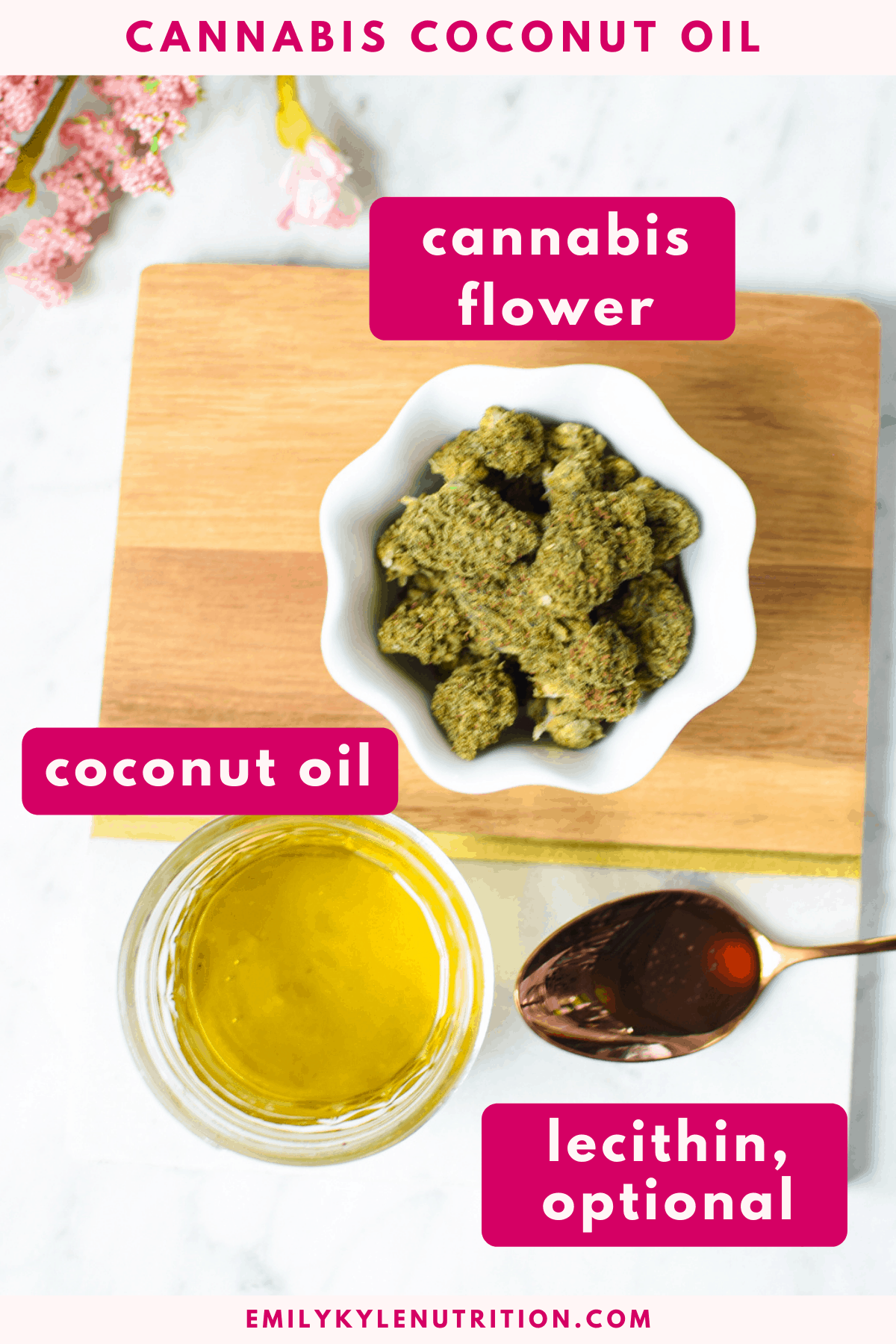
Let’s gather our simple ingredients. The quality of your flower and oil will directly impact your final product, so choose wisely!
- Coconut Oil – You’ll need to decide between refined, unrefined, or MCT oil. I’ll break down the differences below to help you choose.
- Cannabis flower – You can use THC-dominant flower for psychoactive effects, or CBD flower, or CBG flower for non-intoxicating benefits. The amount to use depends on your desired potency. You can use any amount of flower, ranging from 3.5 grams up to 1 ounce.
- Lecithin – This is my secret weapon for edibles. Lecithin is a natural emulsifier that helps your body absorb the cannabinoids more effectively, potentially making your oil feel more potent. It’s not a deal-breaker, but I always add a teaspoon of liquid sunflower lecithin to my infusions. Learn more about adding lecithin to edibles here. You can purchase liquid or powdered lecithin online.
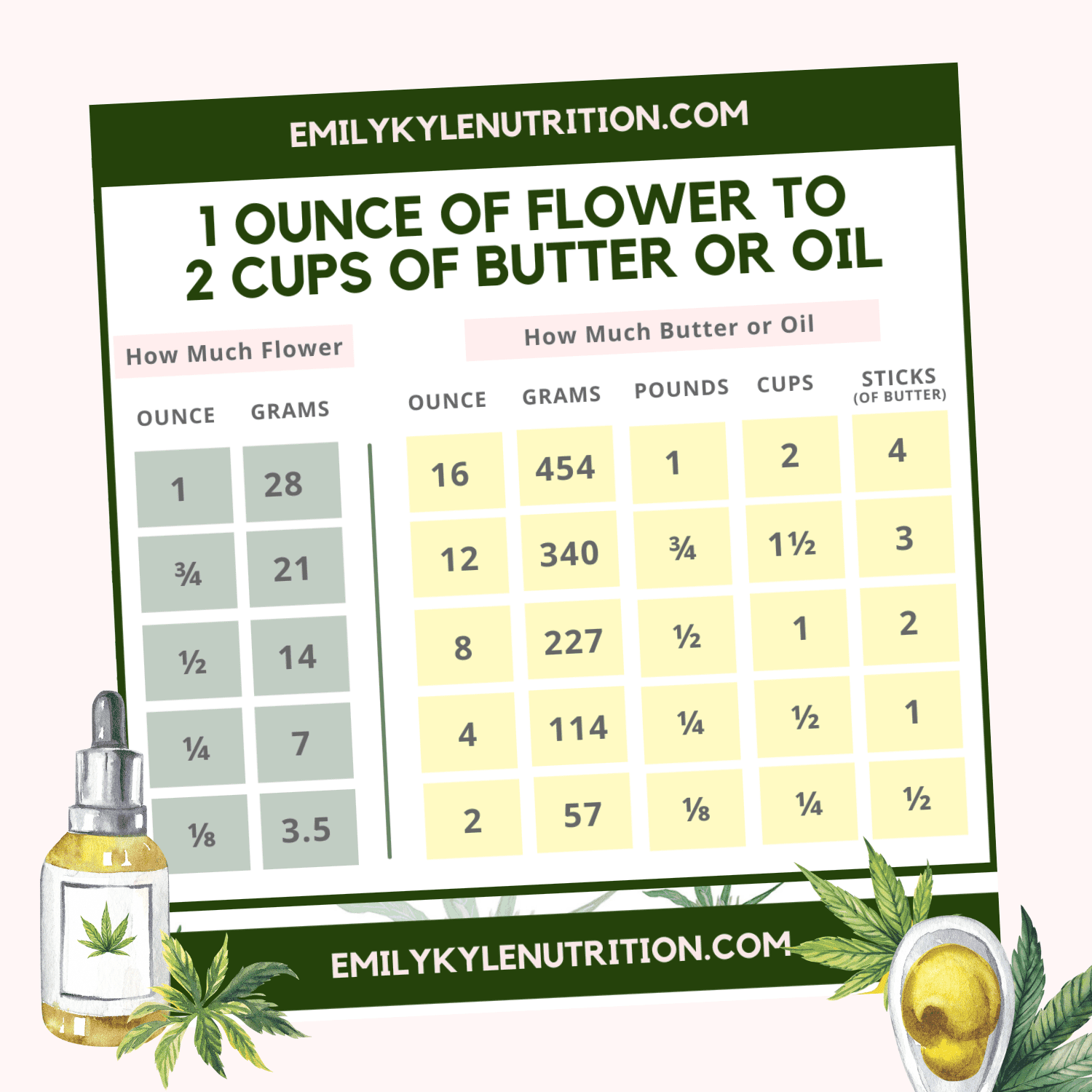
Note: Determine how much to use for each ingredient below with this flower-to-oil ratio guide.
The Step-by-Step Process
My favorite method for infusing is using a Crock-Pot to create a stable water bath. It’s a set-it-and-forget-it approach that gives me consistent results every time. Alternatively, here are instructions for using an Instant Pot or the stovetop.
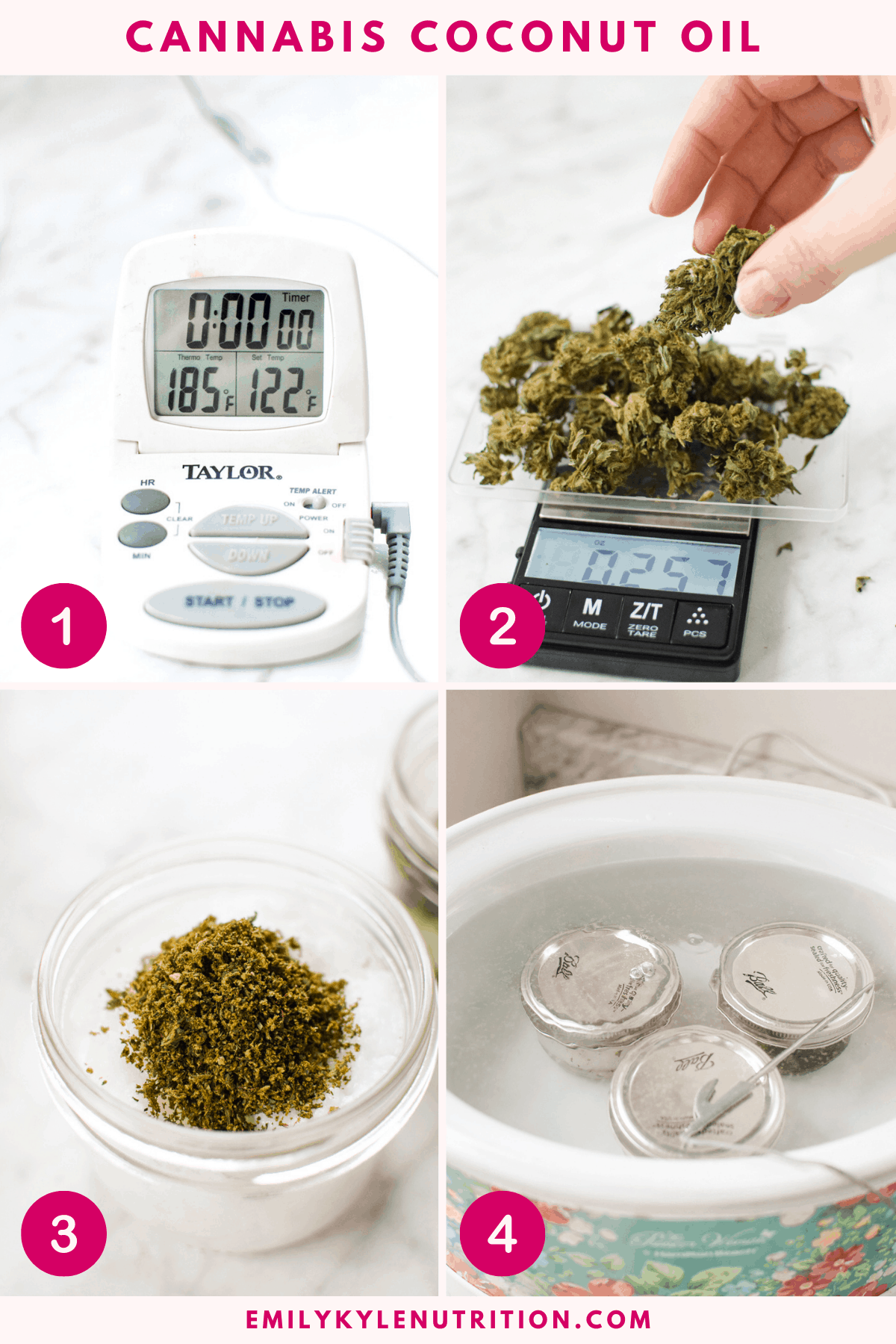
- Prepare the Water Bath: Lay a tea towel on the bottom of your Crock-Pot (this prevents the jars from rattling) and fill it with warm water. Set it to high until the water reaches 185°F, then turn it to low to maintain that temperature.
- Decarb Your Flower: This is the most important step! To activate the THC or CBD, you need to decarboxylate your cannabis. I put my flower in an oven-safe baking dish and bake it at 240°F for about 40 minutes. Your kitchen will smell amazing, but if you need a more discreet method, you can decarb in a mason jar or an Instant Pot. Do not grind the flower; just break it up into smaller, popcorn-sized pieces.
- Combine Ingredients: Add your decarbed flower and coconut oil to a mason jar. If you’re using lecithin, add it now. Seal the jar “fingertip tight”, you want it closed but not so tight that pressure can’t escape.
- Infuse: Carefully place the jar in the water bath and place the lid on the crockpot. Leave it alone to infuse for 4 hours. After 4 hours, remove the jars from the water to cool. This low and slow heating gently extracts the cannabinoids without burning them.
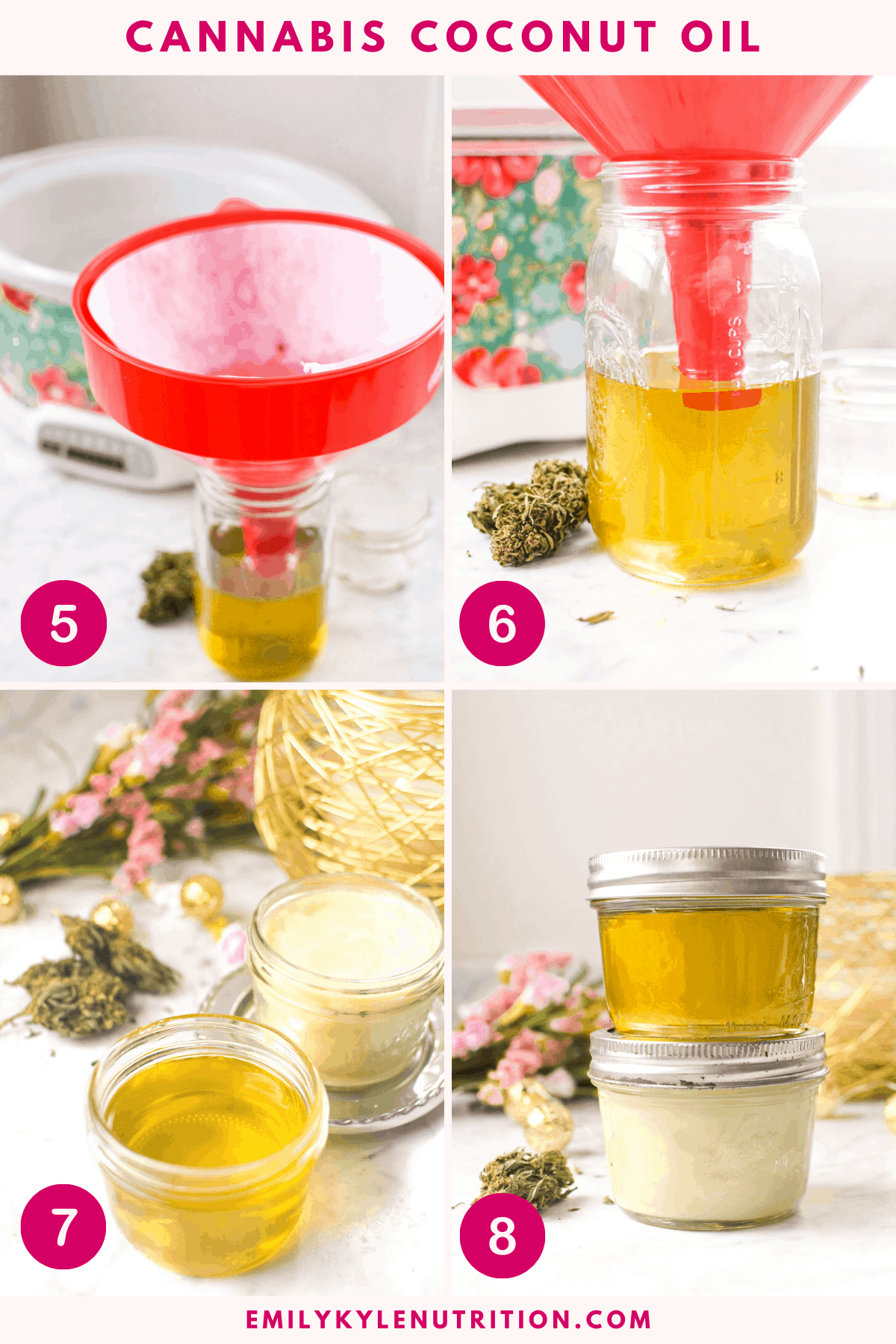
- Prepare to Strain: Whether it be a paper filter and funnel, cheesecloth, French press, or a simple coffee filter, you will want to set up a straining station to separate the plant matter from the oil.
- Strain the Oil: After infusing, let the jar cool until it’s safe to handle. Then, you’ll need to strain out the plant material. Squeeze gently to get all the oil out. Don’t throw away the leftover cannabis pulp! It can be used in other recipes.
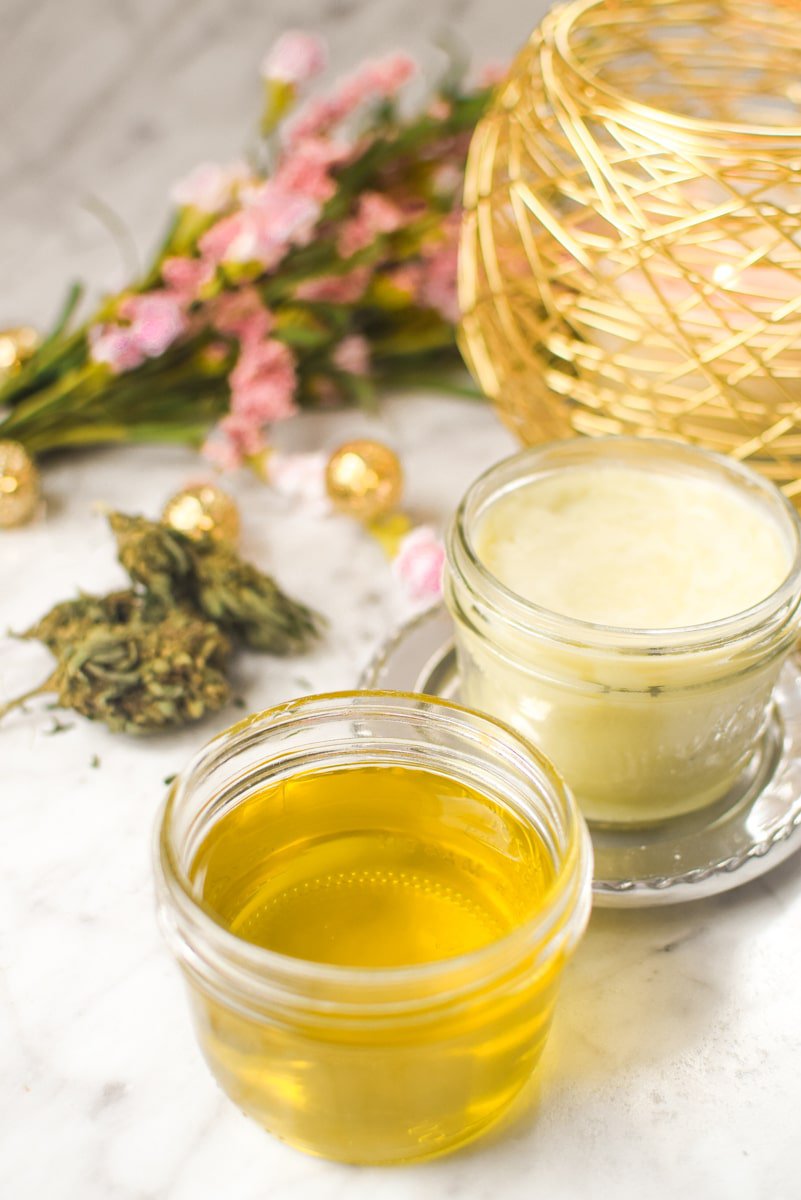
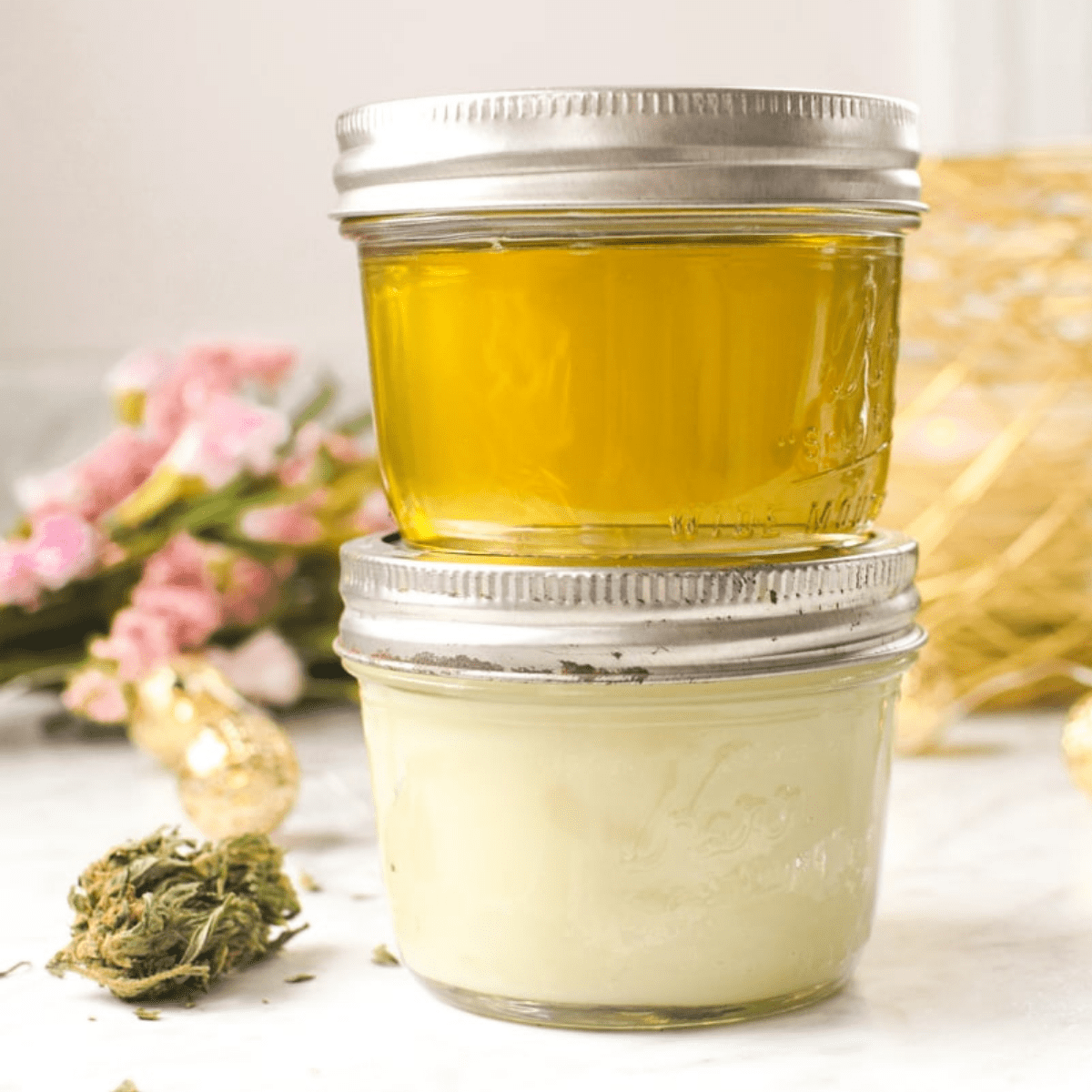
- Store the Oil: Return the prepared oil to whatever jar you would like to store it in; a mason jar works well. Store the prepared cannabis coconut oil in a cool, dry place.
- Long Term Storage Instructions: Store your prepared oil in a cool, dry place. It will last longer if stored in the refrigerator and even longer if stored in the freezer. Keep the jar out of direct sunlight, and keep it in a cool, dark cupboard or even the refrigerator.
⚠️ If you store coconut oil in the refrigerator, know that it will solidify into a solid mass. This is normal, however, in order to get it back to a workable state, you will need to let it sit out to soften. Never use the microwave to warm cannabis infusions. Learn more about how to store cannabis edibles here.
Why Coconut Oil Is Great For Infusions
Coconut oil is a nutritional powerhouse, but its real magic for cannabis infusion lies in its high concentration of saturated fats.
Cannabinoids are fat-soluble, which means they need to bind to fat molecules to become available for your body to use. The fatty acids in coconut oil are exceptionally good at this, leading to a very efficient extraction and a potent final product.
Its versatility is what made it a staple recipe for me. It seamlessly replaces butter in any recipe and serves as the perfect base for homemade topicals.
SAVE THIS GUIDE 💌
Choose A Type of Coconut Oil
The coconut oil aisle can be confusing. Here’s a quick breakdown to help you decide:
- MCT Oil: This is a liquid extract from coconut oil. It stays liquid at room temperature, making it perfect for tinctures or for adding to your morning coffee. Just be aware that for some people, large amounts of MCT oil can cause digestive upset.
- Unrefined (or Virgin) Coconut Oil: This is my personal favorite. It’s cold-pressed and has a distinct, tropical coconut flavor and aroma. I love using this for edibles where the coconut taste is a welcome addition, like in a batch of no-bake cookies.
- Refined Coconut Oil: This oil has been processed (usually with steam) to remove the coconut flavor and smell, making it completely neutral. If you are making a savory dish or don’t want any coconut taste, this is your best bet. It infuses just as effectively as unrefined oil.
Don’t Forget To Decarb
I can’t stress this enough: decarboxylation is the non-negotiable first step for making potent edibles.
Raw cannabis contains THCA and CBDA, the acidic forms of the cannabinoids. Your body can’t process them effectively to produce the desired effects. Heating the cannabis converts THCA into THC and CBDA into CBD, “activating” them for your body.
If you forget this step, your oil will be far less potent.
While you will get some decarb action from the infusion process itself, it won’t be nearly as complete. To get the most out of your flower, always decarb first.
If You Forget to Decarb
While I recommend going through the full decarb process for maximum benefits, truthfully, if you accidentally skip the decarboxylation process, we can fix it.
You will simply increase your infusion time which will help you achieve decarboxylation over time. If you don’t decarb first, I recommend infusing the coconut oil for longer than the typical 4 hours, going for at least 8-12 hours.
This longer cooking time helps to decarboxylate the flower for you. If you accidentally forget to decarb, you can relax, all is not lost.
Additional Factors to Consider
Perfecting your infusion is both an art and a science. Here are a few things that can influence your final product:
- Temperature Controls: The key to a good infusion is maintaining a consistent temperature. If the oil gets too hot (above 300°F), you risk burning off the delicate cannabinoids and terpenes. Using a water bath method is the best way to ensure gentle, even heating.
- The Strain of Cannabis Used: The strain you choose will dictate the effects of your oil. A sativa-dominant strain might produce a more energetic, uplifting oil, while an indica-dominant one will likely result in a more relaxing, body-focused effect.
- The Freshness of Product: Using fresh, properly cured flower will yield a more potent and flavorful oil than using old, dried-out trim. However, infusing trim is a fantastic way to be resourceful and reduce waste!
Notes & Expert Tips
- Floating Jars: Sometimes the mason jar will float when placed in the water bath. This is no need for concern, simply put something heat and water safe over the top of the jar to weigh it down, a clean rock works well.
- Alternative Carrier Oils: Don’t love coconut oil? You can use this process with any oil. Alternative carrier oil options include: olive oil, avocado oil, hemp seed oil, grapeseed oil or MCT oil
- Don’t Grind Your Flower: Grinding cannabis into a fine powder releases more chlorophyll, which can give your oil a grassy, bitter taste. Instead, break it up by hand into small pieces. This provides enough surface area for infusion without the unpleasant flavor.
- Water Curing for a Milder Taste: If you are very sensitive to the taste of cannabis, you can “water cure” your flower before decarbing. This involves soaking the buds in distilled water for a few days (changing the water daily) to remove the chlorophyll. Your oil will have a much milder, cleaner flavor.
- The Magic of Lecithin: I mentioned it before, but adding a teaspoon of sunflower lecithin really may make a difference. It helps emulsify the oil and water in your body, which can improve absorption and make the effects feel stronger and more consistent.
Frequently Asked Questions
In theory, using lecithin will make valuable cannabinoids like CBD and THC more bioavailable or ready for use by the body, ultimately making the edible stronger. You will definitely still have a great infused cannabis oil if you don’t use lecithin, it’s not a make or break ingredient for this recipe.
Yes, you can infuse coconut oil with full-extract cannabis oil, FECO (or RSO), instead of flowers. If you want to infuse with this type of oil, here is my guide on making FECO.
After the straining process to separate the plant matter from your infused oil, you will be leftover with a ball of spent cannabis flower, also called leftover pulp or sludge.
Yes, just use the cannabis flower to oil ratio chart below to choose the batch size that is right for you.
Recipes To Make With Coconut Oil
Cannabis Dessert Recipes
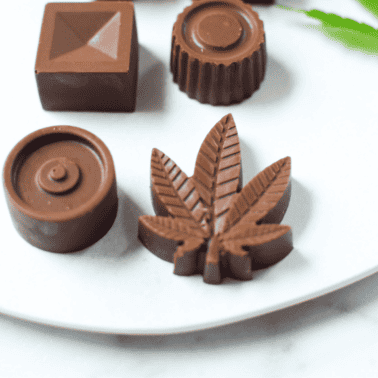
How to Make Weed Brownies with Cannabutter or Oil
Cannabis Topicals
Easy Homemade Cannabis Salve Recipe
Cannabis Drink Recipes
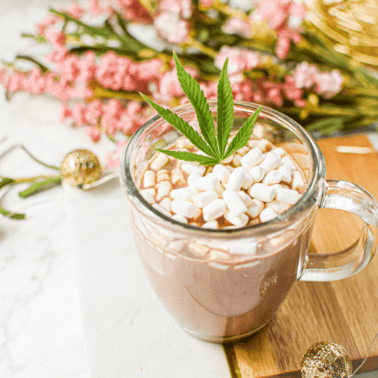
Creamy Cannabis Hot Chocolate
Cannabis Dessert Recipes










Is it possible to combine the flower and coconut oil directly to the crock pot and simmer on low thereby skipping the jars altogether, initially? Seems like an unnecessary step but maybe I am missing something
Hi Cathy. You can definitely infuse directly in the crockpot. We recommend using mason jars for two reasons. Mason jars greatly reduce the cannabis odor in the air and you can use the same jar for decarb, infusing and storing which reduces the amount of cleanup overall. I hope this helps!
I’m so happily surprised with how good my oil came out this time! First time trying this recipe to make infused oil too. I followed the directions carefully aswell to ensure that it would come out I was a bit nervous being my first time using this method but I’m not switching back, the potency of my oil is amazing! My next step is trying my hand at the gummy’s! I’ll update once I’ve made them! Thank you for having such simple instructions!!!
Harley, I am so happy to hear about your success! I hope the gummies turn out just as good. Enjoy 😀
Love your website and all the very helpful information. I don’t have a crockpot. Is there a stovetop method I can follow? And what happens if the oil gets too hot during the infusion process?
Hello Scott! Yes, of course, I have a stovetop method guide right here. Just swap the butter for coconut oil. This method uses a water bath, so no worries that the oil will ever get too hot. Good luck 😀
Dear Emily:
We used your recipe for 1:1 Cannabis flower to oil ratio chart resulting in infused oil that is twice as potent, so are we correct in assuming that we are to half the amount of oil to be used in all of your recipes? Also, how long can we keep gummies once made? Can they be kept for months if frozen?
Hello Kim! This will totally depend on how strong you want your final product. If you want a very strong end product, use the full amount. If you don’t want it so strong, half or even quarter it. The shelf life of the gummies will depend on what preservative you used and if you air dried them, but yes, they will last a long time in the freezer ?
It says to leave 1/2″ headspace. Can I use a Quart jar and only have it filled half – three quarter way? Will the larger headspace cause any issues with the infusion? I will be using approximately 1 oz of ground cannabis and 16oz of coconut oil
Thank you
Hey Tommy! Yes, that should be totally fine 🙂 Good luck!
Hi Emily
I decarbed coconut oil and added the lecithin at that time. When making the gummies should I add more lecithin or is it enough in the oil?
Thanks I learned a lot from your site
Joan
Hello Joan! Thanks so much for the kind words 🙂 I always recommend adding the amount of lecithin called for in the gummy recipe, regardless of whether or not you have added it into your infusion first. I hope this helps!
Thanks for the recipe! My oil turned out very dark. What does this mean and is this something I can correct?
Hello Lindsey, you are most welcome! Color has no indicator of potency; it simply means that a lot of chlorophyll was transferred from the plant matter into your infusion. It’s not a good or a bad thing; it’s just simply personal preference. Here is a guide to learn more about chlorophyll and how to keep it out of your edibles if you prefer 🙂
Hi Emily! While I am not new to consuming edibles I am new to making my own. I read the article about calculating the doses but I am still confused as to how much flower you use per coconut oil to achieve a stronger oil. I did a trial run for your gummies recipe and it made 48 1 teaspoon gummies and 48 2 teaspoons gummies. If using this recipe how much flower would you recommend for the coconut oil? I am trying to get the gummies on the stronger side. 15-25mg?
Hey Karina. If you have 48 pieces and you want them (average) 20mg each, you’ll need 960mg THC to start (48×20=960). Next, you will need to know the % THC in you’re starting material. If you don’t know that, an average number I will use for this example is 15% THC. At 15% THC, you will get 150mg THC per gram, so you will need 6.4 grams of flower (960/150) to get to your desired amount of 960mg THC total. I hope this makes sense!
If you’re making the infused coconut oil with FECO to use as a topical, what would the ratio be, and do you need to heat it as long in the crockpot? Total newbie here; looking forward to trying it. Your website has been so instructional. Thanks!
Hey Jen! The ratio will be totally up to you and how potent you want. FECO is basically already ready to use, so when you’re adding coconut oil, you’re just doing it to expand the volume, but this will dilute the consistency. If you want it super potent, don’t add a lot of oil. If you want to make it less potent, add more oil. If you know the potency of the FECO, you can use the edible dosage calculator to play around with the volume of coconut oil to see how it impacts the overall mg 🙂
Hi there! I love your video. It may sound silly, but where do you buy cannabis flower to make the infused coconut oil? Thanks!
Hello Ernestine, thanks so much for the kind words! No silly questions here 🙂 I have both CBD and CBG flower for sale in my shop, and for THC flower I grow my own. Availability and legality will depend on what state you’re in, I hope this helps!
Hypothetical question, what if you fell asleep and the oil cooked in the crockpot for about 10ish hours, would it be ruined?
Hey Mtartar, no, it would not be ruined 🙂 If anything it may look and taste more green, and you may have a more sleepy end product, but it’s definitely not ruined!
Hi! I just made this recipe and it was super fun and easy. I have a question, my oil didn’t solidify after cooling which I find strange?! I used organic virgin coconut oil cold pressed unrefined- it’s in a solid form. Is it normal that my cannabis infused oil didn’t solidify after ?
Hey Karina! Thanks so much; I’m glad you found it fun and easy. This is normal, and with coconut oil as it cools, sometimes it even looks like little balls of oil. Totally normal; it will solidify eventually. You can always put it in the fridge to speed up the process if you want 🙂
I’ve been reading you articles and watched videos. You are very informative ( I’ve really been enjoying my edibles). I have an ardent lift decarb machine. It turns off automatically. I am very interested in turning my thc into cbn. Can I safely achieve this? If yes please advise.
Hey Glenn! Thanks for reading and watching. My Ardent FX manual says you can simply run the THC decarb setting twice to get to CBN 🙂
If all i have in a regular oven, what temp should i set it to to keep the water around 180°?
Ive done then before years ago with using your recipe but i used the oven and cant remember what i set my temp to, but i slow infused it for 6 hours. Everyone loved the final product
Hey Matt, I haven’t done it this way before, but I would set the oven as low as it would possibly go – I think mine goes as low as 200°F? Let us know if it works for you!
My crockpot only gets to 155f
Will be this enough heat? I’m using refined coconut oil.
How much longer would you recommend and lids should be lightly on?
Hey Chris! I don’t have lab tests to say for sure how much longer, but I would maybe add another hour or two? And lids on lightly, you don’t want them too tight, but you don’t want any water to get in, either 🙂